

Make AI people move realistically: weight, contact and timing
Floaty, stiff or averaged movement comes from a prompt that names the action and not the physics. Write what the weight does, what touches what, and when. Then pick the model: from the same frame, Kling v3 and Seedance 2.5 rotated a real backflip on every roll, and the others did not hold the physics.
- 11 min read
AI people move realistically when the prompt describes physics, not an action. "He jumps" produces an average jump. "He lands on both feet at the same time with his knees bending deep to absorb the weight" gives the model cause and effect to render. The same goes for contact (what touches what, and that it stays there) and timing (a beat the move lands on).
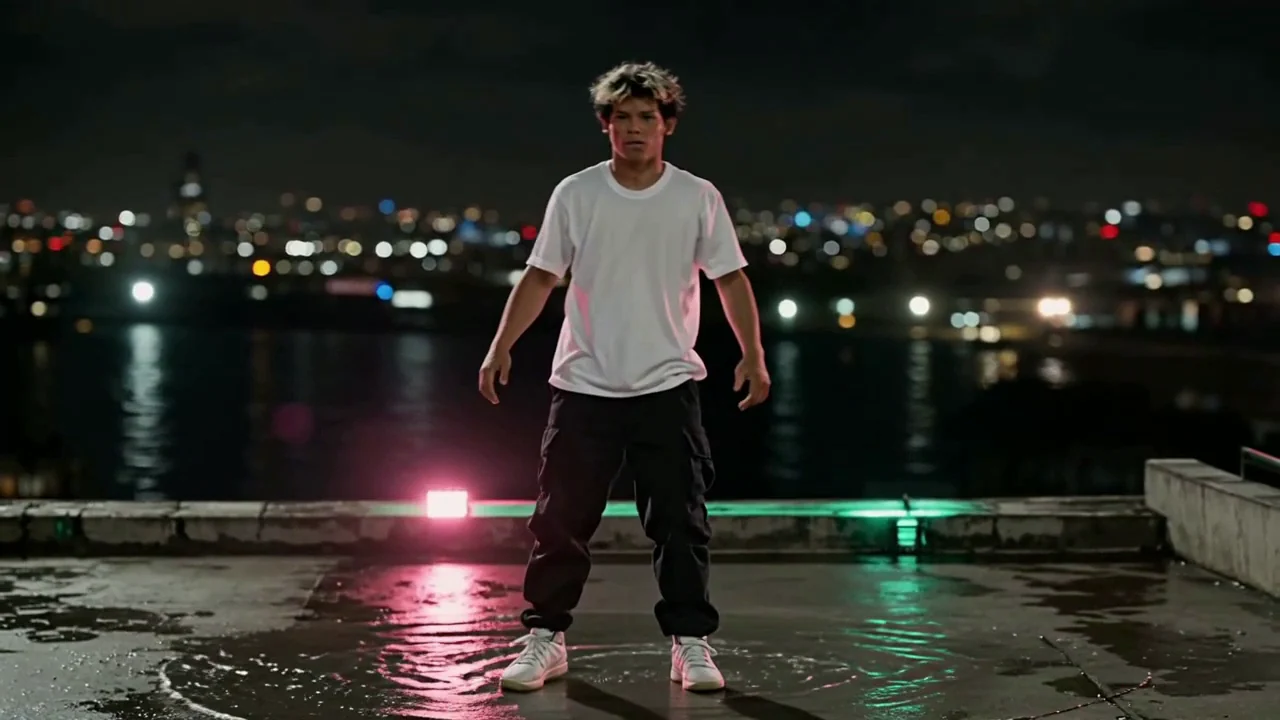
Every clip on this page starts from the same still: a dancer standing square to the camera on a wet rooftop at night. We gave that frame and a physics prompt to four video models and asked for one standing backflip. Then we ran three before-and-after pairs on Kling v3 from the same frame, one line changed each time.
What goes wrong
| What you see | Why | The fix |
|---|---|---|
| A jump with no landing; the body drifts down | "Jumps" has no mass in it | Both feet, knees bend, weight settles, then rise |
| Feet that slide, hands that touch the floor to save a move | Nothing said where the contact is | Name the contact and say it stays; say the hands stay off the floor |
| A move that dribbles on with no shape | No beat, no freeze | A start, a beat to land on, a freeze at the end |
| A flip that never rotates, or rotates twice | The model does not understand the physics, or the prompt left the count open | Say the number of rotations, and try another model |
Before you start
- One performer, one move, one continuous take. The performer is fictional and fully described: age, build, hair, wardrobe with material and colour.
- Start from a still. Render or pick a frame of the performer standing in the place, and add it as the start frame in the composer: the clothes, the light and the set are then fixed, and only the move is open.
- Change one line per run, and read the result frame by frame: where the feet leave the floor, where they land, what the knees do.
- Expect the rest of the frame to move between runs; judge the pair on the move you changed.
Try it with our start frame
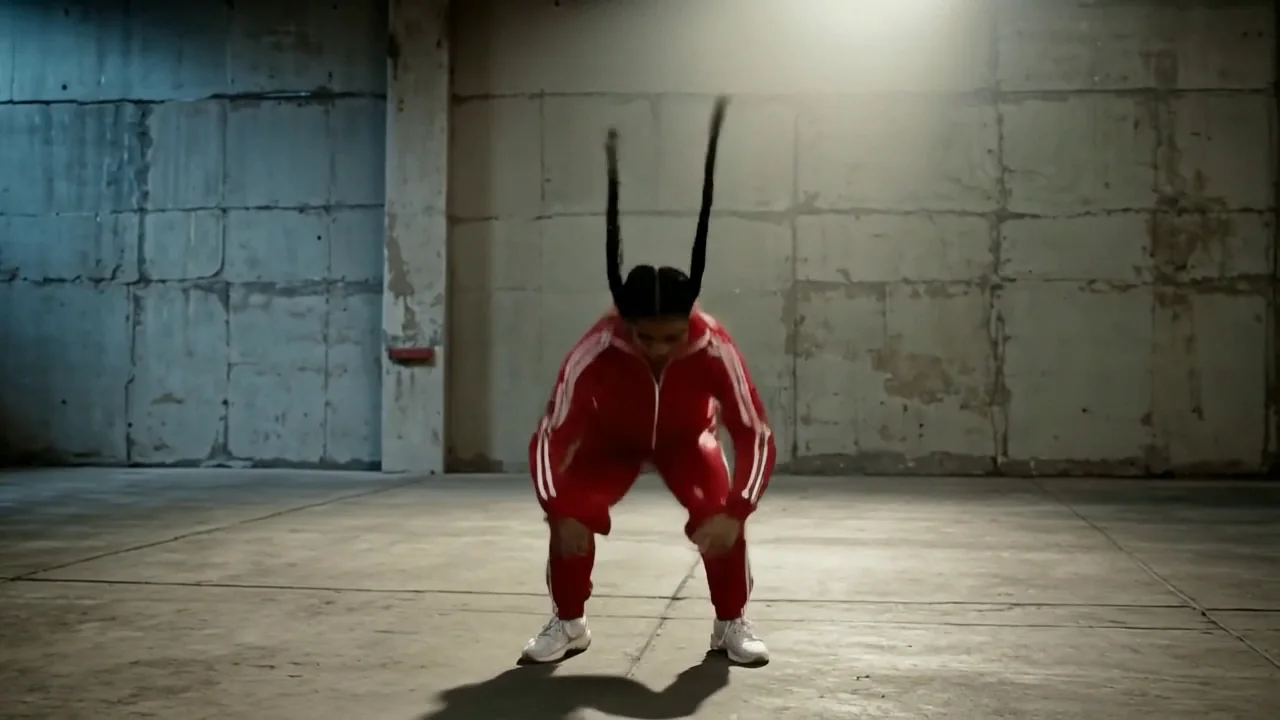
- The standing frame every clip starts fromWebP image · 1280x720 · 59 KBDownload
One backflip, four models, the same frame
We wrote the flip as physics: a crouch to load, a drive off both feet, one rotation, both feet down together, knees absorbing, a hold. Then we sent the same frame and the same words to four models. This is the take we kept, on Kling v3: read the crouch from 1.3 seconds, the drive at 1.8, the tuck, both feet down together at 2.7 with a splash, the deep squat, and the rise to a hold.
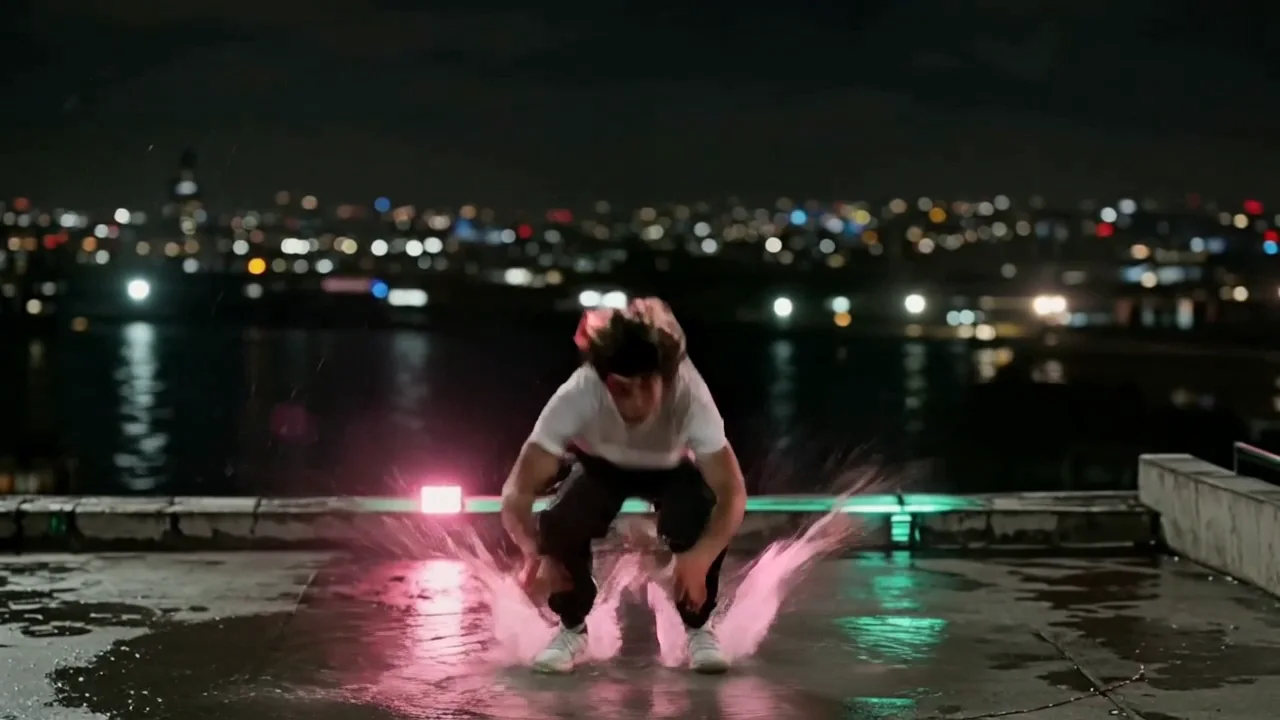
He does one standing backflip and lands on both feet. He crouches to load, drives off both feet straight up, tucks tight and rotates backward once, then both feet come down together on the wet concrete and his knees bend deep to absorb the landing; he straightens up square to the camera and holds still. Exactly one rotation, a feet-first landing, his hands stay off the floor. The clothes and the place stay exactly as in the first frame; the T-shirt stays down over his waist. The camera holds its framing with a small handheld sway; no cuts.
| Model | What came back from the same frame and words |
|---|---|
| Kling v3 | Three rolls, three real flips: a crouch, a fast drive, a tight tuck and one rotation every time. The first landed on its hands because the prompt said nothing about hands; with "lands on both feet" added, the next two landed feet first into a deep squat. The loose T-shirt rode up at take-off and while inverted on every roll. |
| Seedance 2.5 | A real flip on both scenes: a slow load, a high tucked rotation, a feet-first landing into a squat, hands off the floor. On this rooftop it lifted the T-shirt exactly as Kling did, with "the T-shirt stays down" in the prompt. |
| Veo 3.1 Fast | Not the model for this. Three rolls of four missed the flip: a jump into a bridge, a cartwheel onto the hands, and a jump that spun into a turn. One roll rotated. We do not use it for movement. |
| Seedance 1.5 Pro | Our first attempts, from text alone: an aerial with a hand on the floor, then a flip that turned twice. Not the model for movement either. |
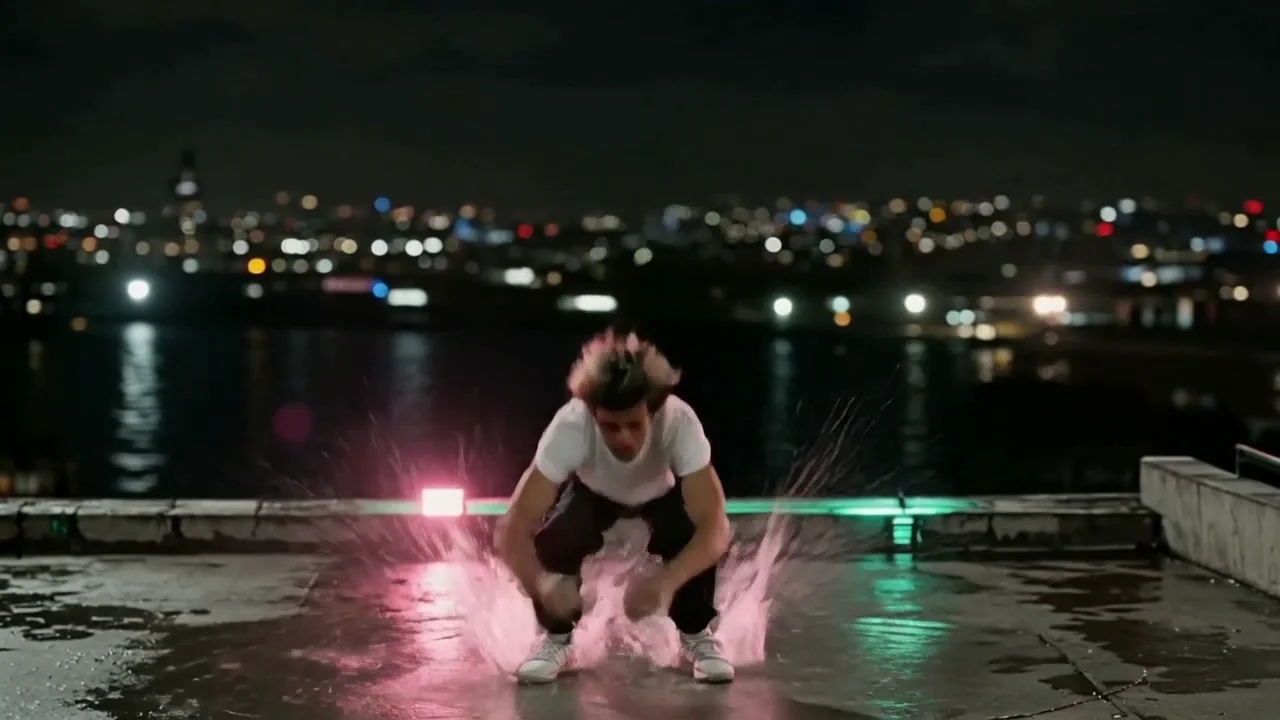
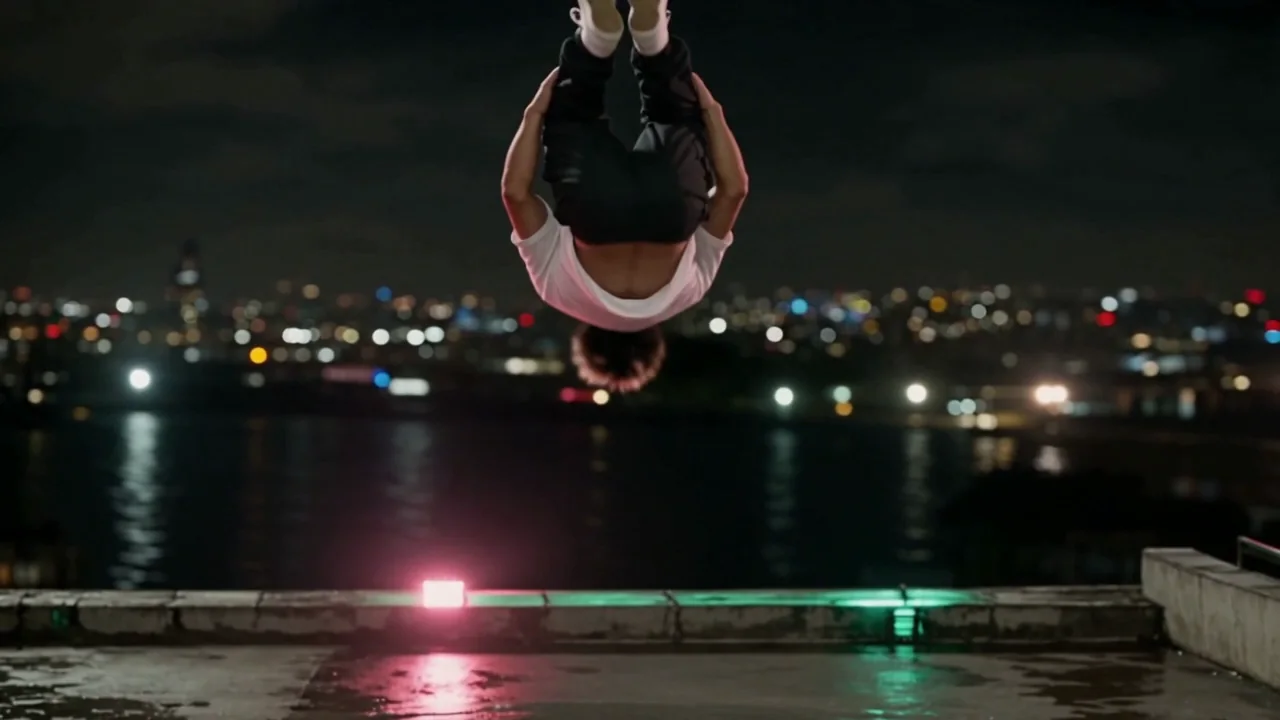
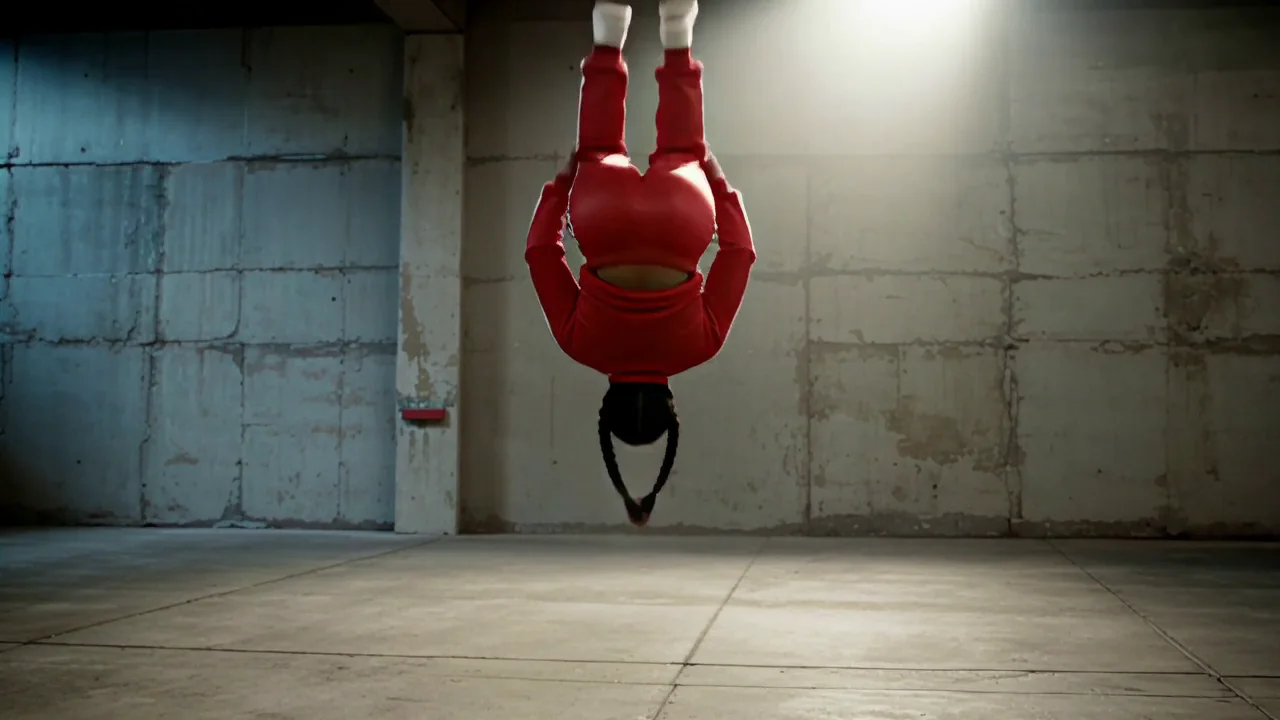
Watch for this:Say where the hands go, and what the clothes do. The first Kling roll flipped and landed on its hands, because the prompt said feet and knees and nothing about hands; "lands on both feet" fixed that on the next two rolls. What no line fixed was the loose T-shirt, which rode up on every Kling roll: a model that understands physics also understands gravity on an untucked shirt. Dress the performer for the move.
Weight: write the landing
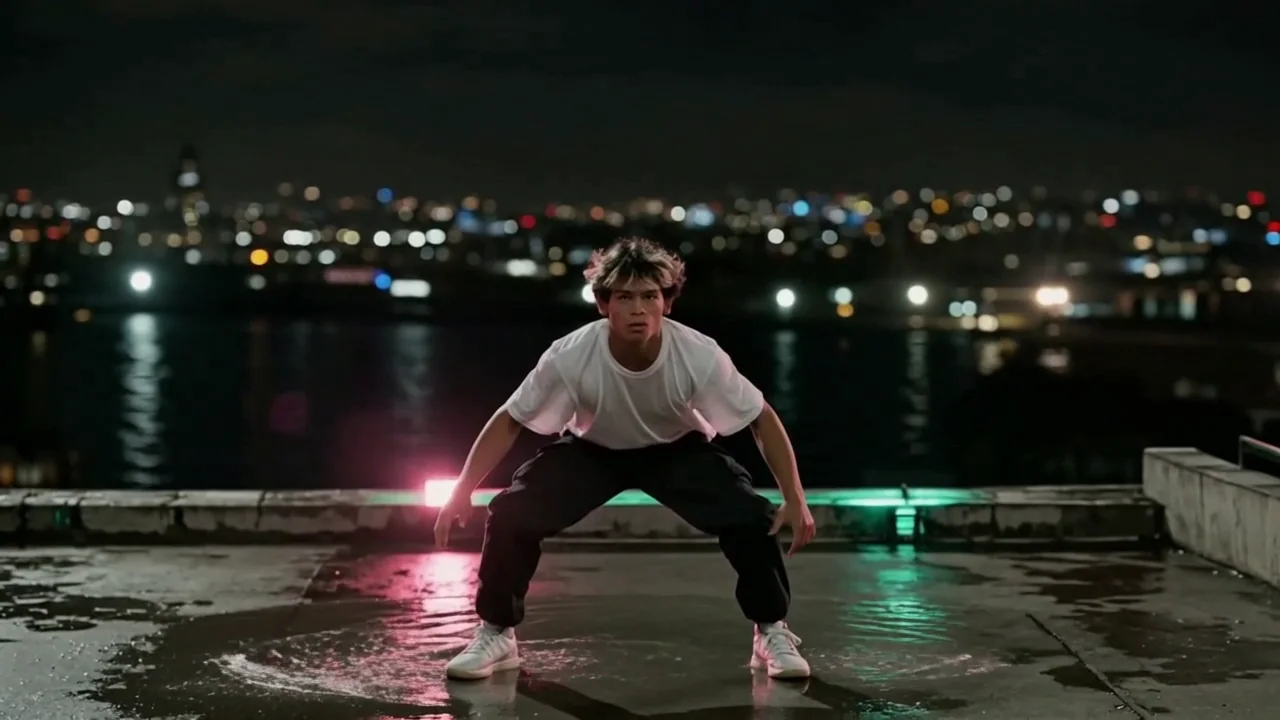
A body reads as real when mass arrives somewhere. The landing is where you see it: knees take the weight, the torso dips, the body rises. Write those three things and the jump before them takes care of itself. Same frame, Kling v3 at 720p, one line changed.
He jumps.
He crouches to load, drives off both feet, and lands on both feet at the same time with his knees bending deep to absorb the weight, then straightens up and holds still.
"He jumps"
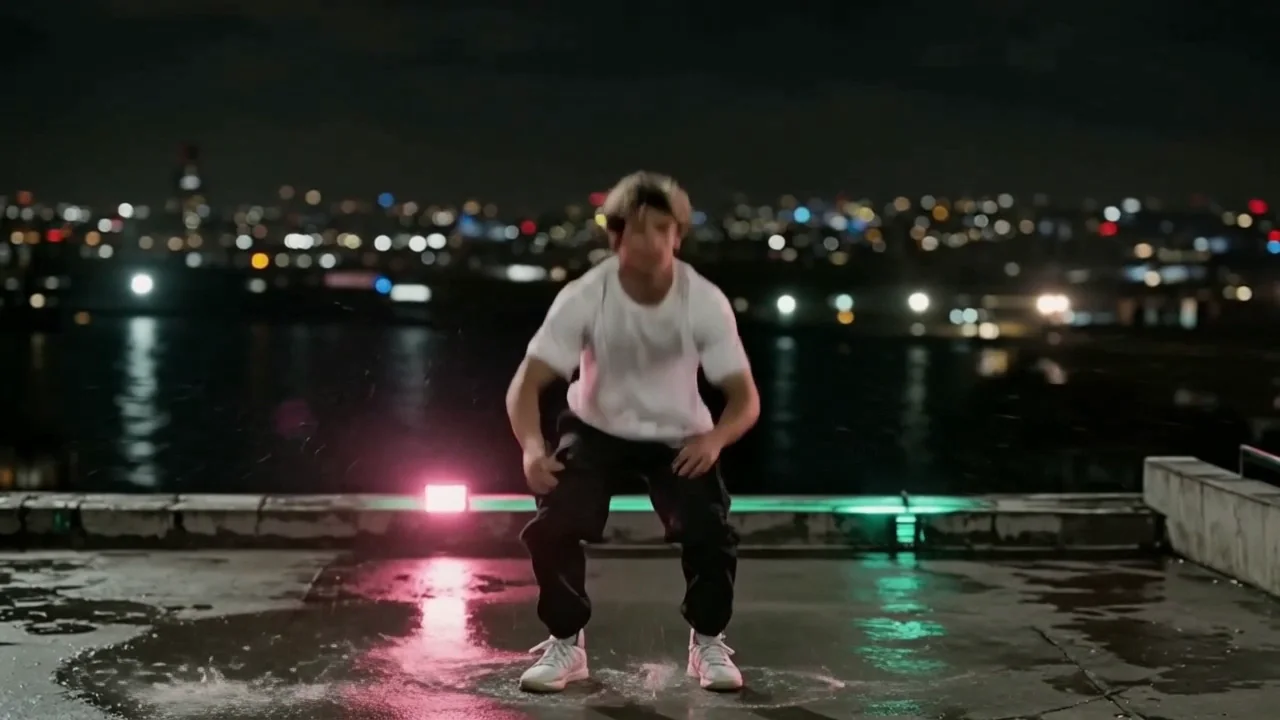
Landing written
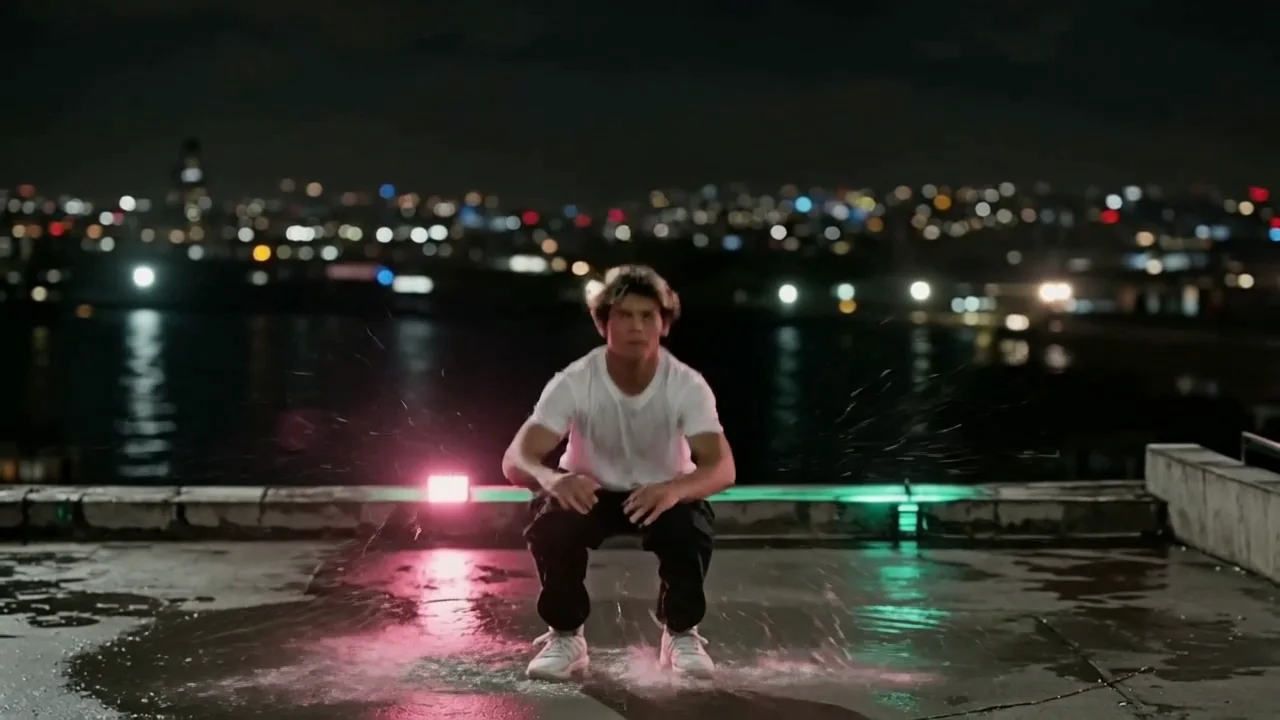
Contact: say what touches what, and that it stays
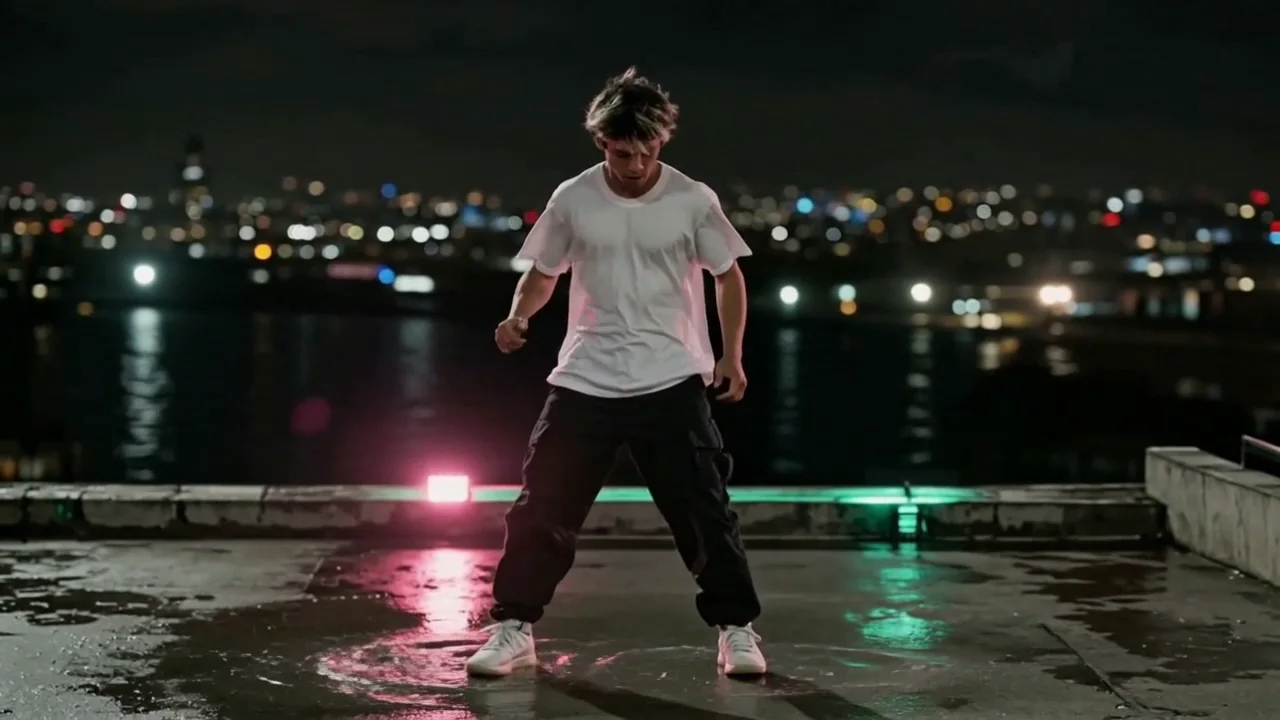
Sliding feet come from contact the prompt never mentioned. Name the surface, the part of the body on it, and say it stays there until the move is done.
He turns.
He plants his right foot, pivots a half turn on the ball of that foot with the sneaker gripping the wet concrete, lands the left foot flat, and holds; the feet stay on the floor throughout.
"He turns"
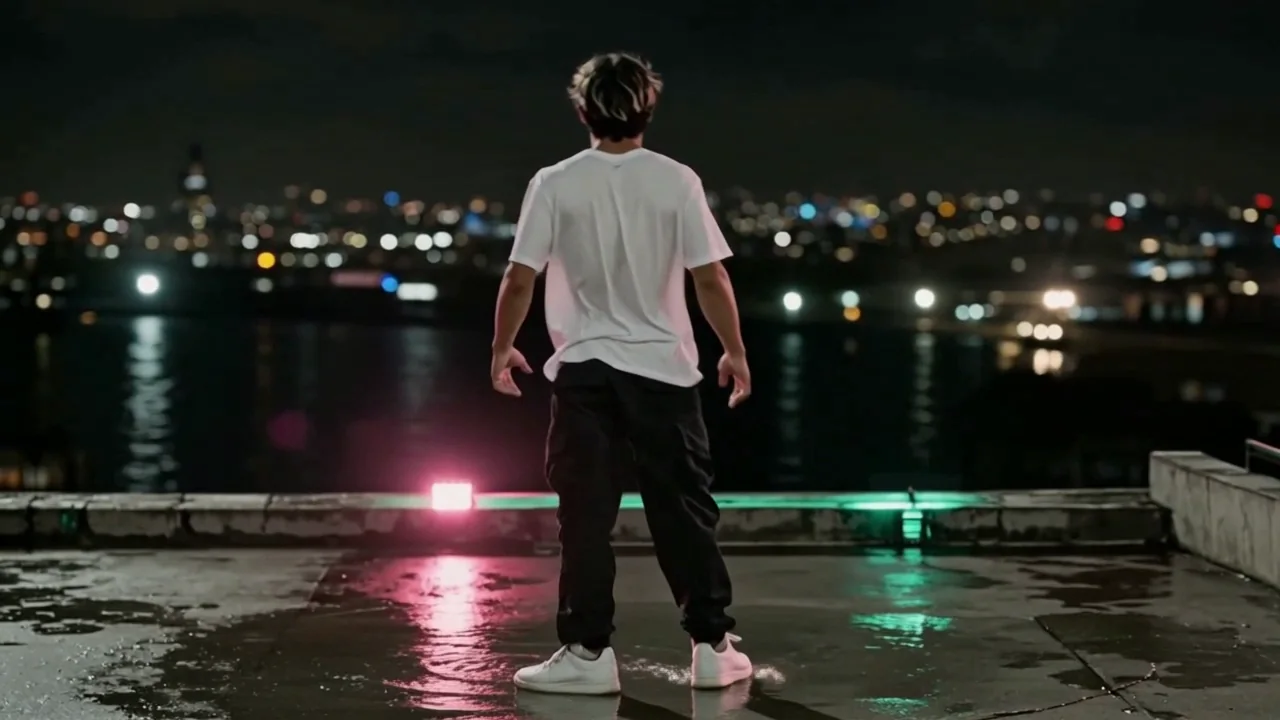
Contact named
Timing: give the move a beat and a freeze
Movement reads as directed when it has two states and a clean transition: still then fast, fast then frozen. A five second clip carries one such change. Say when it happens.
He dances energetically.
He holds still for the first second, then snaps his head to the lens on the beat and drops into a low stance in one count, and freezes on the last frame with his feet planted.
"Dances energetically"
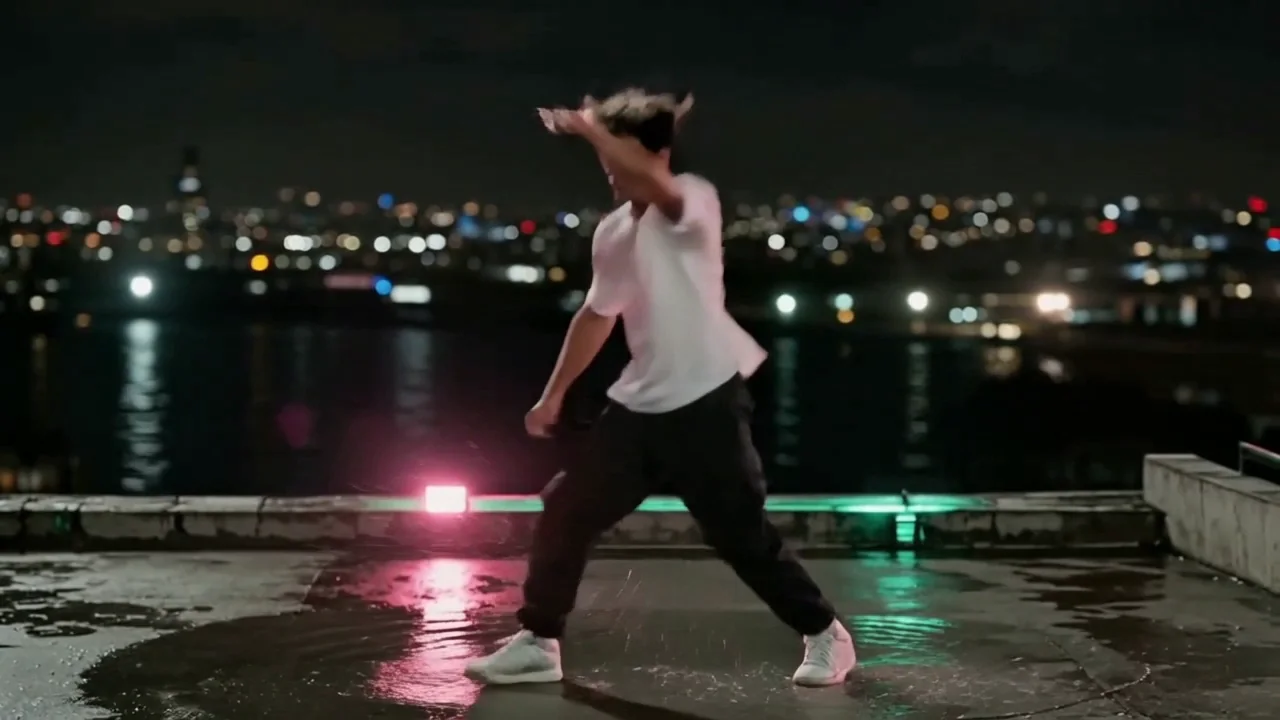
A beat and a freeze
Three ways to run this
- Fastest: open the video composer, add the start frame under Add reference, pick Kling v3 (Kling 3.0 in the model menu) or Seedance 2.5, paste the prompt, and press Generate. The price is on the button.
- Hands-off: tell the NOLGIA Agent the move in plain words and ask it to write the landing, the contact and the beat, and to run it on two models. It renders and shows you both.
- Most control: the API takes the same start frame by asset id and the same prompt, so you can send one frame to several models and keep every job record.
| Job | Use | Why |
|---|---|---|
| A move that must start from a known pose | Start frame in the composer | The clothes, set and light are fixed; only the move is open |
| An acrobatic move | Kling v3 or Seedance 2.5, then check the landing | On our frame both rotated on every roll; Veo 3.1 Fast missed three rolls of four |
| A longer routine | Five second clips, then Extend clip | Drift has less time to build; each piece is checked before the next |
| Drive a still character with a real performance | Kling v3 Motion Control | A reference performance video carries the choreography and timing |
What it costs
Test the move at 5 seconds on Kling v3, or at 480p on Seedance 2.5, and render the keeper once it lands. The price is on the Generate button before you spend anything, and a failed render is refunded.
Kling v3Pro and up
Per 5s clip (audio on by default)
720p 35 credits · 1080p 47 credits · 4K 117 credits
Seedance 2.5Pro and up
Per 5s clip
480p 26 credits · 720p 56 credits · 1080p 137 credits
1080p renders at 16:9 and 9:16
Read live from the catalog when this page loads. Every price is shown before you generate. See every rate.
Where you still regenerate
- The move did not rotate. Some models will not flip from a still. Change the model to Kling v3 or Seedance 2.5 before you change the words.
- A hand saved the landing. Say the hands stay off the floor, and run again.
- A garment lifted mid-move. Say it stays down; check the frames around the landing.
- The face during the flip. A fast move redraws the face; we make no promise about it. Frame wider or cut across it.
Checklist
- The landing is written: feet, knees, weight, rise.
- Every contact is named and told to stay; the hands are told where they go.
- The move has a beat and a freeze, and a count if it rotates.
- One performer, one move, one continuous take, from a start frame.
- Watch the feet first, then the hands, then the clothes, then the face.
Questions and answers
- Does describing the physics change the output?
- Yes. The pairs above are the same frame with one line changed. The written landing, contact and beat each arrived. On Kling v3 the vague lines moved with weight too; the written ones added the order, the planted foot and the freeze. The model still decides whether it can do the move at all.
- Which model is best for a flip?
- Kling v3 or Seedance 2.5. From our frame both rotated a real flip on every roll; Veo 3.1 Fast missed three rolls of four and Seedance 1.5 Pro turned twice. That is one frame and one prompt; test yours before you commit.
- Can I continue a move into a second clip?
- Yes. Open the clip in your Library and press Extend clip. The next clip starts from the last frame of the first.
- Can the same dancer appear in every clip?
- A start frame fixes the clothes, the set and the light for that clip, and a Character carries reference images across clips. We have not measured whether the face holds and we do not promise it.
- Can I copy a real dance?
- Kling v3 Motion Control drives a still character with a reference performance video. It works best at portrait scale; at full body the performer's face does not hold, so check the result.
Write the landing in your next clip
Open the video composerRelated guides
Prompting
Make AI video look real: light, motion and camera
Three sentences make a clip read as filmed: a named light source, a walk with weight, a camera someone is holding. Each tested before and after on Kling v3.
· 8 min read
Prompting
Seven video prompt mistakes, and the fix for each
The seven ways a video prompt goes wrong, each rendered twice on Kling v3: the vague prompt, then the same prompt with one fix. Copy the fixes, and read what a seed does not do.
· 11 min read
Video editing
Put your own character and your dog into any video
Pick a video, add a photo of a person and one of a dog, and Miroge recasts the clip with them: the same moves, the same set, the same camera. Every step, on a computer and a phone.
· 9 min read