

Focal length for AI video: 24mm, 70mm, 135mm and 200mm
Why does AI show your whole body when you ask for a close-up? Because a lens number alone does not set the shot. Here is what focal length changes, how to write it so a video model follows it, and how the NOLGIA reel about it was made, shot by shot.
- 15 min read
This guide follows the NOLGIA project behind a short reel about focal length. Two people in a late-1990s nightclub booth ask why AI ignores close-ups; the reel answers with the same man outside the club at 24mm, 70mm and 135mm, and a 200mm shot from the club door to the bar. It is six Seedance 2.5 clips at 1080p, two character sheets and one image of the club. Every prompt is quoted as it was sent; the only change is that long dashes are typed as hyphens. Everyone in the clips was generated with NOLGIA.
It is two lessons in one: what the millimeters mean, from the video maker's own focal length guide, and how each shot of the reel was built, so you can make it with your own characters.
The reel, shot by shot
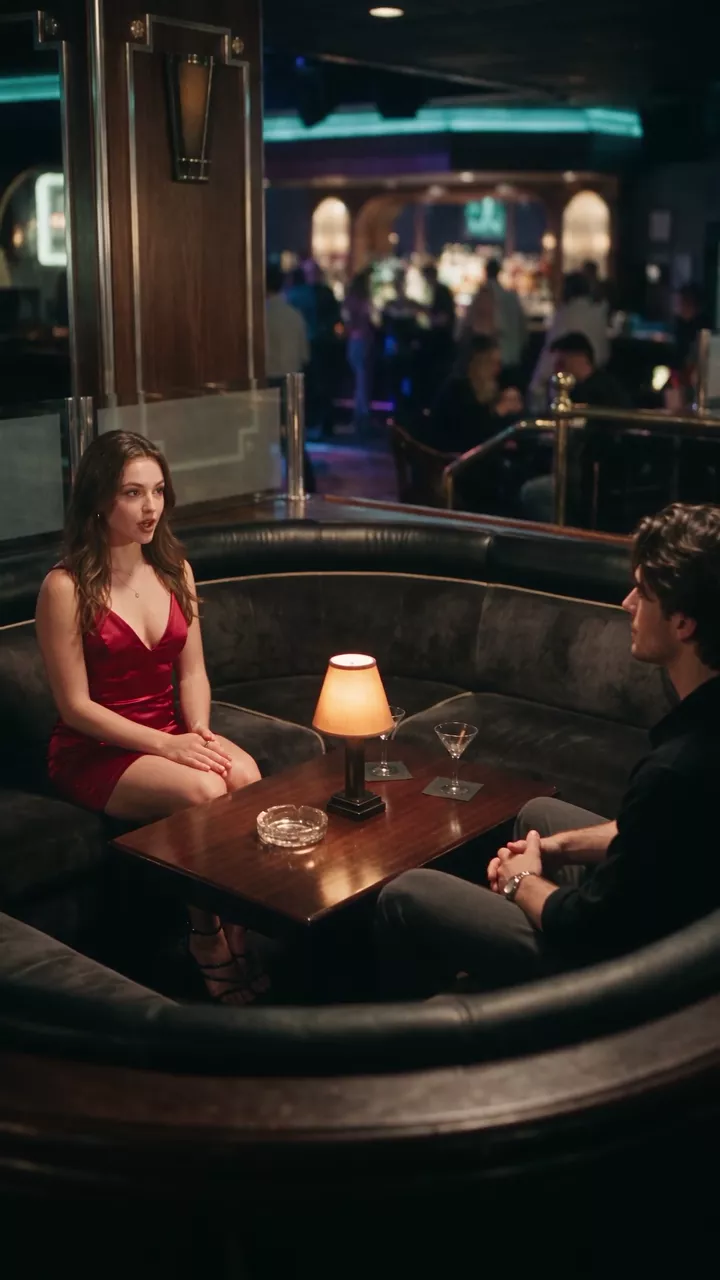
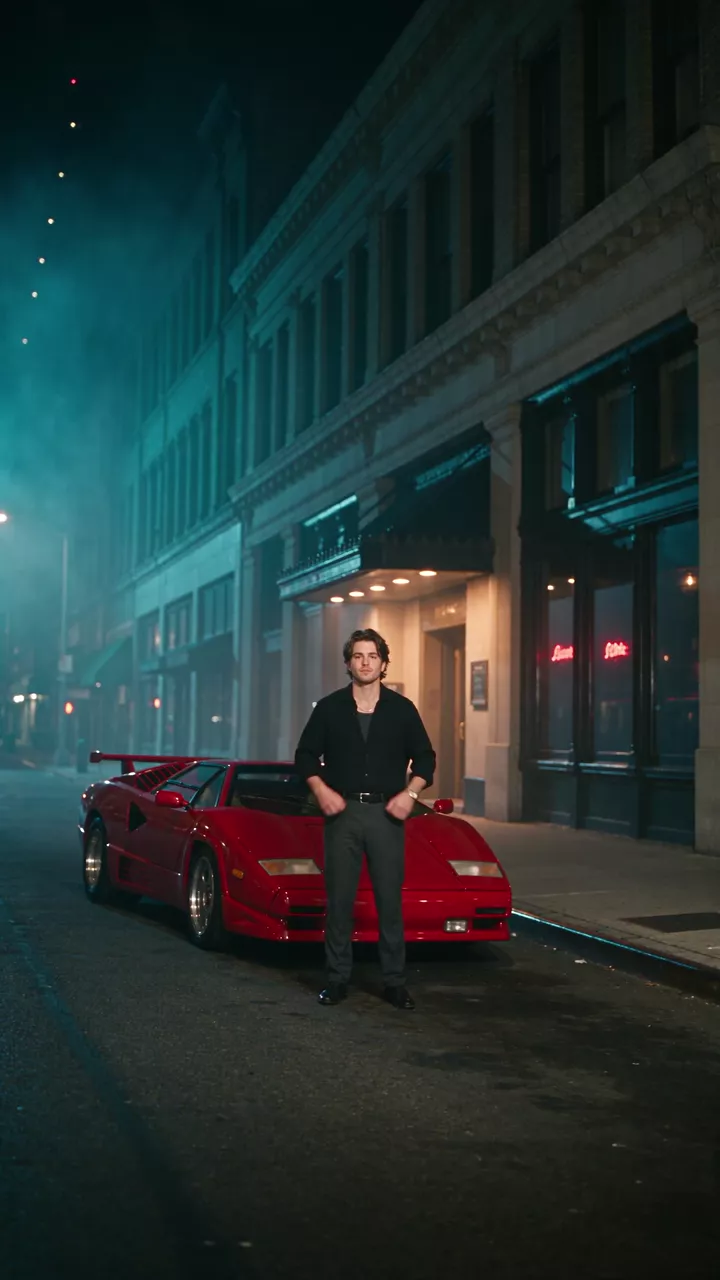
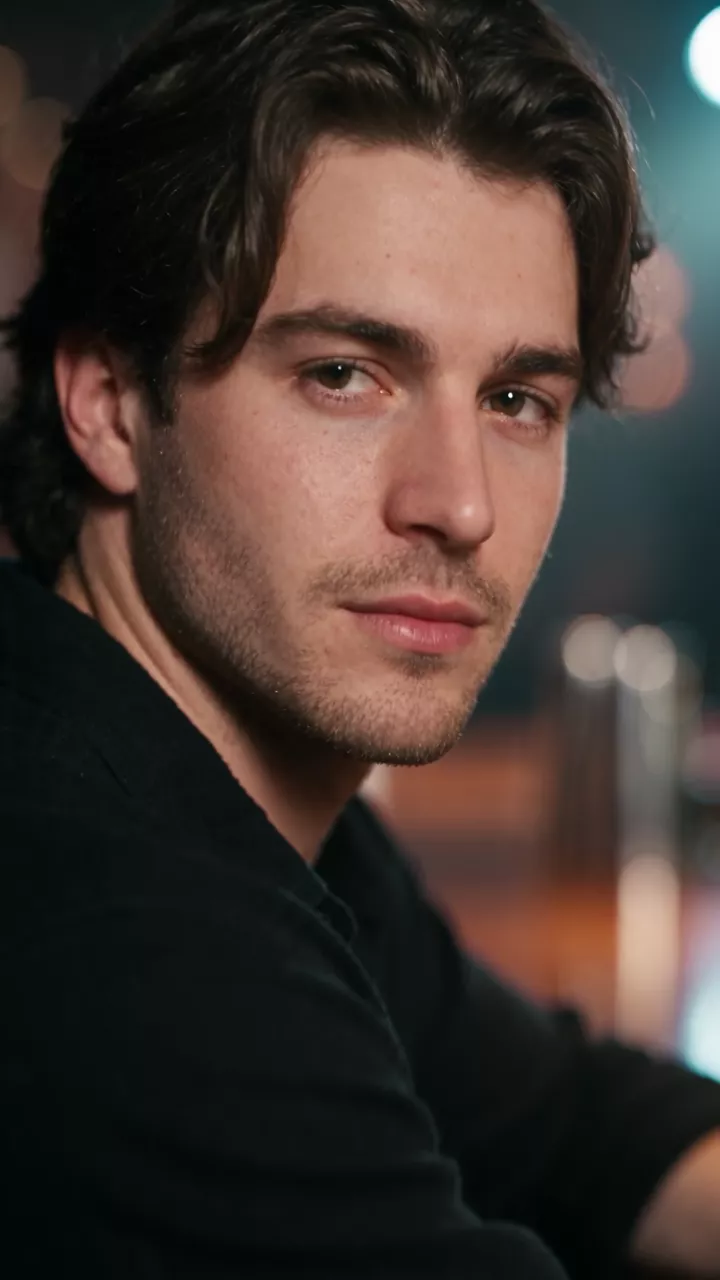
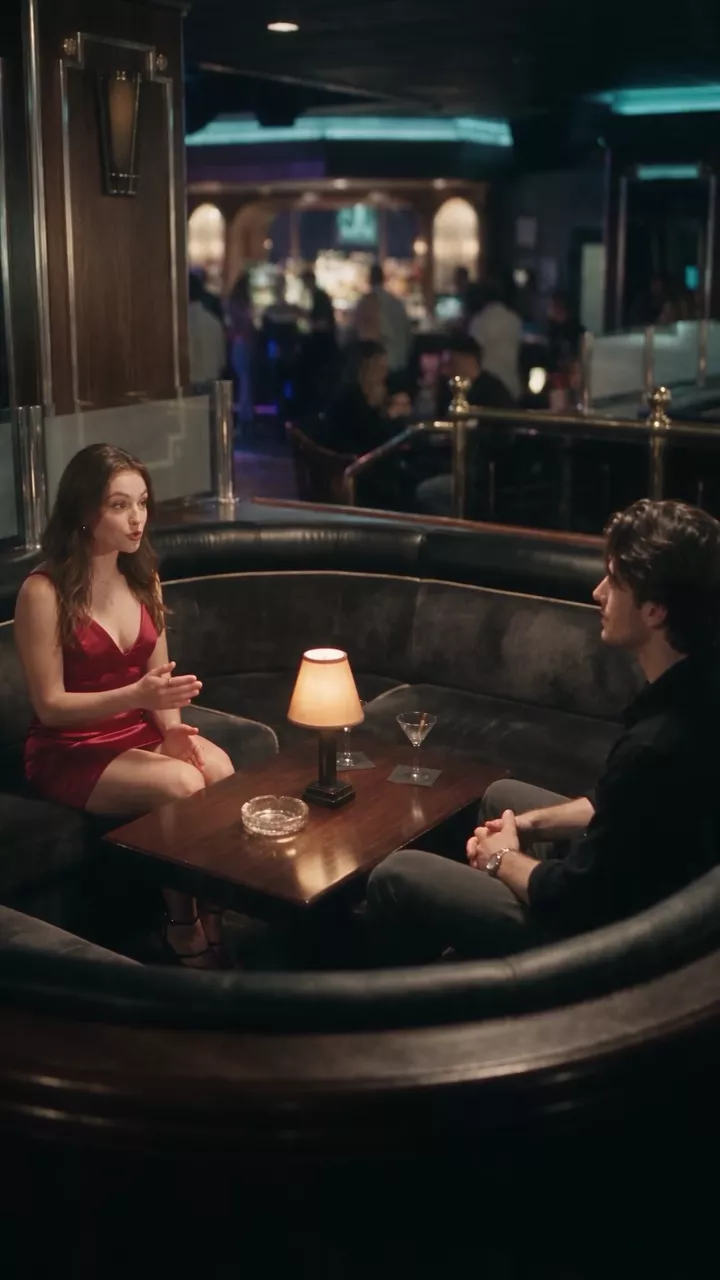
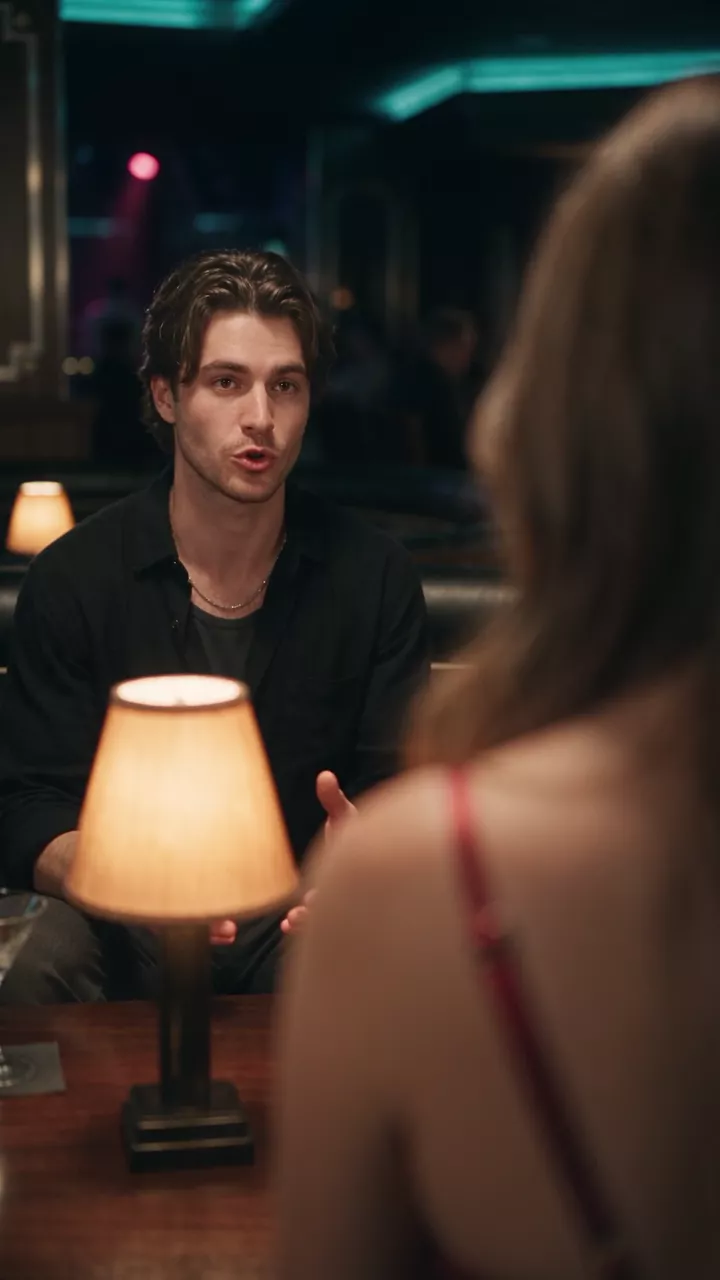
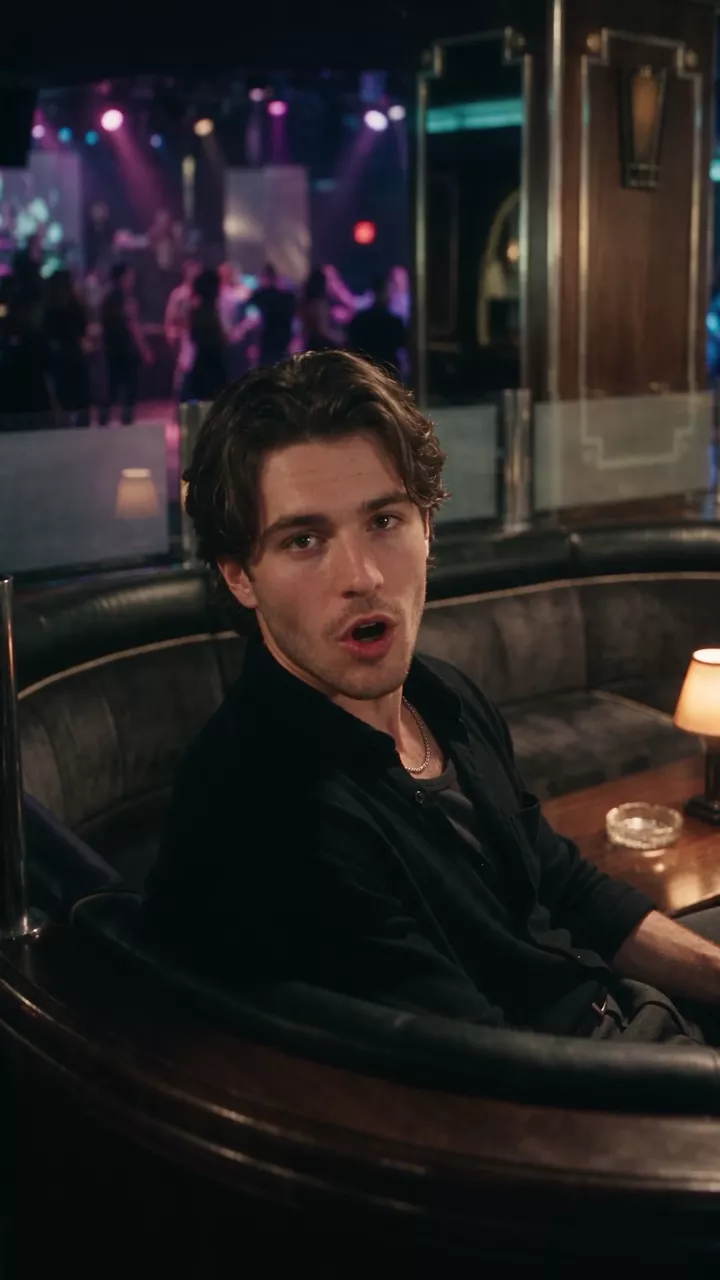
| Shot | What is said or shown | Lens and camera |
|---|---|---|
| 1. The booth | She asks why AI shows her whole body for a close-up; he answers, "Let's get to specifics. We are gonna break down focal length." | A wide two-shot, a slow move in on her, then a fast swing to him |
| 2. Outside the club | The same man at 24mm, 70mm and 135mm | One clip, three timed stages, no camera move |
| 3. The bar | From the door to a close-up of the man at the bar | A crash zoom: 200mm reached during the shot |
| 4. The booth | "Oh! I get it, fewer millimetres, more in shot." | A slow quarter orbit |
| 5. Over her shoulder | "Yes, more millimetres, tighter framing. Moving closer or farther changes it too." | A still over-the-shoulder shot |
| 6. Close | He looks into the lens: "Reply 'knoll' for free guide." | Locked off |
What the millimeters mean
24mm, 70mm, 135mm and 200mm are focal lengths: numbers that describe a lens's field of view. If the camera and the subject stay where they are and the aspect ratio does not change, a shorter focal length shows more of the place, and a longer one gives a tighter frame and makes the subject look larger.
Focal length alone does not set the shot size. You can film a face or a whole body at 135mm; the result also depends on how far the camera is from the subject. This table shows how tall a slice of the scene fills a vertical 9:16 frame at three distances:
| Lens | From 3 m | From 10 m | From 30 m |
|---|---|---|---|
| 24mm | 4.5 m | 15 m | 45 m |
| 70mm | 1.5 m | 5 m | 15 m |
| 135mm | 0.8 m | 2.7 m | 8 m |
| 200mm | 0.54 m | 1.8 m | 5.4 m |
Read it with a person about 1.8 m tall. From 3 m away, a 135mm frames him from the chest up and a 24mm shows him head to toe with plenty of street around him. From 30 m away, the same 135mm still shows him head to toe, at about a fifth of the frame height. That is the answer to the reel's opening question: say how much of the person you want, not only the lens.
Match the lens to the shot
Use the focal length as a visual cue, then say the framing in plain words. These are starting points, not strict rules:
| Focal length | Best used when | Describe the frame as |
|---|---|---|
| 24mm | You want to show the subject within the location | A full-body wide shot with plenty of readable environment around the subject |
| 70mm | The subject, the clothes and the hand gestures all matter | A medium shot from the waist up, with the entire head and both hands visible |
| 135mm | The face and the reaction carry the moment | A close-up from the shoulders up, with the eyes and the expression clearly readable |
| 200mm | You need a tight portrait from far away | A distant camera position, with the head and shoulders filling most of the frame |
Every focal length in this guide is a full-frame equivalent: the number a lens would have on a 35mm full-frame camera. It gives one shared reference for comparing fields of view.
Describe the frame, not just the lens
Writing 135mm lens is not enough. A useful prompt goes in this order:
- The framing: wide, medium, close-up.
- The focal length, as a look: a 135mm full-frame-equivalent lens look.
- What must stay visible: from the shoulders up, keeping the entire head visible.
- The action: one simple thing, like a look toward the camera and a small smile.
- The camera move: restrained handheld, no zoom.
Close-up with a 135mm full-frame-equivalent lens look.
Frame the subject from the shoulders up, keeping the entire head visible. The subject looks toward the camera with a subtle smile. Restrained handheld movement. No zoom.
Watch for this:A visual cue, not a guarantee. In AI video, a focal length is a cue, not a promise that the model reproduces the optics of a real lens. Judge the result by the picture: how large the subject is, how much of the place stays visible, and whether the reaction reads.
Four blocks to paste
Pick one block and add it to your scene. Describe the character, the place, the light, the aspect ratio and the length separately.
Wide shot with a 24mm full-frame-equivalent lens look.
Show the subject from head to toe, with generous space around them and a clearly readable environment. Keep the subject away from the extreme frame edges.
The subject takes one relaxed step and looks across the location. Restrained handheld movement from a fixed camera position. No zoom or camera travel.
Medium shot with a 70mm full-frame-equivalent lens look.
Frame the subject from the waist up, keeping the entire head and both hands visible. Show a limited portion of the environment.
The subject briefly adjusts their sleeve, then looks toward the camera. Restrained handheld movement from a fixed camera position. No zoom or camera travel.
Close-up with a 135mm full-frame-equivalent lens look.
Frame the subject from the shoulders up, keeping the entire head visible. Make the eyes and facial expression clearly readable.
The subject turns slightly toward the camera and gives a restrained, knowing smile. Subtle breathing and natural blinking. Restrained handheld movement from a fixed camera position. No zoom or camera travel.
Close-up from a distant camera position, with a 200mm full-frame-equivalent telephoto lens look. The subject's head and shoulders fill most of the frame.
The subject pauses their work and looks toward the camera. Keep the eyes sharp and the expression natural. Restrained handheld movement from the same distant position.
No zoom or forward camera travel.
Use 24mm when the place is part of the story, 70mm when the viewer needs both the expression and the hands, 135mm when a look or a small smile carries the meaning, and 200mm when the camera watches from across a courtyard, a street or a big room.
Make the 24, 70, 135 comparison
The heart of the reel is one 18 second Seedance 2.5 clip with three timed stages: 24mm from 0 to 6 seconds, 70mm from 6 to 12, 135mm from 12 to 18. The man stays on the same spot by the red Lamborghini, and the prompt asks for each change to "feel like real camera/lens changes" with no digital zoom.
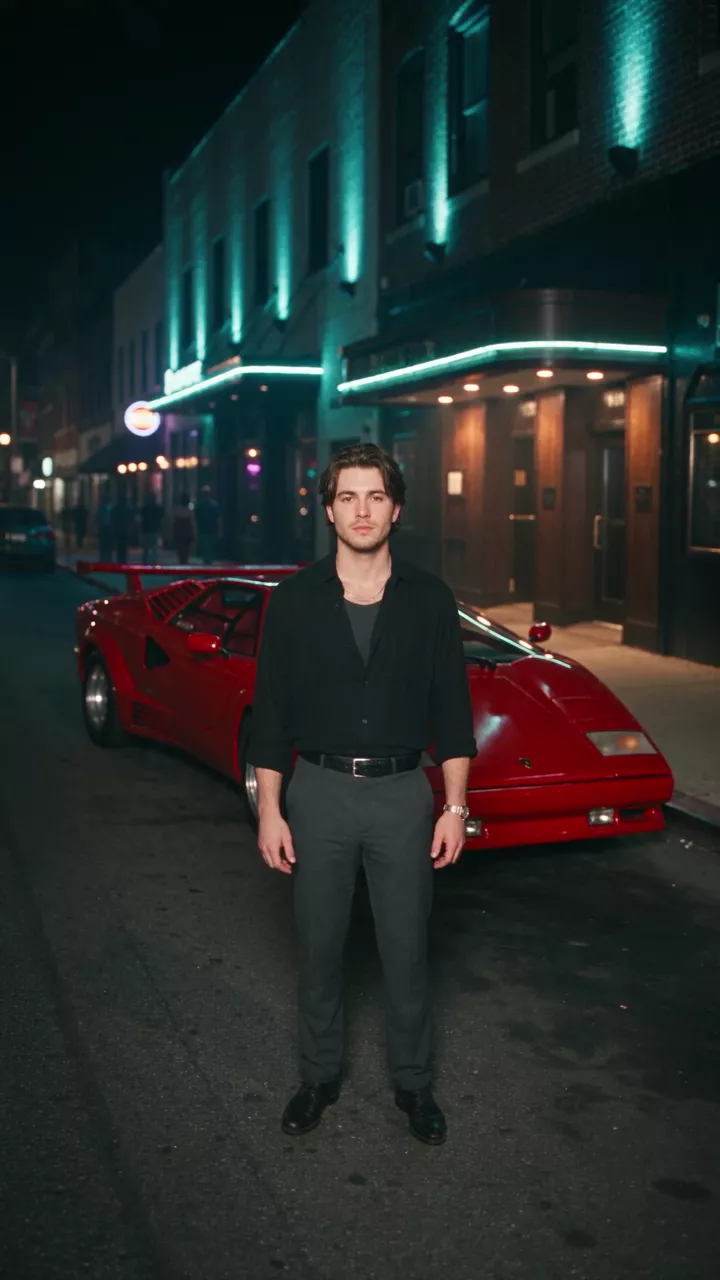
The fix was to give the wide stage a distance and a size, not just a lens: "Place the camera VERY FAR from the man, approximately 25-35 meters away", and "He should occupy approximately 8-12% of the total frame height." Two 5 second tests of the wide street shot came before the first 18 second run.
SEEDANCE 2.5 - 18 SECOND VIDEO - 9:16 VERTICAL

Use the uploaded male character reference as the STRICT identity reference.

Preserve his exact face, hairstyle, facial structure, body proportions, clothing, accessories and overall appearance throughout the entire video.

The character remains in the SAME physical location throughout all three focal-length stages.

CONCEPT:

A stylish late-1990s American nightclub exterior at night.

The man stands outside the nightclub, confidently facing the camera while naturally posing.

He does NOT speak.

He maintains a generally straight, front-facing body orientation toward the camera, but behaves like a real person casually posing: subtle posture changes, natural hand movements, fixing his collar, briefly putting a hand into his pocket, shifting his weight, glancing to the side and naturally returning his eyes to camera.

These movements must remain subtle, relaxed and masculine.

He should NEVER look frozen or mannequin-like.

Behind him is an authentic late-1990s nightclub exterior with a period-correct RED LAMBORGHINI parked behind him.

The Lamborghini has authentic late-1990s styling, glossy red paint and realistic period-correct details.

--------------------------------------------------
0-6 SECONDS - 24MM EXTREME WIDE
--------------------------------------------------

IMPORTANT: THIS SHOT MUST BE MUCH FARTHER AWAY THAN THE PREVIOUS VERSION.

Use a TRUE 24MM ENVIRONMENTAL WIDE SHOT.

Place the camera VERY FAR from the man, approximately 25-35 meters away.

The man should appear SMALL within the 9:16 vertical frame.

He should occupy approximately 8-12% of the total frame height.

The environment must dominate the composition.

Show a LARGE amount of:

nightclub facade,
street,
sidewalk,
nightclub entrance,
parked Lamborghini,
surrounding architecture,
streetlights,
distant background,
nighttime atmosphere.

The man should feel like a person standing within a large environment, NOT like a portrait subject.

He remains approximately centered but has substantial negative space around him.

The camera remains stationary or has only extremely subtle natural operator movement.

DO NOT push toward him.

DO NOT zoom.

DO NOT crop in.

DO NOT track tightly.

This should feel like the same distant environmental scale as the 24MM reference, but pushed even farther.

During these six seconds, the man naturally poses while remaining small in the frame.

For example:

He begins with both hands relaxed.

He subtly shifts his weight.

He casually places one hand into his trouser pocket.

He briefly adjusts his jacket/collar with the other hand.

He returns to a relaxed stance.

He looks directly at the camera, briefly glances toward the side, then naturally returns his gaze to the camera.

All movements are slow, subtle and believable.

His body remains generally facing the camera.

He does NOT walk.

He does NOT turn his body away.

--------------------------------------------------
6-12 SECONDS - 70MM MEDIUM
--------------------------------------------------

At exactly 6 seconds, transition to the 70MM MEDIUM SHOT.

Keep the character in EXACTLY the same physical location.

Match the 70MM reference framing from the previous version.

Frame approximately from the waist/chest upward.

The man is now substantially larger in frame.

The nightclub remains visible behind him but is more compressed.

The red Lamborghini remains recognizable in the background.

The man continues naturally posing.

He may:

casually put one hand in his pocket,
adjust his collar,
briefly straighten his shirt,
shift his shoulders slightly,
look briefly toward one side,
then return his eyes directly to camera.

Keep the body generally facing straight toward camera.

These actions should flow naturally into each other rather than feeling like separate poses.

His facial expression gradually becomes more confident and relaxed.

A very subtle smile begins to develop.

Natural blinking.
Natural breathing.
Natural eye movement.
Subtle facial muscle movement.

No dialogue.

Do NOT make him perform exaggerated fashion-model poses.

--------------------------------------------------
12-18 SECONDS - 135MM CLOSE-UP
--------------------------------------------------

At exactly 12 seconds, transition to the 135MM CLOSE-UP.

Match the 135MM reference framing from the previous version.

The man's face becomes the dominant element of the vertical frame.

Frame approximately from the upper chest/shoulders upward.

The nightclub becomes heavily compressed and softly blurred.

The red Lamborghini becomes a soft red shape in the background.

Club lights become beautiful soft bokeh.

The man maintains direct eye contact most of the time.

He develops a natural, subtle confident smile.

He can briefly glance slightly to the side, then return his eyes to the camera.

He may make one tiny collar adjustment or subtle shoulder movement if naturally motivated, but keep the close-up primarily focused on his face.

The final expression should feel charismatic, relaxed and confident.

NOT a huge smile.
NOT a laugh.
NOT exaggerated.

Focus intensely on realistic facial performance:

subtle eye movement,
natural blinking,
tiny eyebrow movement,
natural cheek movement,
subtle lip movement,
realistic facial muscle movement,
natural skin deformation while smiling.

--------------------------------------------------
REALISTIC SKIN - CRITICAL
--------------------------------------------------

The 135MM close-up must reveal REALISTIC HUMAN SKIN.

Visible natural pores.
Fine facial hairs.
Peach fuzz.
Subtle blemishes.
Natural under-eye texture.
Realistic lips.
Individual eyelashes.
Tiny variations in skin tone.
Natural skin translucency.
Realistic texture around the nose, cheeks and forehead.

Do NOT smooth or beautify the skin.

Do NOT use plastic AI skin.

Do NOT airbrush.

Do NOT sharpen the pores artificially.

The skin should look like an extremely high-quality real 35mm photographic close-up of an actual human being.

When the man smiles, the skin around his eyes, cheeks and mouth should move naturally.

--------------------------------------------------
LENS / FRAMING ACCURACY
--------------------------------------------------

24MM:
EXTREMELY FAR.
True environmental wide shot.
Man very small.
Approximately 8-12% of frame height.
Large amount of environment.
Lamborghini clearly visible.
Minimal compression.

70MM:
MEDIUM SHOT.
Man significantly larger.
Waist/chest-up framing.
Less environment.
More background compression.
Lamborghini still recognizable.

135MM:
CLOSE-UP.
Face dominates frame.
Upper chest/shoulders visible.
Very little environment.
Strong background compression.
Nightclub lights become soft bokeh.
Lamborghini becomes a soft red background element.

The three stages must feel like genuinely different focal lengths.

Do NOT simulate them with simple digital cropping.

--------------------------------------------------
CAMERA TRANSITIONS
--------------------------------------------------

24MM → 70MM at exactly 6 seconds.

70MM → 135MM at exactly 12 seconds.

The transitions should feel like real camera/lens changes while preserving the man's physical position.

Do NOT digitally zoom.

Do NOT change the location.

Do NOT move the character forward.

Do NOT change his wardrobe.

--------------------------------------------------
VISUAL AESTHETIC
--------------------------------------------------

Authentic late-1990s American nightlife.

Premium realistic commercial photography.

Cool cyan-blue and blue-green environmental lighting.
Warm amber nightclub entrance lighting.
Deep charcoal blacks.
Subtle red and magenta nightlife accents.
Warm natural skin.
Glossy red Lamborghini.
Slightly desaturated color palette.
Soft highlights.
Gentle contrast.
Subtle nighttime atmospheric haze.

Authentic 35mm photographic rendering.
Fine organic film grain.
Gentle analog softness.
Subtle highlight halation.
Realistic optical depth of field.
Physically believable nighttime lighting.

The overall image should feel like a premium late-1990s nightlife editorial brought to life.

NO dialogue.
NO subtitles.
NO captions.
NO text.
NO logos.
NO watermarks.
NO modern cars.
NO modern nightclub design.
NO smartphones.
NO LED screens.
NO exaggerated posing.
NO mannequin-like stillness.

FINAL STRUCTURE:

0-6 sec:
24MM - EXTREMELY FAR environmental wide - man very small in frame - subtle confident posing.

6-12 sec:
70MM - MEDIUM - natural body movement - subtle confident smile.

12-18 sec:
135MM - CLOSE-UP - realistic skin texture - natural facial expressions - confident subtle smile - direct eye contact.

The character remains confident, relaxed and naturally alive throughout all three focal lengths.
Tip:Time the stages, don't cut. One clip with "At exactly 6 seconds, transition to the 70MM MEDIUM SHOT" keeps the light, the man and the street identical across all three lenses, which three separate clips would have to fight for.
This prompt makes a reel, not a lab test. It moves the camera far back for 24mm and then asks for a waist-up 70mm and a shoulders-up 135mm, which no real lens would give from 30 m (see the table above). For a strict comparison, keep everything but the lens fixed:
| Keep it the same | Why |
|---|---|
| The subject and the place | So changes in content don't affect the comparison |
| The camera and subject positions | So the viewpoint stays the same |
| The camera height and viewing direction | So an angle change isn't mistaken for a focal length change |
| The light and the aspect ratio | So the exposure, composition and proportions stay the same |
Keep the camera position, camera height, viewing direction and subject position identical across all three shots.
Use the same sensor format and aspect ratio.
Change only the focal length: 24mm, 70mm, then 135mm.
Allow the framing to become progressively tighter.
Do not move the camera or subject to compensate.
Watch for this:Don't ask for the same size. In a true comparison the subject gets larger at every step, so never ask the model to keep the subject the same size. For more control, make three matched reference images first, check the compositions, then animate each one, with only small movement so it doesn't distract from the lens.
The 200mm shot: from the door to the bar
The 200mm shot is built on distance. A hand opens the club door; far inside, a bartender pours a drink for the man at the bar, and he is "TINY in the frame", about 2 to 4% of its height. Then the view rushes in to a 200mm close-up, and only then does he notice the camera, turn and nod. The prompt times every beat:
- 0 to 1 second: the hand grabs the handle and the door opens.
- 1 to 2.2 seconds: the bartender pours; the man is tiny and unaware.
- 2.2 to 2.8 seconds: he picks up the drink.
- 2.8 to 4.8 seconds: the 200mm telephoto rush, from a tiny figure to a close-up.
- Then: he notices the camera, turns and gives one small nod.
SEEDANCE 2.5 - 6 SECOND VIDEO - 9:16 VERTICAL

Use the uploaded male character reference as the STRICT identity reference.
Preserve his exact face, hairstyle, facial structure, body proportions, wardrobe and appearance.

CORE CONCEPT:

A 200MM CLOSE-UP FROM AN EXTREME DISTANCE.

The camera begins OUTSIDE a late-1990s nightclub.

A person's hand opens the nightclub door.

The door reveals an extremely deep nightclub interior.

At the VERY FAR END of the club, the male character is sitting at the drink counter.

He is extremely small in the opening frame.

A BARTENDER IS ALREADY POURING HIS DRINK as soon as the door opens.

The man is naturally focused on the bartender and his drink, completely unaware of the camera.

The camera then rapidly telephoto-zooms from this enormous distance toward him.

As the camera approaches, he naturally notices the camera, turns his head toward it, makes eye contact and gives one subtle confident nod.

ONE CONTINUOUS SHOT.
NO CUT.

--------------------------------------------------
0.0-1.0 SEC - HAND OPENS THE DOOR
--------------------------------------------------

Start OUTSIDE the nightclub entrance.

The nightclub door is in the foreground.

A person's hand reaches into frame and naturally grabs the door handle.

The hand opens the door.

The door swings open naturally.

IMPORTANT:

The nightclub interior must NOT already be fully visible.

The first visual action is:

HAND GRABS DOOR
→ DOOR OPENS
→ CLUB INTERIOR REVEALED.

As the door opens, the camera looks DEEP into the nightclub.

--------------------------------------------------
1.0-2.2 SEC - BARTENDER POURS HIS DRINK
--------------------------------------------------

The opening door reveals a VERY LARGE, DEEP nightclub interior.

The camera is still outside.

The male character is sitting AT THE VERY FAR END of the nightclub at the drink counter.

He is TINY in the frame.

He should occupy only approximately 2-4% of the total vertical frame height.

There must be a HUGE amount of physical space between camera and character.

Show multiple layers of depth:

foreground doorway,
door frame,
nearby patrons,
tables,
chairs,
club architecture,
midground crowd,
bar patrons,
waitstaff,
more nightclub space,
FAR BACK DRINK COUNTER,
male character.

The club must feel long and deep.

At the far drink counter:

THE BARTENDER IS ACTIVELY POURING WHISKEY INTO THE MAN'S GLASS.

This action must be clearly visible even though they are very far away.

The bartender stands directly in front of him behind the counter.

The whiskey is visibly being poured from a bottle into a short whiskey glass.

The man is sitting naturally and watching the bartender pour.

He is NOT looking toward the camera.

He is NOT posing.

He is NOT aware of the camera.

The surrounding crowd continues behaving naturally.

People are talking, drinking and moving around the bar.

--------------------------------------------------
2.2-2.8 SEC - HE PICKS UP THE DRINK
--------------------------------------------------

The bartender finishes pouring.

The man naturally reaches forward and picks up the freshly poured whiskey glass.

He looks at the drink or briefly toward the bartender.

He remains relaxed.

He still has NO awareness of the camera.

His body remains oriented toward the bar.

--------------------------------------------------
2.8-4.8 SEC - MASSIVE 200MM TELEPHOTO WHOOSH
--------------------------------------------------

NOW begin the dramatic telephoto movement.

The camera rapidly moves/zooms from the EXTREME DISTANCE toward the man.

The character goes from:

TINY FIGURE AT THE FAR END OF THE CLUB

to:

LARGE 200MM TELEPHOTO CLOSE-UP.

The enormous physical distance must be visually obvious.

As the camera rapidly approaches:

foreground doorway elements,
people,
tables,
bar patrons,
lights
and nightclub architecture

create layered natural motion blur and compression.

The crowd becomes increasingly compressed.

The nightclub background progressively collapses into shallow depth of field.

This should feel like an extremely powerful long-lens 200MM camera bringing a distant subject into close view.

NOT a digital crop.

NOT a simple image enlargement.

NOT a CGI tunnel.

NOT teleportation.

Do not distort or morph the character's face.

--------------------------------------------------
CHARACTER REACTION DURING THE ZOOM
--------------------------------------------------

The man does NOT look toward the camera at the beginning.

Only when the camera gets close enough does he notice it.

While still holding the whiskey glass:

he naturally turns his HEAD toward camera.

His BODY remains mostly oriented toward the bar.

His head turns gradually and naturally.

His eyes find the camera.

The reaction should happen organically:

drinking
→ notices something
→ turns head
→ sees camera
→ makes eye contact.

No sudden snap.

No exaggerated acting.

--------------------------------------------------
4.8-6.0 SEC - 200MM CLOSE-UP
--------------------------------------------------

Land on a TRUE 200MM TELEPHOTO CLOSE-UP.

Frame approximately upper chest/shoulders to top of head.

The man's face dominates the 9:16 frame.

He is still holding the whiskey glass naturally.

His body remains slightly turned toward the bar.

His head is turned toward camera.

He looks directly into the lens.

He gives ONE subtle, confident nod.

Then holds a calm, confident expression.

The nod should communicate quiet acknowledgment.

No exaggerated smile.

No speaking.

No dramatic head movement.

--------------------------------------------------
FINAL 200MM LOOK
--------------------------------------------------

The final shot must genuinely look like a 200MM telephoto lens.

Strong background compression.
Extremely shallow depth of field.
Minimal perspective distortion.
Natural facial proportions.
Compressed nightclub crowd.
Soft amber and cyan nightclub bokeh.

The character should look like he has been photographed from a very large distance using a powerful telephoto lens.

--------------------------------------------------
SKIN REALISM - CRITICAL
--------------------------------------------------

The final close-up must reveal extremely realistic human skin:

visible pores,
fine peach fuzz,
individual facial hairs,
subtle blemishes,
natural under-eye texture,
realistic lips,
individual eyelashes,
natural skin-tone variation,
realistic facial movement.

No plastic AI skin.
No beauty filter.
No airbrushing.
No excessive smoothing.

--------------------------------------------------
NIGHTCLUB ENVIRONMENT
--------------------------------------------------

Authentic late-1990s upscale American nightclub.

Very deep interior.

Busy crowd.

Male character seated at the FAR BACK drink counter.

Dark wood.
Black leather.
Chrome.
Smoked glass.
Warm amber bar lights.
Cool cyan-blue ambient lighting.
Subtle blue-green shadows.
Muted red/magenta accents.
Atmospheric haze.

All people, clothing and styling should feel authentically late-1990s.

--------------------------------------------------
EXACT ACTION ORDER - DO NOT CHANGE
--------------------------------------------------

1. CAMERA OUTSIDE NIGHTCLUB.
2. HAND GRABS CLUB DOOR.
3. HAND OPENS DOOR.
4. DEEP CLUB INTERIOR IS REVEALED.
5. MALE CHARACTER IS TINY AT THE VERY FAR END OF THE CLUB.
6. BARTENDER IS ACTIVELY POURING WHISKEY FOR HIM.
7. MAN WATCHES BARTENDER POUR.
8. BARTENDER FINISHES.
9. MAN PICKS UP HIS WHISKEY GLASS.
10. CAMERA RAPIDLY TELEPHOTO-ZOOMS FROM EXTREME DISTANCE.
11. MAN NATURALLY NOTICES CAMERA.
12. MAN TURNS HIS HEAD TOWARD CAMERA.
13. EYES MEET CAMERA.
14. CAMERA LANDS ON 200MM CLOSE-UP.
15. MAN GIVES ONE SUBTLE CONFIDENT NOD.

ONE CONTINUOUS SHOT.

NO CUTS.
NO DIALOGUE.
NO SUBTITLES.
NO TEXT.
NO LOGOS.
NO WATERMARKS.

The opening must make the viewer feel that they are standing OUTSIDE the club and looking an enormous distance through the entire nightclub to discover the man sitting at the bar, while the bartender is visibly pouring his drink. Camera: a fast crash zoom in on the subject from a fixed position, the lens snapping from wide to a tight close-up.
Watch for this:This is a zoom, not a 200mm shot. The clip ends at a 200mm look, but it gets there by changing the focal length during the shot: its last sentence is the Camera move pick Zoom in at Strong, "a fast crash zoom in on the subject from a fixed position". A 200mm shot proper starts and stays tight from far away; use the 200mm block above for that.
Make the two characters and the club first
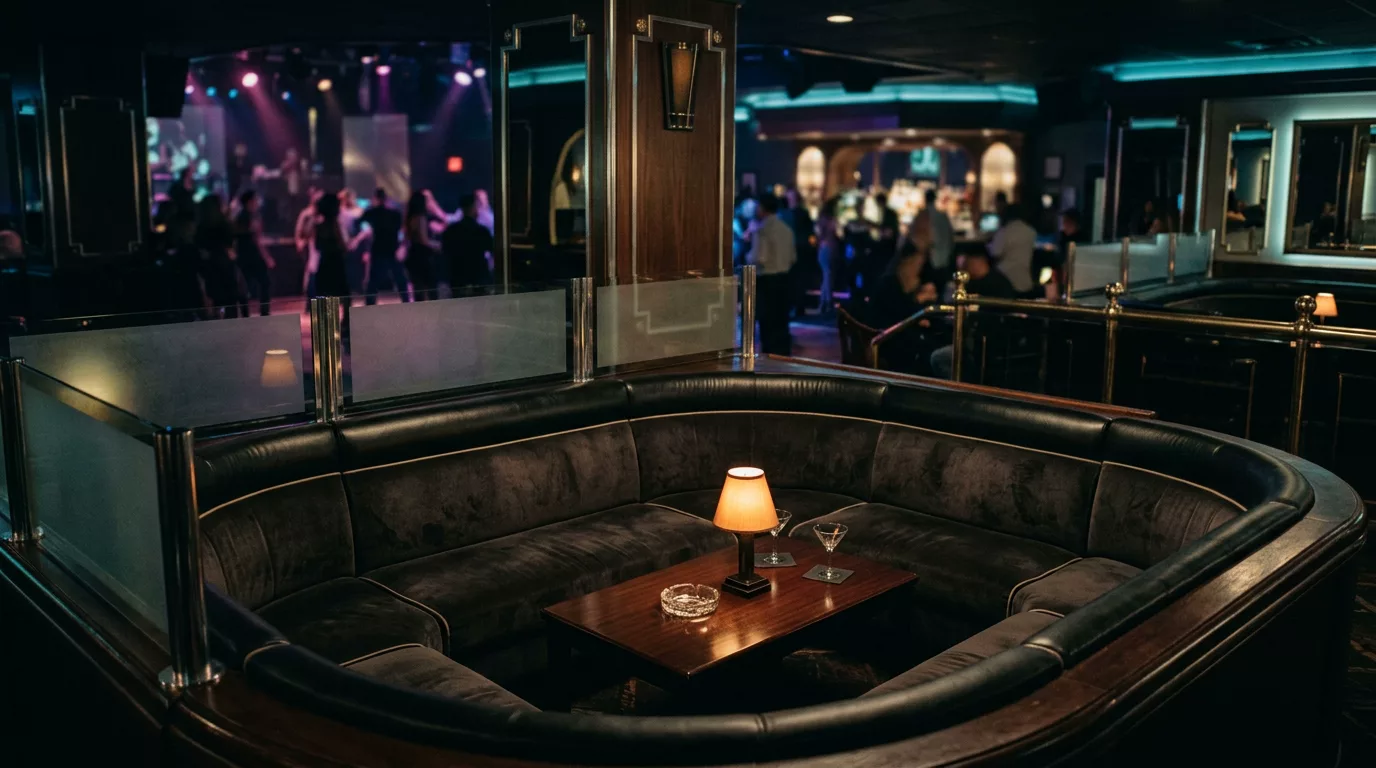
The clips draw on three images: a character sheet for each of the two people and a still of the club, all made with Nano Banana 2. They go into the video composer under Reference images, and the prompts name them: "@Image 1 = exact male character reference. @Image 2 = exact female character reference. @Image 3 = exact nightclub location reference."
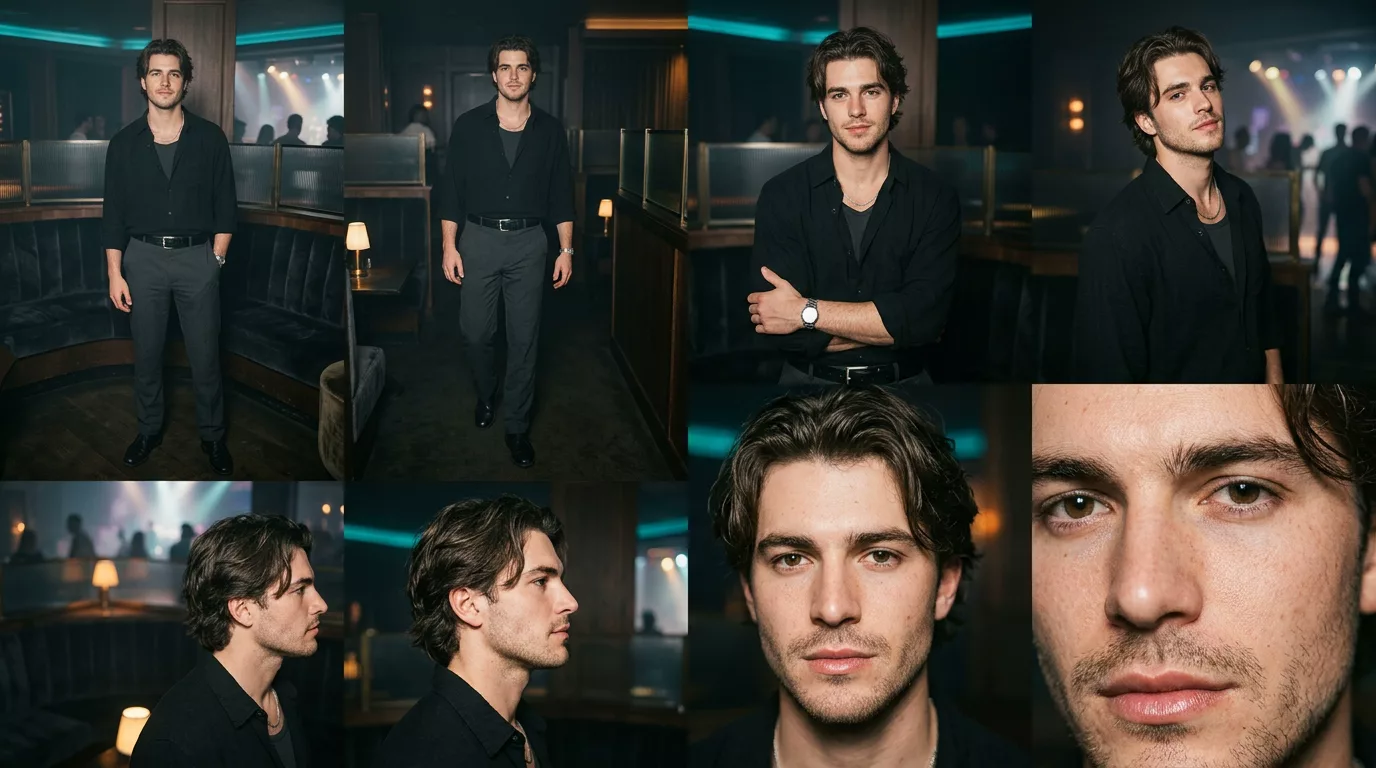
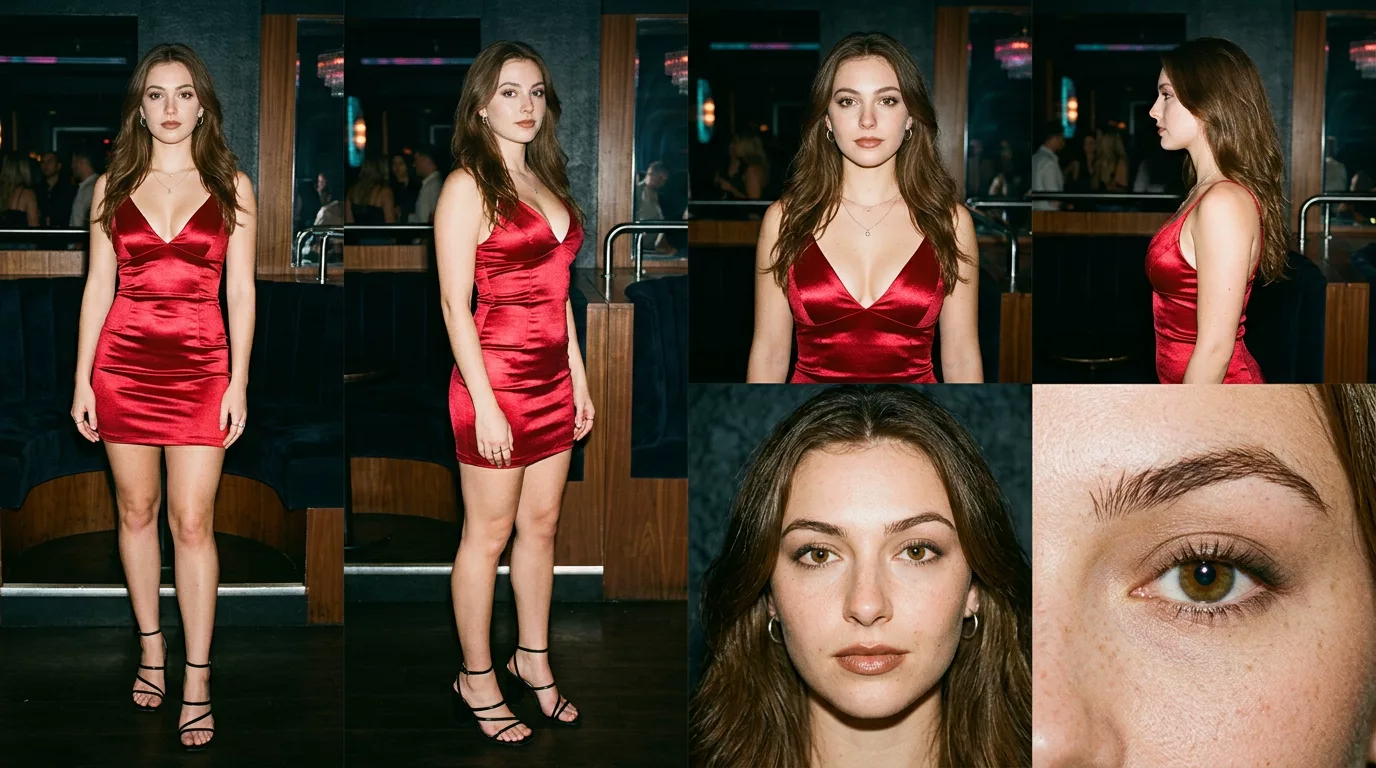
Create a highly realistic photographic character sheet of a handsome white American man, approximately 21-23 years old, designed as a recurring main character for a late-1990s nightclub film.

He should look like a real young American man from approximately 1998-1999 - naturally handsome, stylish and confident, but not like a modern model dressed in vintage clothing.

FACE:
Strong but realistic facial structure, expressive brown eyes, natural eyebrows, defined cheekbones, realistic nose and lips, subtle facial asymmetry and a relaxed confident expression. Slight natural facial imperfections.

SKIN:
Extremely realistic human skin texture: visible pores, fine peach fuzz, subtle blemishes, natural under-eye texture, realistic lips, individual facial hairs and believable skin translucency. No plastic AI skin, no beauty filter, no airbrushed appearance.

HAIR:
Medium-length dark brown hair with an authentic late-1990s hairstyle: naturally thick, slightly layered, softly tousled with subtle volume and imperfect individual strands. Period-correct without becoming exaggerated.

FACIAL HAIR:
Very subtle late-90s stubble along the jaw and upper lip, naturally uneven and realistic.

WARDROBE:
Authentic late-1990s upscale club fashion: relaxed black button-up shirt worn slightly open at the collar, fitted but not skinny dark charcoal trousers, black leather belt and polished black leather shoes.

Add a simple silver chain necklace and understated silver watch.

The clothing should feel expensive and fashionable for 1998-1999 without looking like modern streetwear.

BODY:
Natural lean athletic build with realistic proportions, broad but believable shoulders and relaxed posture. No exaggerated muscularity.

CHARACTER PRESENCE:
Calm, confident, slightly mysterious and effortlessly cool. He should feel like someone who naturally belongs in an upscale late-90s nightclub.

ENVIRONMENT:
Place him in a private seating area inside an authentic late-1990s American nightclub: dark velvet booth seating, small low table, dark wood, smoked glass, chrome details, dim club lighting, subtle cyan/blue practical lights and warm amber highlights, with an indistinct dance floor and blurred clubgoers far behind him.

The space must feel PRIVATE while clearly being part of a real nightclub.

PHOTOGRAPHIC STYLE:
Premium realistic photographic aesthetic with cool cyan-blue and muted green environmental tones contrasted against warm natural skin and subtle amber practical lighting.

Slightly desaturated colors, soft highlights, gentle contrast, atmospheric haze and realistic depth of field.

Authentic late-1990s nightlife photography shot on 35mm film. Fine organic film grain, subtle analog softness, realistic halation around lights and natural photographic imperfections.

CHARACTER SHEET:
Show the EXACT SAME MAN in:

1. Full-body front view
2. Full-body 3/4 view
3. Waist-up front portrait
4. Waist-up 3/4 portrait
5. Side profile
6. Tight facial close-up
7. Extreme facial close-up showing realistic pores, peach fuzz, facial hair, eyelashes and natural skin texture

Maintain EXACT facial identity, hairstyle, age, body proportions, wardrobe, accessories and skin tone across every view.

No modern clothing, modern hairstyle, modern grooming, influencer aesthetic, plastic skin, CGI appearance, excessive retouching, logos, text or watermarks.
Create a highly realistic photographic establishing image of an upscale late-1990s American nightclub, specifically a private VIP seating area inside the club.

The location should feel like an authentic 1998-1999 nightclub - sophisticated, slightly dark, intimate and expensive, NOT a modern nightclub designed to look retro.

COMPOSITION:
A spacious private booth area occupies the foreground and middle ground. Large curved dark charcoal/black velvet banquettes wrap around a low dark wooden table. Several empty booth sections extend naturally through the space.

The camera is positioned at approximately seated eye level, looking diagonally across the private seating area. Leave enough open space in the main booth for two people to sit naturally later.

The VIP area should feel secluded but still visually connected to the nightclub behind it.

BACKGROUND:
Behind the private booths, show a larger nightclub environment with a distant dance floor and bar area. Only a few indistinct clubgoers are visible in the background, heavily blurred by shallow depth of field.

Include subtle late-1990s nightclub details:
dark wood paneling,
smoked glass,
brushed chrome,
black leather and velvet,
small table lamps,
frosted glass partitions,
mirrored surfaces,
period-correct bar furniture,
subtle decorative wall panels,
dim practical lighting.

No modern LED screens, no contemporary furniture, no modern architectural details.

LIGHTING:
The nightclub is primarily illuminated by practical light sources.

Cool cyan-blue ambient lighting runs subtly along architectural edges and ceiling details.

Warm amber table lamps and small tungsten practicals illuminate the booths.

Very subtle magenta/purple nightclub light can appear deep in the background around the dance floor.

The lighting must feel sophisticated and atmospheric rather than colorful or neon-heavy.

Create beautiful pools of warm light on the seating while the surrounding environment falls into cool cyan-green shadows.

COLOR PALETTE - CRITICAL:
Premium cinematic photographic color treatment:

deep charcoal black,
dark espresso brown,
muted cyan,
cool blue-green,
soft teal,
warm amber,
subtle muted magenta in the distant background.

The environment should be slightly desaturated overall.

Keep the blacks rich but retain visible detail.
Keep cyan lighting subtle and sophisticated.
Warm amber practical lights should create contrast against the cool environment.

Do NOT use exaggerated neon colors.
Do NOT make everything blue.
Do NOT use modern teal-and-orange Hollywood grading.

The result should have the same refined cool-environment / warm-subject relationship as a high-end commercial photograph.

CAMERA / LENS:
Photographed on a professional 35mm film camera with a natural 40-50mm perspective.

Moderately shallow depth of field.
Foreground booth texture remains detailed.
Background gradually falls into soft optical blur.

Natural lens rendering, subtle halation around practical lights, gentle highlight rolloff, organic film grain and very slight analog softness.

The image should feel photographed rather than digitally rendered.

ERA AUTHENTICITY:
Every visible object must feel appropriate to approximately 1998-1999.

Late-90s nightclub furniture.
Late-90s lighting fixtures.
Late-90s bar design.
Late-90s interior materials.
Late-90s glassware and tables.
Late-90s atmosphere.

Avoid obvious 1970s, 1980s or modern nightclub design.

ATMOSPHERE:
Sophisticated late-night energy without looking chaotic.

There is a sense that a busy party is happening beyond the private booth, but this particular seating area is quiet enough for two people to have a conversation.

Subtle atmospheric haze catches the distant club lighting.

The club feels exclusive, intimate, slightly mysterious and luxurious.

IMPORTANT:
No main characters.
No recognizable people in the foreground.
Only indistinct blurred silhouettes far in the background.
No text.
No logos.
No signage.
No DJ visible.
No screens.
No modern
To make them, open Image from the Create menu and pick the model; to use them, press Reference images in the video composer and add them with Upload or Library. The comparison and the 200mm shot attach only his sheet, because only he is in them.
The booth scenes: dialogue and camera
The four booth clips carry the script. Each prompt gives the exact words in quotes, who says them and when, and how the two behave: "TWO CONFIDENT PEOPLE CASUALLY TALKING IN A NIGHTCLUB WHILE A CAMERA HAPPENS TO BE FILMING THEM." Each has one clear camera idea:
- The question: a wide two-shot, a slow forward move in on her while she speaks, then a fast, motion-blurred swing to him. It recreates the camera move of a reference video the video maker attached.
- The realization: a slow quarter orbit around the booth, with the Camera move pick Orbit left.
- The explanation: a still shot over her shoulder, framed from an uploaded reference image.
- The closing line: locked off, his eyes on the lens for the line, then he turns back to the conversation.
SEEDANCE 2.5 - 7.5 SECOND VIDEO - 9:16 VERTICAL

REFERENCE IMAGES:
@Image 1 = exact male character reference.
@Image 2 = exact female character reference.
@Image 3 = exact nightclub location reference.

Preserve the exact facial identity, hairstyle, body proportions, wardrobe, accessories and skin texture of both characters.

Preserve the exact nightclub booth, curved seating, low table, lamp, wood paneling, glass partitions, background club and lighting from the location image.

IMPORTANT COMPOSITION:
The man and woman are sitting OPPOSITE EACH OTHER across the curved VIP booth, with the low table between them.

They are NOT sitting beside each other.

Both characters sit in a relaxed, confident, natural manner. They look completely comfortable in the environment, as if they regularly spend time in this nightclub.

They are stylish, self-assured and charismatic, but NOT overly posed.

ONE CONTINUOUS CONVERSATIONAL SCENE.

DIALOGUE - EXACT WORDING:

WOMAN:
“Why does AI show my whole body when I ask for a close up?”

MAN:
“Let’s get to specifics. We are gonna break down focal length.”

Do not change, shorten, paraphrase or add dialogue.

--------------------------------------------------
PERFORMANCE
--------------------------------------------------

The couple must speak naturally, like two confident young adults having a casual conversation.

The dialogue must NOT feel like an advertisement being recited.

The woman speaks naturally to the man while remaining relaxed in her seat.

She uses subtle, believable conversational hand gestures while talking - a small movement of one hand, a slight open-palm gesture or a small gesture toward herself when saying “my whole body.”

Her gestures should happen naturally at appropriate moments, NOT on every word.

Her facial expression changes naturally throughout the sentence: confident, mildly amused, slightly questioning and curious.

She occasionally shifts her eyes toward the man, briefly glances away naturally, then returns her attention to him.

She does NOT stare directly into the camera while delivering the entire sentence.

The man listens confidently and comfortably.

While the woman speaks, he naturally reacts with small facial expressions, subtle eye movement, a slight nod or tiny amused reaction.

He does NOT sit completely frozen.

When the camera transitions to him, he naturally takes over the conversation.

The man delivers:

“Let’s get to specifics. We are gonna break down focal length.”

His tone is calm, confident and conversational.

He makes one or two subtle natural hand gestures while speaking, emphasizing the idea of “specifics” and “focal length.”

He may briefly shift his posture or lean slightly forward as he begins speaking.

Both characters have:
natural blinking,
natural breathing,
subtle facial reactions,
small head movements,
natural eye movement,
realistic mouth movement,
small posture adjustments,
natural hand gestures.

Do NOT exaggerate their expressions.

Do NOT make them constantly smile.

Do NOT make them constantly gesture.

Do NOT make them look like actors performing for a commercial.

The feeling should be:
TWO CONFIDENT PEOPLE CASUALLY TALKING IN A NIGHTCLUB WHILE A CAMERA HAPPENS TO BE FILMING THEM.

--------------------------------------------------
CAMERA MOVEMENT - MATCH THE ORIGINAL REFERENCE
--------------------------------------------------

THIS IS THE MOST IMPORTANT PART OF THE PROMPT.

Recreate the camera movement of the uploaded reference video as closely as possible.

The reference camera movement is NOT a dramatic cinematic dolly, orbit or handheld sequence.

It is a very controlled, gradual move from a wide two-shot into a close-up of the woman, followed by a fast motion-blurred transition to the man.

0.0-0.7 SECONDS:

Start with a WIDE TWO-SHOT.

Both characters are visible sitting opposite each other across the booth.

The entire seating area and some of the nightclub environment are visible.

The camera is stable and positioned at approximately eye level.

The couple is already sitting naturally when the video begins.

0.7-3.3 SECONDS:

Begin a SLOW, CONTINUOUS FORWARD CAMERA MOVE toward the WOMAN.

The camera gradually gets closer and closer to her.

This should feel like the camera is physically moving toward her while maintaining the same general viewing direction.

The composition progressively changes:

WIDE TWO-SHOT
→ MEDIUM TWO-SHOT
→ MEDIUM CLOSE-UP OF WOMAN
→ CLOSE-UP OF WOMAN.

The man gradually leaves the frame as the woman becomes dominant.

The movement is smooth, controlled and deliberate.

It is NOT a dramatic dolly.

It is NOT a digital zoom.

It is NOT random handheld movement.

The camera should reproduce the restrained forward movement visible in the reference.

The woman delivers her complete line during this movement:

“Why does AI show my whole body when I ask for a close up?”

By the end of her sentence, the camera is close to her face and upper torso.

Her natural facial expressions and hand movements remain visible during the move.

3.3-3.8 SECONDS:

FAST CAMERA TRANSITION.

Immediately after the woman finishes speaking, rapidly swing the camera from the woman toward the man.

Create the SAME strong motion-blurred camera transition visible in the original reference.

The entire frame briefly becomes naturally motion-blurred as the camera rapidly changes direction.

This must look like REAL CAMERA MOTION.

Not a digital transition.
Not a crossfade.
Not a whip-pan graphic.
Not an editing effect.

The motion blur should naturally smear the nightclub and the woman's figure during the rapid camera movement.

3.8-7.5 SECONDS:

The camera lands on the MAN in a close-up.

The man is still seated opposite the woman in the same booth.

His position, wardrobe, face and environment remain completely consistent.

He begins speaking naturally:

“Let’s get to specifics. We are gonna break down focal length.”

He initially looks naturally toward the woman, then shifts his gaze toward the camera as he begins explaining.

While speaking, the camera makes a VERY SUBTLE continued forward movement toward him, similar to the gentle push-in visible in the original reference.

Do not make this movement dramatic.

The man remains relaxed and confident.

Finish with him in a tight conversational close-up.

--------------------------------------------------
CAMERA RULES
--------------------------------------------------

The camera sequence MUST be:

WIDE TWO-SHOT
→ SLOW FORWARD MOVE TOWARD WOMAN
→ PROGRESSIVELY TIGHTER WOMAN FRAMING
→ WOMAN CLOSE-UP
→ FAST MOTION-BLURRED CAMERA TRANSITION
→ MAN CLOSE-UP
→ SUBTLE FORWARD PUSH-IN.

NO camera cuts.

NO orbit.

NO crane.

NO drone.

NO gimbal look.

NO dramatic dolly.

NO digital zoom.

NO random handheld shake.

NO exaggerated camera movement.

NO slow motion.

The camera should feel like a real operator deliberately moving closer to whoever is speaking.

--------------------------------------------------
VISUAL AESTHETIC
--------------------------------------------------

Match the uploaded nightclub location and the premium color aesthetic of the original reference.

Late-1990s upscale nightclub.

Cool cyan-blue and blue-green ambient lighting.
Warm amber practical table lamp.
Warm natural skin tones.
Deep charcoal blacks.
Dark brown wood.
Glossy red dress catching subtle cyan and amber reflections.
Slightly desaturated environment.
Soft highlights.
Gentle contrast.
Subtle atmospheric haze.

Keep the nightclub environment cool while maintaining naturally warm skin.

Background clubgoers remain distant, indistinct and heavily out of focus.

Use realistic optical depth of field.

Premium 35mm photographic rendering.
Fine organic film grain.
Subtle analog softness.
Gentle highlight halation.
Realistic skin pores.
Natural hair texture.
Realistic satin reflections.

The result should feel like a premium contemporary commercial photographed with a real camera, while retaining authentic late-1990s nightclub styling.

--------------------------------------------------
CONTINUITY
--------------------------------------------------

The couple remains seated opposite each other throughout the entire sequence.

They never switch seats.

They never stand up.

They never sit beside each other.

The booth remains identical.

The nightclub remains identical.

Their faces, hairstyles, clothing and accessories remain identical.

No new foreground characters.

No text.
No subtitles.
No captions.
No logos.
No watermarks.
No UI.

FINAL FEEL:

A confident, stylish young couple casually talking in a private VIP booth inside a late-1990s nightclub.

Natural facial expressions.
Natural hand gestures.
Relaxed confident body language.

The camera behaves exactly like the reference:
it starts wide, gradually moves toward the woman as she speaks, gets progressively tighter until her close-up, rapidly motion-blurs across to the man, then settles into his close-up with a subtle forward push. Camera: aggressive handheld, the frame shaking and lurching with the action, quick reframes and an urgent run-and-gun feel.
SEEDANCE 2.5 - 5 SECOND VIDEO - 9:16 VERTICAL

Use the uploaded male and female character references as STRICT identity references.

Use the uploaded reference image as the framing and visual composition reference.

SCENE:

Continue inside the same late-1990s nightclub booth.

The woman and man remain seated opposite each other across the table.

This shot is filmed OVER THE WOMAN'S SHOULDER, with the woman in the immediate foreground and the man as the primary subject.

The woman should be partially visible from behind in the foreground/right side of frame.

Her shoulder, upper back, and a small portion of her hair create natural foreground depth.

The man's face and upper torso are clearly visible beyond her.

The composition should closely resemble the uploaded reference:

woman's shoulder/hair softly out of focus in foreground,
man centered / slightly off-center in the background,
man looking toward the woman,
shallow depth of field,
natural nightclub environment behind him.

--------------------------------------------------
DIALOGUE - EXACT
--------------------------------------------------

MAN:

“Yes, more millimetres, tighter framing. Moving closer or farther changes it too.”

He delivers the ENTIRE sentence naturally and continuously.

No unnecessary pauses.

No extra words.

No rushing.

The delivery should sound like a confident person casually explaining something to someone sitting across from him.

--------------------------------------------------
PERFORMANCE
--------------------------------------------------

The man speaks directly to the woman.

He does NOT look into the camera.

He maintains natural eye contact with the woman positioned in the foreground.

His expression is relaxed, confident and slightly instructional.

As he says:

“Yes, more millimetres, tighter framing.”

he can make a small natural hand gesture toward the space between them, subtly emphasizing the idea of tighter framing.

As he says:

“Moving closer or farther changes it too.”

he makes a restrained conversational gesture, perhaps a small movement of his hand forward and backward to naturally illustrate moving closer/farther.

Keep the gestures subtle.

Do NOT choreograph every word.

The woman remains mostly still in the foreground, listening naturally.

She can make a tiny head movement or nod while listening.

Natural blinking.
Natural breathing.
Natural facial expressions.
Natural eye movement.
Subtle posture shifts.

--------------------------------------------------
CAMERA
--------------------------------------------------

STATIC OVER-THE-SHOULDER COMPOSITION.

Do NOT orbit in this shot.

Do NOT zoom.

Do NOT push in.

Do NOT pull out.

The camera should remain positioned behind and slightly to the side of the woman.

The woman's shoulder and hair should remain softly out of focus in the foreground.

The man remains the sharp focal point.

Use realistic shallow depth of field to separate him from the woman and nightclub background.

Very subtle organic handheld micro-movement is acceptable, but the framing itself remains stable.

--------------------------------------------------
TIMING
--------------------------------------------------

0.0-0.4 SEC:

Establish the over-the-shoulder composition.

Woman's shoulder/hair in foreground.

Man looking naturally toward her.

0.4-4.5 SEC:

Man continuously delivers:

“Yes, more millimetres, tighter framing. Moving closer or farther changes it too.”

Natural facial expressions and subtle hand gestures throughout.

4.5-5.0 SEC:

He finishes the sentence and holds a subtle confident expression while maintaining eye contact with the woman.

No additional dialogue.

--------------------------------------------------
VISUAL STYLE
--------------------------------------------------

Match the established nightclub aesthetic.

Authentic late-1990s upscale American nightclub.

Dark wood.
Black leather booth.
Warm amber table lamp.
Cool cyan-blue ambient lighting.
Deep shadows.
Subtle red/magenta nightclub accents.
Soft atmospheric haze.
Distant nightclub crowd.

Late-1990s clothing and styling.

Natural realistic skin texture.

Visible pores and subtle facial imperfections.

Realistic eyes, lips, hair and facial movement.

Organic 35mm film grain.
Gentle analog softness.
Natural optical depth of field.
Subtle highlight halation.

The woman's foreground should have realistic optical blur rather than artificial Gaussian blur.

The man should have crisp, photorealistic facial detail.

No beauty filter.
No plastic skin.
No artificial sharpening.
No modern nightclub elements.
No smartphones.
No text.
No subtitles.
No logos.
No watermarks.

FINAL FEEL:

A natural cinematic conversation.

The camera observes the man from over the woman's shoulder while he casually explains:

“Yes, more millimetres, tighter framing. Moving closer or farther changes it too.”

He feels relaxed and confident, not like he is presenting to an audience.

The woman feels like a real conversational partner rather than a foreground prop.
Watch for this:A pick that fights the prompt. The question's prompt asks for "a very controlled, gradual move" and rules out a handheld sequence, but its last sentence is the Camera move pick Handheld at Strong: "aggressive handheld, the frame shaking and lurching". The pick goes after your prompt and nothing checks that they agree, so pick the move that matches, or none.
The question took five runs: the fourth was a 720p run of the final prompt, and the fifth, at 1080p, is the one kept. The realization took three, the explanation one, and the closing line three.
Three mix-ups
- Focal length or distance. Both change how large the subject looks. Moving the camera also changes perspective, how near and far things relate to each other; changing the focal length from one spot does not. In the reel, the man's line says it: "Moving closer or farther changes it too."
- A close-up or a blurred background. They are separate choices. If you want a soft background, ask for it: "Softly blurred background, eyes in sharp focus."
- A focal length or a camera move. 200mm is a focal length. A crash zoom is a fast change of focal length during the shot, like the reel's bar shot. A dolly in is the camera physically moving toward the subject, like the slow move in on her in the booth. If you want the shot to begin tight, write "Start on a close-up", and add a move only when you want the audience to see the approach.
Generate it in NOLGIA
Open Video from the Create menu and stay on Text to video. Press Change on the model card and pick Seedance 2.5. Press Reference images and add the sheets and the club. Set the aspect ratio chip to 9:16, the duration chip to the length you want (18s for the comparison), the quality to 1080p as here or 720p to test, and leave Audio On for the dialogue. In the Camera move row, pick the move the prompt describes, or none. Pick your project in the Project dropdown, paste the prompt and press Generate video. The price is on the button before anything runs.
Watch for this:The duration chip sets the length. Two prompts here say 6 SECOND VIDEO and came back at 5 seconds; the question says 7.5 and came back at 8. The clip is as long as the duration chip, whatever the prompt says, so time your beats to the chip.
The six clips took 22 Seedance 2.5 runs in about four hours: five for the question, four for the comparison including the two short tests, six for the 200mm shot, three for the realization, one for the explanation and three for the closing line.
Try it with your own character
Make two shots: 24mm to set the place, then 135mm to show the reaction. In each prompt, say exactly what must stay visible. That is how you guide the viewer's attention: first the place, then what matters.
- The framing in words: wide, medium or close, and from where to where.
- The focal length as a look, written as a full-frame equivalent.
- What must stay visible: the whole head, both hands, the car behind him.
- One simple action.
- The camera move, or no zoom and no camera travel.
- For a comparison, everything fixed except the lens.
What it costs
Clips are priced by model, length and quality, and 1080p costs more than 720p, so test at 720p. The price is on the Generate video button before it runs. The live rates for the models in this reel:
Seedance 2.5Pro and up
Per 5s clip
480p 26 credits · 720p 56 credits · 1080p 137 credits
1080p renders at 16:9 and 9:16
Nano Banana 2Every plan
Per image
Native 4 credits · 2K 17 credits · 4K 54 credits
Read live from the catalog when this page loads. Every price is shown before you generate. See every rate.
Questions and answers
- Why does AI show the whole body when I ask for a close-up?
- Because shot size depends on how far the camera is as much as on the lens, and a model fills in what you leave out. Write the frame: a close-up from the shoulders up, keeping the entire head visible, with a 135mm full-frame-equivalent lens look.
- Does writing 135mm give me a real 135mm lens?
- No. In AI video a focal length is a visual cue, not a promise of real optics. Judge the result by the picture: how large the subject is, how much of the place shows, and whether the reaction reads.
- What does full-frame equivalent mean?
- It is the focal length a lens would have on a 35mm full-frame camera. Using it for every number gives one shared reference for comparing fields of view.
- Is 200mm the same as zooming in?
- No. 200mm is a focal length. A crash zoom changes the focal length during the shot, and a dolly in moves the camera toward the subject. If you want a tight shot from the start, write Start on a close-up.
- Can I show all three lenses in one clip?
- Yes. The reel does it in one 18 second Seedance 2.5 clip with three timed stages. For tighter control, make three matched reference images and animate each one separately.
- Are the people real?
- No. Both people and the club were generated with NOLGIA from the prompts in this guide.
Try the 24mm and 135mm pair
Open the video composerRelated guides
Prompting
Camera moves: what each one does and the words that get it
Twelve camera moves in plain words: what the camera does, what it makes people feel, the words to write in your prompt, and the move each one is confused with. Each with a clip made in NOLGIA.
· 25 min read
Filmmaking
How to make realistic AI videos
The step-by-step workflow for realistic AI video: plan with the NOLGIA Agent, lock the characters and the place, write every shot beat by beat for Seedance 2.5, then score and cut.
· 20 min read
Prompting
Seedance 2.5: how to prompt it, with a library that was run
How to write for Seedance 2.5 on NOLGIA: text to video, a still as the start frame, a take as @Video1 with its sound, the six aspect ratios, 4 to 30 seconds, and what it refuses.
· 10 min read