
Longueur focale pour la vidéo IA : 24 mm, 70 mm, 135 mm et 200 mm
Pourquoi l'IA montre-t-elle tout votre corps quand vous demandez un gros plan ? Parce qu'un simple chiffre de focale ne définit pas le cadrage. Voici ce que la longueur focale change, comment l'écrire pour qu'un modèle vidéo la suive, et comment la séquence NOLGIA à ce sujet a été réalisée, plan par plan.
- 16 min de lecture
Traduit automatiquement de l'anglais. Lire l'original
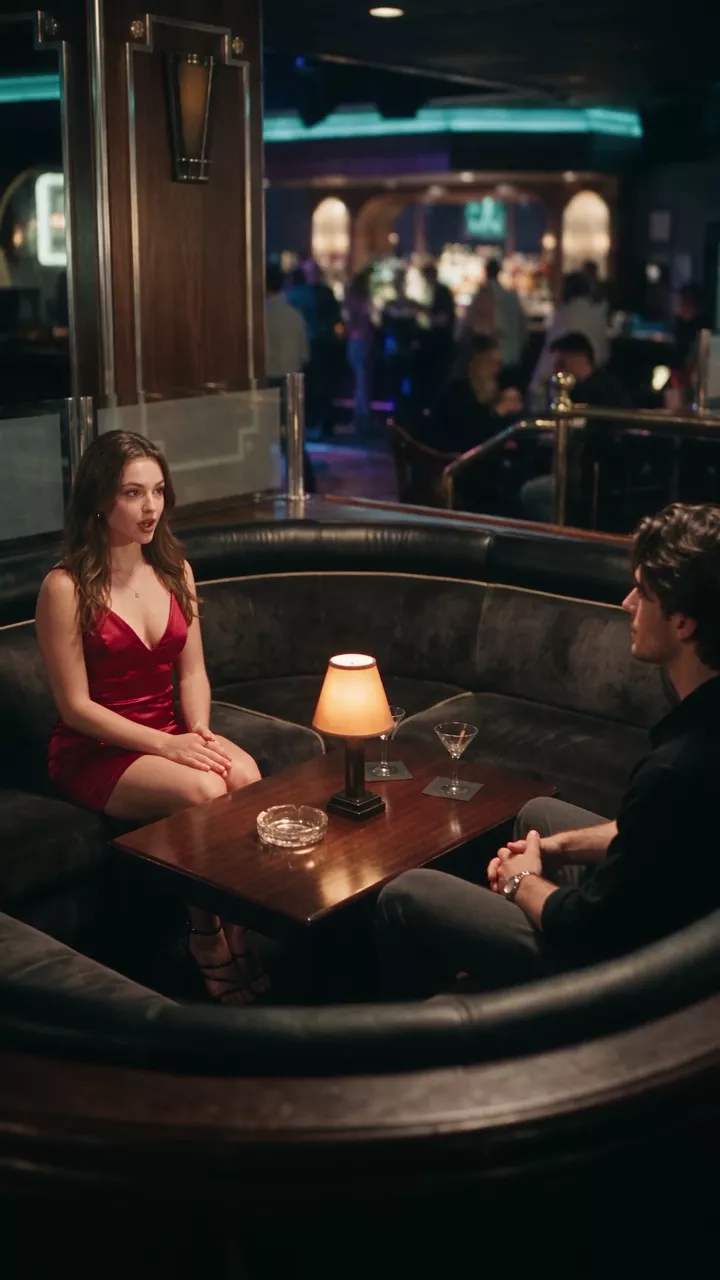
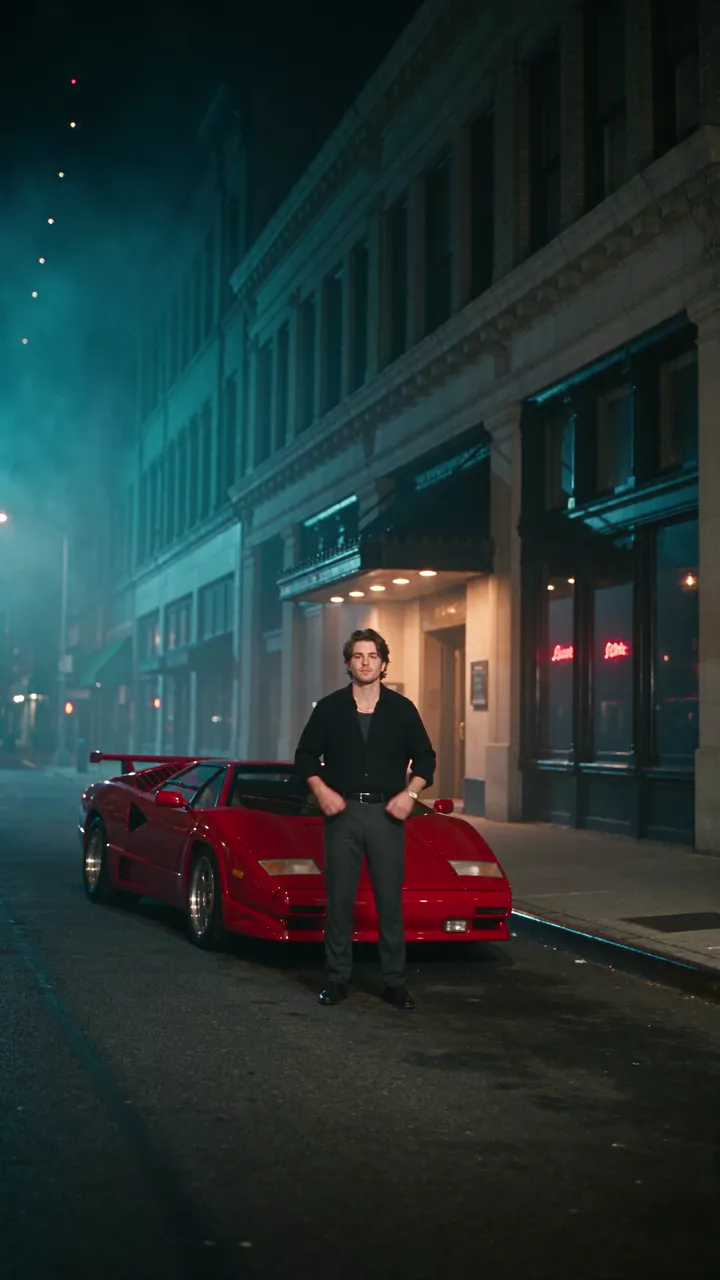
Ce guide suit le projet NOLGIA derrière un court reel sur les focales. Deux personnes dans une cabine de boîte de nuit de la fin des années 1990 se demandent pourquoi l'IA ignore les gros plans ; le reel répond avec le même homme à l'extérieur du club à 24 mm, 70 mm et 135 mm, et un plan à 200 mm de la porte du club au bar. Il s'agit de six clips Seedance 2.5 en 1080p, de deux fiches de personnages et d'une image du club. Chaque prompt est cité tel qu'il a été envoyé ; le seul changement est que les tirets longs sont tapés comme des traits d'union. Toutes les personnes dans les clips ont été générées avec NOLGIA.
C'est deux leçons en une : ce que signifient les millimètres, selon le guide des focales du créateur vidéo lui-même, et comment chaque plan du reel a été construit, afin que vous puissiez le réaliser avec vos propres personnages.
Le reel, plan par plan
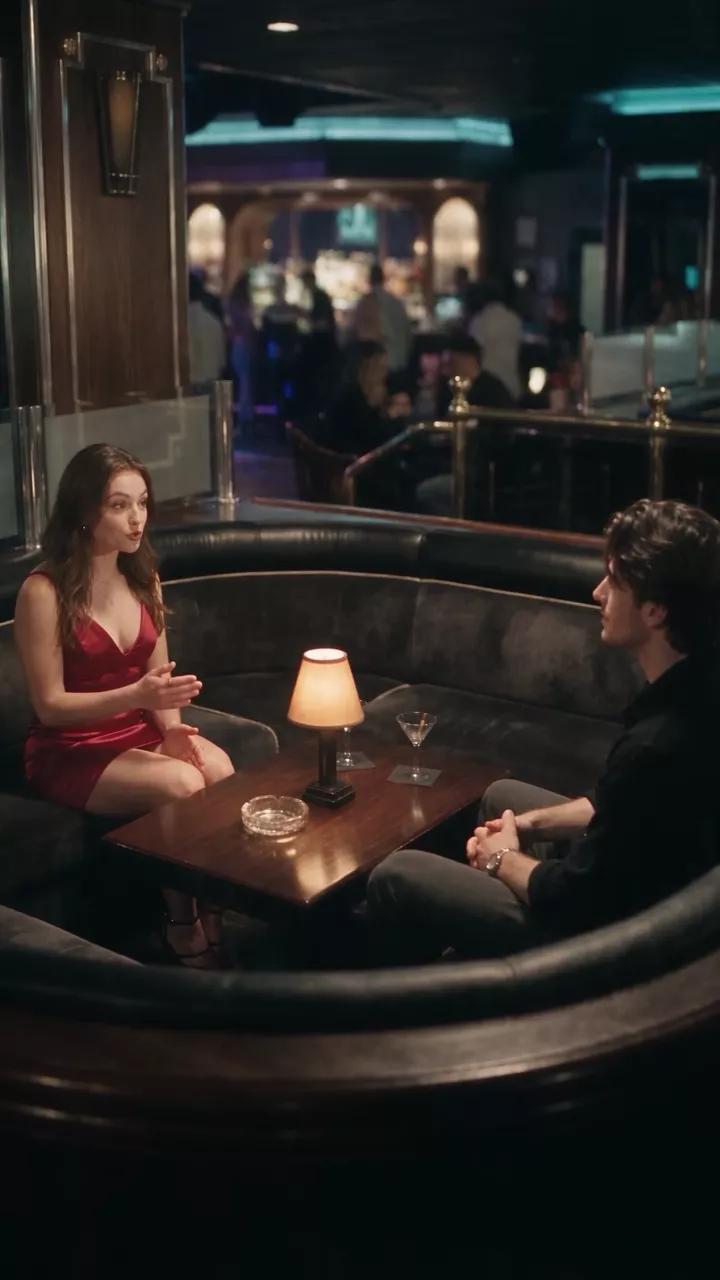
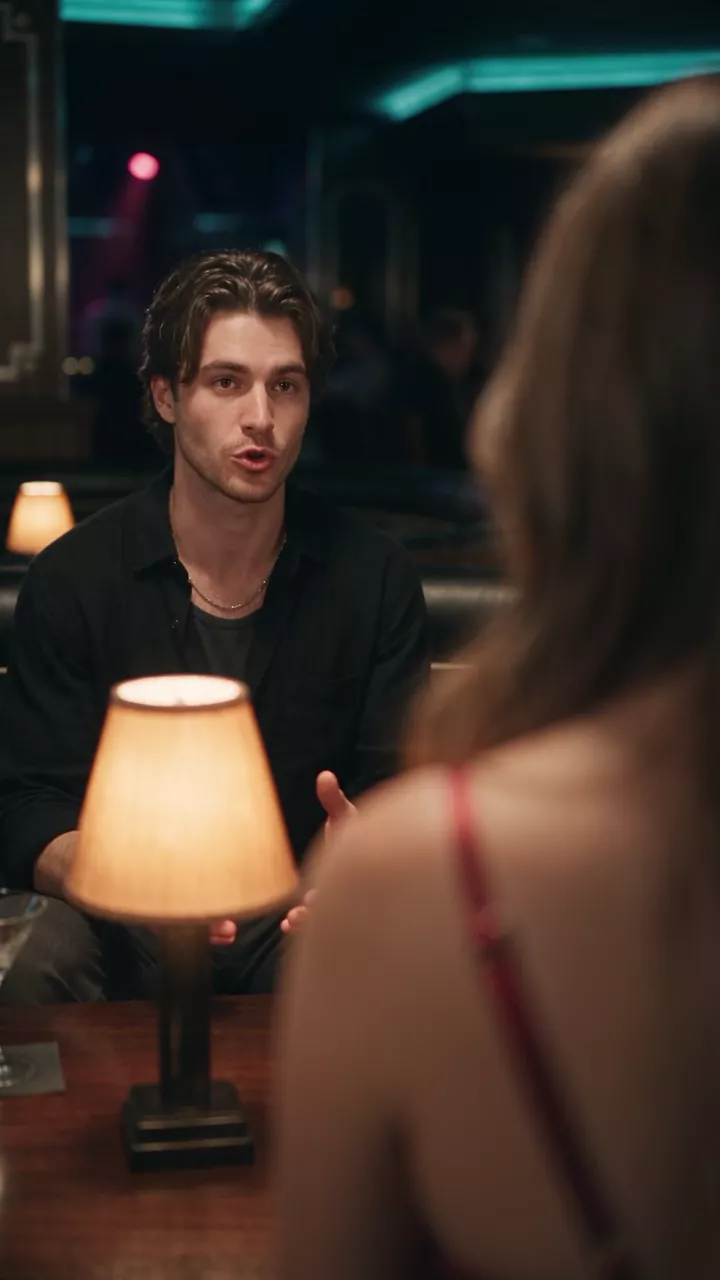
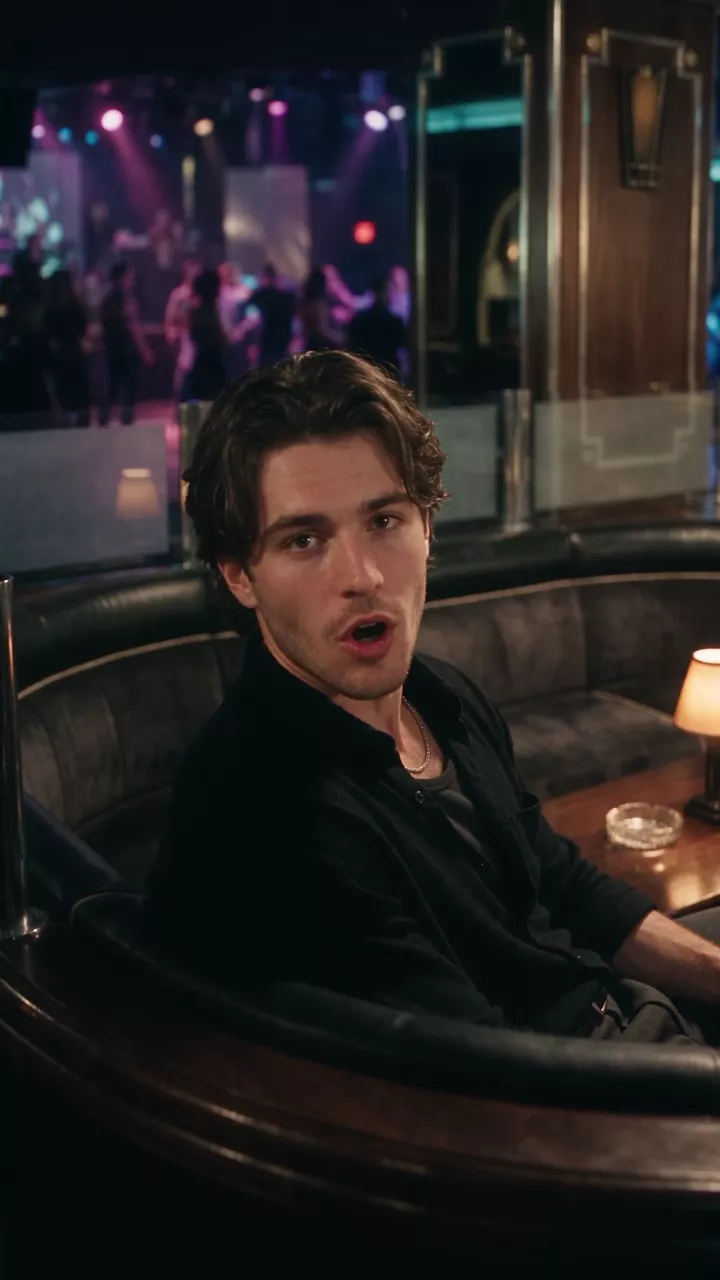
| Plan | Ce qui est dit ou montré | Objectif et caméra |
|---|---|---|
| 1. Le stand | Elle demande pourquoi l'IA montre tout son corps pour un gros plan ; il répond : « Entrons dans le détail. Nous allons décortiquer la focale. » | Un plan large à deux, un lent travelling avant sur elle, puis un rapide panoramique vers lui |
| 2. Dehors, devant le club | Le même homme à 24 mm, 70 mm et 135 mm | Un clip, trois étapes chronométrées, aucun mouvement de caméra |
| 3. Le bar | De la porte à un gros plan de l'homme au bar | Un zoom brutal : 200 mm atteint pendant le plan |
| 4. Le stand | « Oh ! Je comprends, moins de millimètres, plus de champ. » | Une lente orbite d'un quart de tour |
| 5. Par-dessus son épaule | « Oui, plus de millimètres, cadrage plus serré. Se rapprocher ou s'éloigner change aussi cela. » | Un plan fixe par-dessus l'épaule |
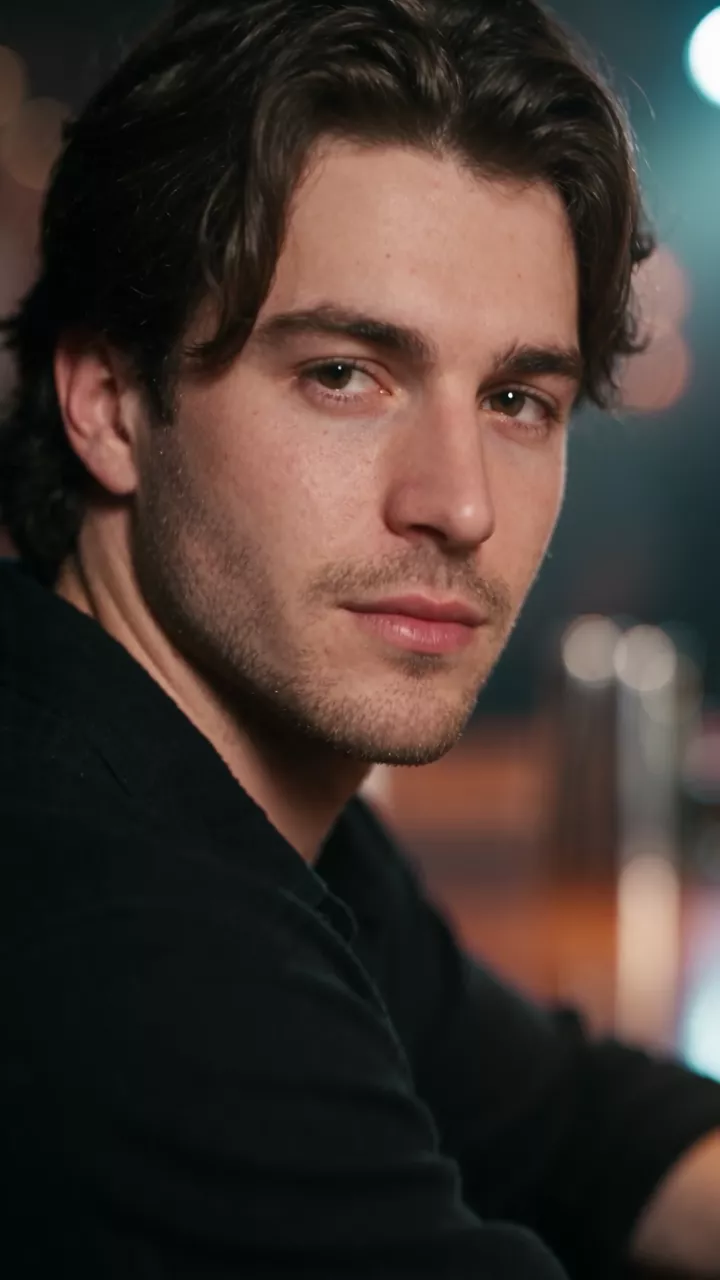
| 6. Gros plan | Il regarde l'objectif : « Répondez "knoll" pour le guide gratuit. » | Caméra fixe |
Ce que signifient les millimètres
24 mm, 70 mm, 135 mm et 200 mm sont des focales : des chiffres qui décrivent le champ de vision d'un objectif. Si la caméra et le sujet restent immobiles et que le ratio d'aspect ne change pas, une focale plus courte montre plus de l'environnement, tandis qu'une focale plus longue offre un cadrage plus serré et fait paraître le sujet plus grand.
La focale seule ne définit pas le cadrage. Vous pouvez filmer un visage ou un corps entier à 135 mm ; le résultat dépend aussi de la distance entre la caméra et le sujet. Ce tableau montre quelle hauteur d'une tranche de la scène remplit un cadre vertical 9:16 à trois distances :
| Objectif | À 3 m | À 10 m | À 30 m |
|---|---|---|---|
| 24 mm | 4,5 m | 15 m | 45 m |
| 70 mm | 1,5 m | 5 m | 15 m |
| 135 mm | 0,8 m | 2,7 m | 8 m |
| 200 mm | 0,54 m | 1,8 m | 5,4 m |
Lisez-le en imaginant une personne d'environ 1,80 m. À 3 m, un 135 mm la cadre du buste vers le haut, tandis qu'un 24 mm la montre de la tête aux pieds avec beaucoup de rue autour. À 30 m, ce même 135 mm la montre toujours de la tête aux pieds, occupant environ un cinquième de la hauteur du cadre. C'est la réponse à la question posée au début : indiquez quelle partie de la personne vous voulez voir, pas seulement l'objectif.
Associez l'objectif au cadrage
Utilisez la focale comme indice visuel, puis décrivez le cadrage en termes simples. Ce sont des points de départ, pas des règles strictes :
| Focale | À utiliser quand | Décrivez le cadre comme |
|---|---|---|
| 24 mm | Vous voulez montrer le sujet dans son environnement | Un plan large en pied avec un environnement lisible autour du sujet |
| 70 mm | Le sujet, les vêtements et les gestes des mains sont importants | Un plan taille, de la ceinture vers le haut, avec la tête entière et les deux mains visibles |
| 135 mm | Le visage et la réaction portent le moment | Un gros plan des épaules vers le haut, avec les yeux et l'expression clairement lisibles |
| 200 mm | Vous avez besoin d'un portrait serré pris de loin | Une position de caméra éloignée, avec la tête et les épaules occupant la majeure partie du cadre |
Chaque focale dans ce guide est une équivalence plein format : le nombre qu'aurait un objectif sur un appareil photo plein format 35 mm. Cela donne une référence commune pour comparer les angles de champ.
Décrivez le cadre, pas seulement l'objectif
Écrire objectif 135 mm ne suffit pas. Un prompt utile suit cet ordre :
- Le cadrage : large, moyen, gros plan.
- La focale, comme un rendu : un rendu d'objectif équivalent plein format 135 mm.
- Ce qui doit rester visible : des épaules vers le haut, en gardant la tête entière visible.
- L'action : une chose simple, comme un regard vers la caméra et un léger sourire.
- Le mouvement de caméra : caméra à l'épaule discrète, pas de zoom.
Close-up with a 135mm full-frame-equivalent lens look.
Frame the subject from the shoulders up, keeping the entire head visible. The subject looks toward the camera with a subtle smile. Restrained handheld movement. No zoom.
Attention :Un indice visuel, pas une garantie. Dans la vidéo générée par IA, la focale est un indice, pas une promesse que le modèle reproduit l'optique d'un objectif réel. Jugez le résultat par l'image : la taille du sujet, la quantité d'espace visible et si la réaction est lisible.
Quatre blocs à coller
Choisissez un bloc et ajoutez-le à votre scène. Décrivez le personnage, le lieu, la lumière, le format et la durée séparément.
Wide shot with a 24mm full-frame-equivalent lens look.
Show the subject from head to toe, with generous space around them and a clearly readable environment. Keep the subject away from the extreme frame edges.
The subject takes one relaxed step and looks across the location. Restrained handheld movement from a fixed camera position. No zoom or camera travel.Medium shot with a 70mm full-frame-equivalent lens look.
Frame the subject from the waist up, keeping the entire head and both hands visible. Show a limited portion of the environment.
The subject briefly adjusts their sleeve, then looks toward the camera. Restrained handheld movement from a fixed camera position. No zoom or camera travel.Close-up with a 135mm full-frame-equivalent lens look.
Frame the subject from the shoulders up, keeping the entire head visible. Make the eyes and facial expression clearly readable.
The subject turns slightly toward the camera and gives a restrained, knowing smile. Subtle breathing and natural blinking. Restrained handheld movement from a fixed camera position. No zoom or camera travel.Close-up from a distant camera position, with a 200mm full-frame-equivalent telephoto lens look. The subject's head and shoulders fill most of the frame.
The subject pauses their work and looks toward the camera. Keep the eyes sharp and the expression natural. Restrained handheld movement from the same distant position.
No zoom or forward camera travel.Utilisez 24 mm quand le lieu fait partie de l'histoire, 70 mm quand le spectateur a besoin de voir l'expression et les mains, 135 mm quand un regard ou un léger sourire porte le sens, et 200 mm quand la caméra observe depuis une cour, une rue ou une grande pièce.
Faire la comparaison 24, 70, 135
Le cœur du reel est un clip Seedance 2.5 de 18 secondes avec trois étapes chronométrées : 24 mm de 0 à 6 secondes, 70 mm de 6 à 12, 135 mm de 12 à 18. L'homme reste au même endroit près de la Lamborghini rouge, et le prompt demande que chaque changement « ressemble à de vrais changements d'appareil photo/objectif » sans zoom numérique.
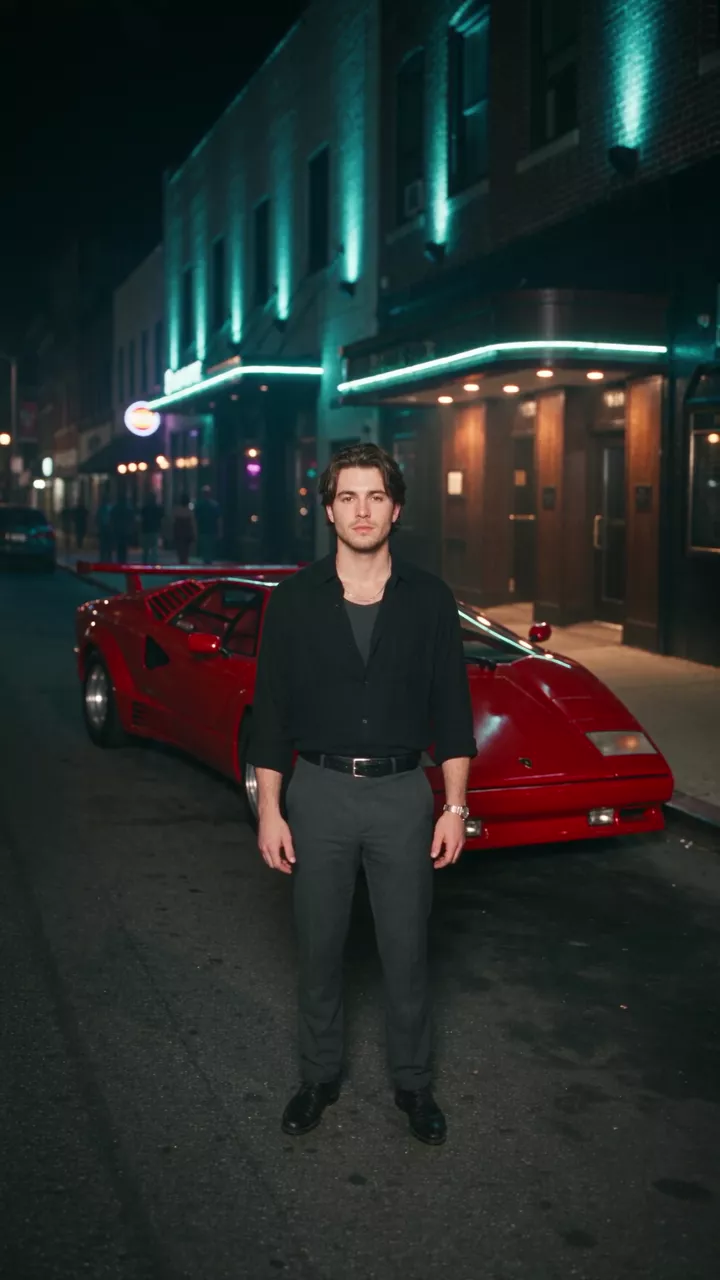
La solution consistait à donner au plan large une distance et une taille, et pas seulement un objectif : « Placez la caméra TRÈS LOIN de l'homme, à environ 25-35 mètres », et « Il doit occuper environ 8-12 % de la hauteur totale du cadre. » Deux tests de 5 secondes du plan large dans la rue ont précédé la première exécution de 18 secondes.
SEEDANCE 2.5 - 18 SECOND VIDEO - 9:16 VERTICAL

Use the uploaded male character reference as the STRICT identity reference.

Preserve his exact face, hairstyle, facial structure, body proportions, clothing, accessories and overall appearance throughout the entire video.

The character remains in the SAME physical location throughout all three focal-length stages.

CONCEPT:

A stylish late-1990s American nightclub exterior at night.

The man stands outside the nightclub, confidently facing the camera while naturally posing.

He does NOT speak.

He maintains a generally straight, front-facing body orientation toward the camera, but behaves like a real person casually posing: subtle posture changes, natural hand movements, fixing his collar, briefly putting a hand into his pocket, shifting his weight, glancing to the side and naturally returning his eyes to camera.

These movements must remain subtle, relaxed and masculine.

He should NEVER look frozen or mannequin-like.

Behind him is an authentic late-1990s nightclub exterior with a period-correct RED LAMBORGHINI parked behind him.

The Lamborghini has authentic late-1990s styling, glossy red paint and realistic period-correct details.

--------------------------------------------------
0-6 SECONDS - 24MM EXTREME WIDE
--------------------------------------------------

IMPORTANT: THIS SHOT MUST BE MUCH FARTHER AWAY THAN THE PREVIOUS VERSION.

Use a TRUE 24MM ENVIRONMENTAL WIDE SHOT.

Place the camera VERY FAR from the man, approximately 25-35 meters away.

The man should appear SMALL within the 9:16 vertical frame.

He should occupy approximately 8-12% of the total frame height.

The environment must dominate the composition.

Show a LARGE amount of:

nightclub facade,
street,
sidewalk,
nightclub entrance,
parked Lamborghini,
surrounding architecture,
streetlights,
distant background,
nighttime atmosphere.

The man should feel like a person standing within a large environment, NOT like a portrait subject.

He remains approximately centered but has substantial negative space around him.

The camera remains stationary or has only extremely subtle natural operator movement.

DO NOT push toward him.

DO NOT zoom.

DO NOT crop in.

DO NOT track tightly.

This should feel like the same distant environmental scale as the 24MM reference, but pushed even farther.

During these six seconds, the man naturally poses while remaining small in the frame.

For example:

He begins with both hands relaxed.

He subtly shifts his weight.

He casually places one hand into his trouser pocket.

He briefly adjusts his jacket/collar with the other hand.

He returns to a relaxed stance.

He looks directly at the camera, briefly glances toward the side, then naturally returns his gaze to the camera.

All movements are slow, subtle and believable.

His body remains generally facing the camera.

He does NOT walk.

He does NOT turn his body away.

--------------------------------------------------
6-12 SECONDS - 70MM MEDIUM
--------------------------------------------------

At exactly 6 seconds, transition to the 70MM MEDIUM SHOT.

Keep the character in EXACTLY the same physical location.

Match the 70MM reference framing from the previous version.

Frame approximately from the waist/chest upward.

The man is now substantially larger in frame.

The nightclub remains visible behind him but is more compressed.

The red Lamborghini remains recognizable in the background.

The man continues naturally posing.

He may:

casually put one hand in his pocket,
adjust his collar,
briefly straighten his shirt,
shift his shoulders slightly,
look briefly toward one side,
then return his eyes directly to camera.

Keep the body generally facing straight toward camera.

These actions should flow naturally into each other rather than feeling like separate poses.

His facial expression gradually becomes more confident and relaxed.

A very subtle smile begins to develop.

Natural blinking.
Natural breathing.
Natural eye movement.
Subtle facial muscle movement.

No dialogue.

Do NOT make him perform exaggerated fashion-model poses.

--------------------------------------------------
12-18 SECONDS - 135MM CLOSE-UP
--------------------------------------------------

At exactly 12 seconds, transition to the 135MM CLOSE-UP.

Match the 135MM reference framing from the previous version.

The man's face becomes the dominant element of the vertical frame.

Frame approximately from the upper chest/shoulders upward.

The nightclub becomes heavily compressed and softly blurred.

The red Lamborghini becomes a soft red shape in the background.

Club lights become beautiful soft bokeh.

The man maintains direct eye contact most of the time.

He develops a natural, subtle confident smile.

He can briefly glance slightly to the side, then return his eyes to the camera.

He may make one tiny collar adjustment or subtle shoulder movement if naturally motivated, but keep the close-up primarily focused on his face.

The final expression should feel charismatic, relaxed and confident.

NOT a huge smile.
NOT a laugh.
NOT exaggerated.

Focus intensely on realistic facial performance:

subtle eye movement,
natural blinking,
tiny eyebrow movement,
natural cheek movement,
subtle lip movement,
realistic facial muscle movement,
natural skin deformation while smiling.

--------------------------------------------------
REALISTIC SKIN - CRITICAL
--------------------------------------------------

The 135MM close-up must reveal REALISTIC HUMAN SKIN.

Visible natural pores.
Fine facial hairs.
Peach fuzz.
Subtle blemishes.
Natural under-eye texture.
Realistic lips.
Individual eyelashes.
Tiny variations in skin tone.
Natural skin translucency.
Realistic texture around the nose, cheeks and forehead.

Do NOT smooth or beautify the skin.

Do NOT use plastic AI skin.

Do NOT airbrush.

Do NOT sharpen the pores artificially.

The skin should look like an extremely high-quality real 35mm photographic close-up of an actual human being.

When the man smiles, the skin around his eyes, cheeks and mouth should move naturally.

--------------------------------------------------
LENS / FRAMING ACCURACY
--------------------------------------------------

24MM:
EXTREMELY FAR.
True environmental wide shot.
Man very small.
Approximately 8-12% of frame height.
Large amount of environment.
Lamborghini clearly visible.
Minimal compression.

70MM:
MEDIUM SHOT.
Man significantly larger.
Waist/chest-up framing.
Less environment.
More background compression.
Lamborghini still recognizable.

135MM:
CLOSE-UP.
Face dominates frame.
Upper chest/shoulders visible.
Very little environment.
Strong background compression.
Nightclub lights become soft bokeh.
Lamborghini becomes a soft red background element.

The three stages must feel like genuinely different focal lengths.

Do NOT simulate them with simple digital cropping.

--------------------------------------------------
CAMERA TRANSITIONS
--------------------------------------------------

24MM → 70MM at exactly 6 seconds.

70MM → 135MM at exactly 12 seconds.

The transitions should feel like real camera/lens changes while preserving the man's physical position.

Do NOT digitally zoom.

Do NOT change the location.

Do NOT move the character forward.

Do NOT change his wardrobe.

--------------------------------------------------
VISUAL AESTHETIC
--------------------------------------------------

Authentic late-1990s American nightlife.

Premium realistic commercial photography.

Cool cyan-blue and blue-green environmental lighting.
Warm amber nightclub entrance lighting.
Deep charcoal blacks.
Subtle red and magenta nightlife accents.
Warm natural skin.
Glossy red Lamborghini.
Slightly desaturated color palette.
Soft highlights.
Gentle contrast.
Subtle nighttime atmospheric haze.

Authentic 35mm photographic rendering.
Fine organic film grain.
Gentle analog softness.
Subtle highlight halation.
Realistic optical depth of field.
Physically believable nighttime lighting.

The overall image should feel like a premium late-1990s nightlife editorial brought to life.

NO dialogue.
NO subtitles.
NO captions.
NO text.
NO logos.
NO watermarks.
NO modern cars.
NO modern nightclub design.
NO smartphones.
NO LED screens.
NO exaggerated posing.
NO mannequin-like stillness.

FINAL STRUCTURE:

0-6 sec:
24MM - EXTREMELY FAR environmental wide - man very small in frame - subtle confident posing.

6-12 sec:
70MM - MEDIUM - natural body movement - subtle confident smile.

12-18 sec:
135MM - CLOSE-UP - realistic skin texture - natural facial expressions - confident subtle smile - direct eye contact.

The character remains confident, relaxed and naturally alive throughout all three focal lengths.Astuce :Chronométrez les étapes, ne coupez pas. Un seul clip avec « À exactement 6 secondes, transition vers le PLAN MOYEN 70 MM » maintient la lumière, l'homme et la rue identiques sur les trois objectifs, ce que trois clips séparés devraient tenter d'obtenir.
Ce prompt crée une vidéo, pas un test de laboratoire. Il recule la caméra pour un 24 mm, puis demande un cadrage taille haute en 70 mm et un cadrage épaules en 135 mm, ce qu'aucun objectif réel ne permettrait à 30 m (voir le tableau ci-dessus). Pour une comparaison stricte, gardez tout fixe sauf l'objectif :
| Gardez identique | Pourquoi |
|---|---|
| Le sujet et le lieu | Pour que les changements de contenu n'affectent pas la comparaison |
| Les positions de la caméra et du sujet | Pour que le point de vue reste le même |
| La hauteur de la caméra et la direction du regard | Pour qu'un changement d'angle ne soit pas confondu avec un changement de focale |
| La lumière et le format d'image | Pour que l'exposition, la composition et les proportions restent les mêmes |
Keep the camera position, camera height, viewing direction and subject position identical across all three shots.
Use the same sensor format and aspect ratio.
Change only the focal length: 24mm, 70mm, then 135mm.
Allow the framing to become progressively tighter.
Do not move the camera or subject to compensate.Attention :Ne demandez pas la même taille. Dans une vraie comparaison, le sujet grandit à chaque étape, ne demandez donc jamais au modèle de garder le sujet à la même taille. Pour plus de contrôle, créez d'abord trois images de référence assorties, vérifiez les compositions, puis animez chacune d'elles, avec seulement de petits mouvements pour ne pas distraire de l'objectif.
Le plan 200 mm : de la porte au bar
La prise de vue au 200 mm est construite sur la distance. Une main ouvre la porte du club ; loin à l'intérieur, un barman sert un verre à l'homme au comptoir, et il est "MINUSCULE dans le cadre", soit environ 2 à 4 % de sa hauteur. Puis la vue se précipite vers un gros plan au 200 mm, et ce n'est qu'à ce moment-là qu'il remarque la caméra, se retourne et fait un signe de tête. Le prompt synchronise chaque temps fort :
- 0 à 1 seconde : la main saisit la poignée et la porte s'ouvre.
- 1 à 2,2 secondes : le barman sert le verre ; l'homme est minuscule et ne se rend compte de rien.
- 2,2 à 2,8 secondes : il prend son verre.
- 2,8 à 4,8 secondes : la ruée téléobjectif au 200 mm, passant d'une silhouette minuscule à un gros plan.
- Ensuite : il remarque la caméra, se retourne et fait un petit signe de tête.
SEEDANCE 2.5 - 6 SECOND VIDEO - 9:16 VERTICAL

Use the uploaded male character reference as the STRICT identity reference.
Preserve his exact face, hairstyle, facial structure, body proportions, wardrobe and appearance.

CORE CONCEPT:

A 200MM CLOSE-UP FROM AN EXTREME DISTANCE.

The camera begins OUTSIDE a late-1990s nightclub.

A person's hand opens the nightclub door.

The door reveals an extremely deep nightclub interior.

At the VERY FAR END of the club, the male character is sitting at the drink counter.

He is extremely small in the opening frame.

A BARTENDER IS ALREADY POURING HIS DRINK as soon as the door opens.

The man is naturally focused on the bartender and his drink, completely unaware of the camera.

The camera then rapidly telephoto-zooms from this enormous distance toward him.

As the camera approaches, he naturally notices the camera, turns his head toward it, makes eye contact and gives one subtle confident nod.

ONE CONTINUOUS SHOT.
NO CUT.

--------------------------------------------------
0.0-1.0 SEC - HAND OPENS THE DOOR
--------------------------------------------------

Start OUTSIDE the nightclub entrance.

The nightclub door is in the foreground.

A person's hand reaches into frame and naturally grabs the door handle.

The hand opens the door.

The door swings open naturally.

IMPORTANT:

The nightclub interior must NOT already be fully visible.

The first visual action is:

HAND GRABS DOOR
→ DOOR OPENS
→ CLUB INTERIOR REVEALED.

As the door opens, the camera looks DEEP into the nightclub.

--------------------------------------------------
1.0-2.2 SEC - BARTENDER POURS HIS DRINK
--------------------------------------------------

The opening door reveals a VERY LARGE, DEEP nightclub interior.

The camera is still outside.

The male character is sitting AT THE VERY FAR END of the nightclub at the drink counter.

He is TINY in the frame.

He should occupy only approximately 2-4% of the total vertical frame height.

There must be a HUGE amount of physical space between camera and character.

Show multiple layers of depth:

foreground doorway,
door frame,
nearby patrons,
tables,
chairs,
club architecture,
midground crowd,
bar patrons,
waitstaff,
more nightclub space,
FAR BACK DRINK COUNTER,
male character.

The club must feel long and deep.

At the far drink counter:

THE BARTENDER IS ACTIVELY POURING WHISKEY INTO THE MAN'S GLASS.

This action must be clearly visible even though they are very far away.

The bartender stands directly in front of him behind the counter.

The whiskey is visibly being poured from a bottle into a short whiskey glass.

The man is sitting naturally and watching the bartender pour.

He is NOT looking toward the camera.

He is NOT posing.

He is NOT aware of the camera.

The surrounding crowd continues behaving naturally.

People are talking, drinking and moving around the bar.

--------------------------------------------------
2.2-2.8 SEC - HE PICKS UP THE DRINK
--------------------------------------------------

The bartender finishes pouring.

The man naturally reaches forward and picks up the freshly poured whiskey glass.

He looks at the drink or briefly toward the bartender.

He remains relaxed.

He still has NO awareness of the camera.

His body remains oriented toward the bar.

--------------------------------------------------
2.8-4.8 SEC - MASSIVE 200MM TELEPHOTO WHOOSH
--------------------------------------------------

NOW begin the dramatic telephoto movement.

The camera rapidly moves/zooms from the EXTREME DISTANCE toward the man.

The character goes from:

TINY FIGURE AT THE FAR END OF THE CLUB

to:

LARGE 200MM TELEPHOTO CLOSE-UP.

The enormous physical distance must be visually obvious.

As the camera rapidly approaches:

foreground doorway elements,
people,
tables,
bar patrons,
lights
and nightclub architecture

create layered natural motion blur and compression.

The crowd becomes increasingly compressed.

The nightclub background progressively collapses into shallow depth of field.

This should feel like an extremely powerful long-lens 200MM camera bringing a distant subject into close view.

NOT a digital crop.

NOT a simple image enlargement.

NOT a CGI tunnel.

NOT teleportation.

Do not distort or morph the character's face.

--------------------------------------------------
CHARACTER REACTION DURING THE ZOOM
--------------------------------------------------

The man does NOT look toward the camera at the beginning.

Only when the camera gets close enough does he notice it.

While still holding the whiskey glass:

he naturally turns his HEAD toward camera.

His BODY remains mostly oriented toward the bar.

His head turns gradually and naturally.

His eyes find the camera.

The reaction should happen organically:

drinking
→ notices something
→ turns head
→ sees camera
→ makes eye contact.

No sudden snap.

No exaggerated acting.

--------------------------------------------------
4.8-6.0 SEC - 200MM CLOSE-UP
--------------------------------------------------

Land on a TRUE 200MM TELEPHOTO CLOSE-UP.

Frame approximately upper chest/shoulders to top of head.

The man's face dominates the 9:16 frame.

He is still holding the whiskey glass naturally.

His body remains slightly turned toward the bar.

His head is turned toward camera.

He looks directly into the lens.

He gives ONE subtle, confident nod.

Then holds a calm, confident expression.

The nod should communicate quiet acknowledgment.

No exaggerated smile.

No speaking.

No dramatic head movement.

--------------------------------------------------
FINAL 200MM LOOK
--------------------------------------------------

The final shot must genuinely look like a 200MM telephoto lens.

Strong background compression.
Extremely shallow depth of field.
Minimal perspective distortion.
Natural facial proportions.
Compressed nightclub crowd.
Soft amber and cyan nightclub bokeh.

The character should look like he has been photographed from a very large distance using a powerful telephoto lens.

--------------------------------------------------
SKIN REALISM - CRITICAL
--------------------------------------------------

The final close-up must reveal extremely realistic human skin:

visible pores,
fine peach fuzz,
individual facial hairs,
subtle blemishes,
natural under-eye texture,
realistic lips,
individual eyelashes,
natural skin-tone variation,
realistic facial movement.

No plastic AI skin.
No beauty filter.
No airbrushing.
No excessive smoothing.

--------------------------------------------------
NIGHTCLUB ENVIRONMENT
--------------------------------------------------

Authentic late-1990s upscale American nightclub.

Very deep interior.

Busy crowd.

Male character seated at the FAR BACK drink counter.

Dark wood.
Black leather.
Chrome.
Smoked glass.
Warm amber bar lights.
Cool cyan-blue ambient lighting.
Subtle blue-green shadows.
Muted red/magenta accents.
Atmospheric haze.

All people, clothing and styling should feel authentically late-1990s.

--------------------------------------------------
EXACT ACTION ORDER - DO NOT CHANGE
--------------------------------------------------

1. CAMERA OUTSIDE NIGHTCLUB.
2. HAND GRABS CLUB DOOR.
3. HAND OPENS DOOR.
4. DEEP CLUB INTERIOR IS REVEALED.
5. MALE CHARACTER IS TINY AT THE VERY FAR END OF THE CLUB.
6. BARTENDER IS ACTIVELY POURING WHISKEY FOR HIM.
7. MAN WATCHES BARTENDER POUR.
8. BARTENDER FINISHES.
9. MAN PICKS UP HIS WHISKEY GLASS.
10. CAMERA RAPIDLY TELEPHOTO-ZOOMS FROM EXTREME DISTANCE.
11. MAN NATURALLY NOTICES CAMERA.
12. MAN TURNS HIS HEAD TOWARD CAMERA.
13. EYES MEET CAMERA.
14. CAMERA LANDS ON 200MM CLOSE-UP.
15. MAN GIVES ONE SUBTLE CONFIDENT NOD.

ONE CONTINUOUS SHOT.

NO CUTS.
NO DIALOGUE.
NO SUBTITLES.
NO TEXT.
NO LOGOS.
NO WATERMARKS.

The opening must make the viewer feel that they are standing OUTSIDE the club and looking an enormous distance through the entire nightclub to discover the man sitting at the bar, while the bartender is visibly pouring his drink. Camera: a fast crash zoom in on the subject from a fixed position, the lens snapping from wide to a tight close-up.Attention :Il s'agit d'un zoom, pas d'une prise de vue au 200 mm. Le clip se termine avec un rendu au 200 mm, mais y parvient en modifiant la focale pendant la prise de vue : sa dernière phrase est la sélection Mouvement de caméra Zoom in réglé sur Strong, "un zoom avant rapide et brusque sur le sujet depuis une position fixe". Une vraie prise de vue au 200 mm commence et reste serrée depuis loin ; utilisez le bloc 200 mm ci-dessus pour cela.
Créez d'abord les deux personnages et le club
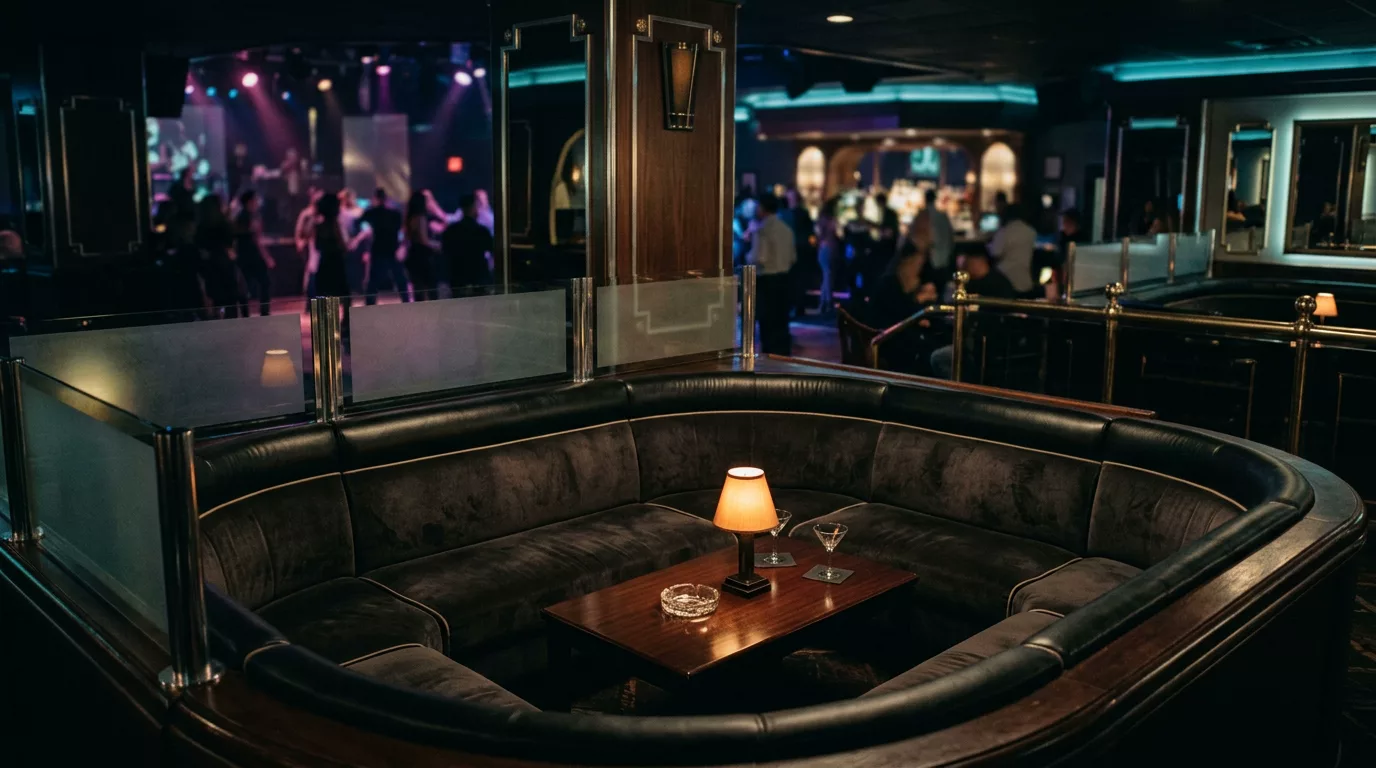
Les clips s'appuient sur trois images : une fiche de personnage pour chacune des deux personnes et une image fixe du club, toutes réalisées avec Nano Banana 2. Elles sont intégrées au compositeur vidéo sous Images de référence, et les prompts les nomment : « @Image 1 = référence exacte du personnage masculin. @Image 2 = référence exacte du personnage féminin. @Image 3 = référence exacte du lieu de la boîte de nuit. »
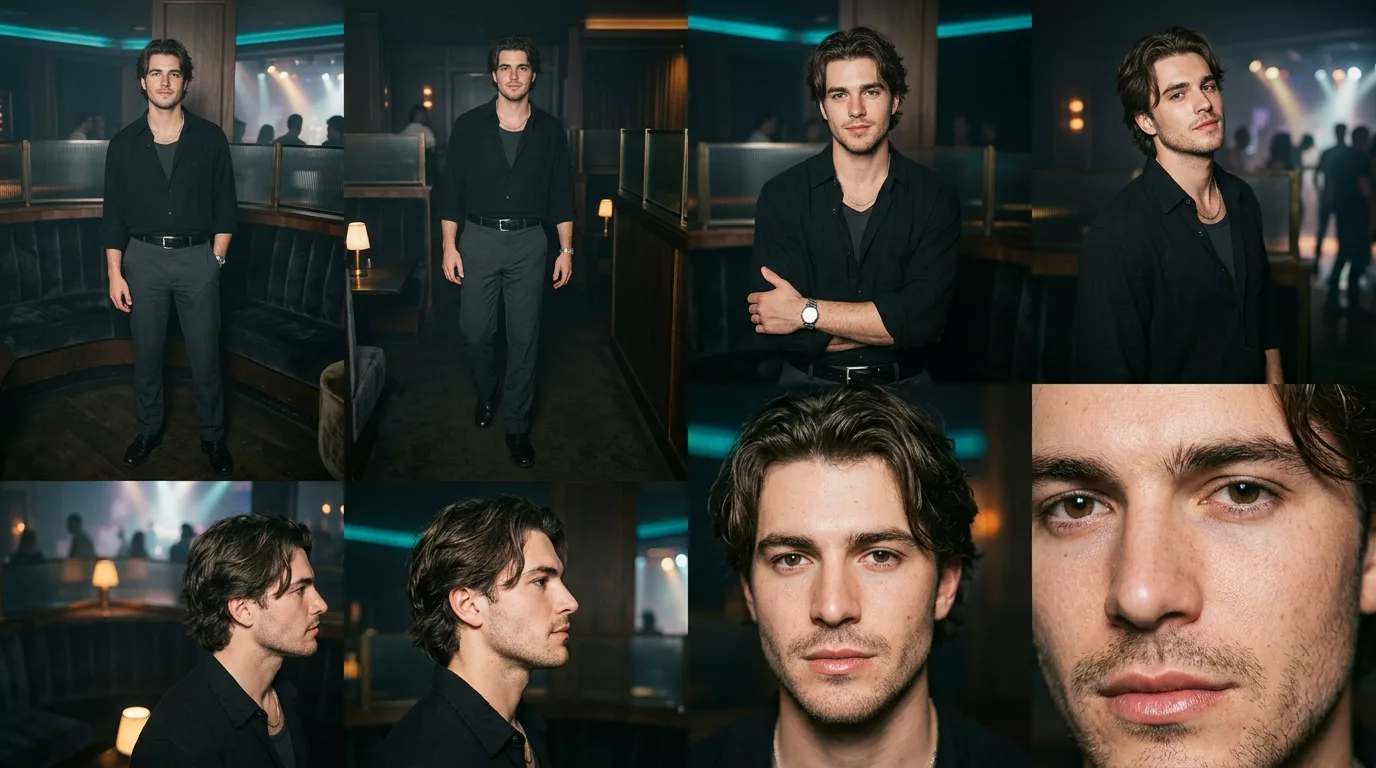
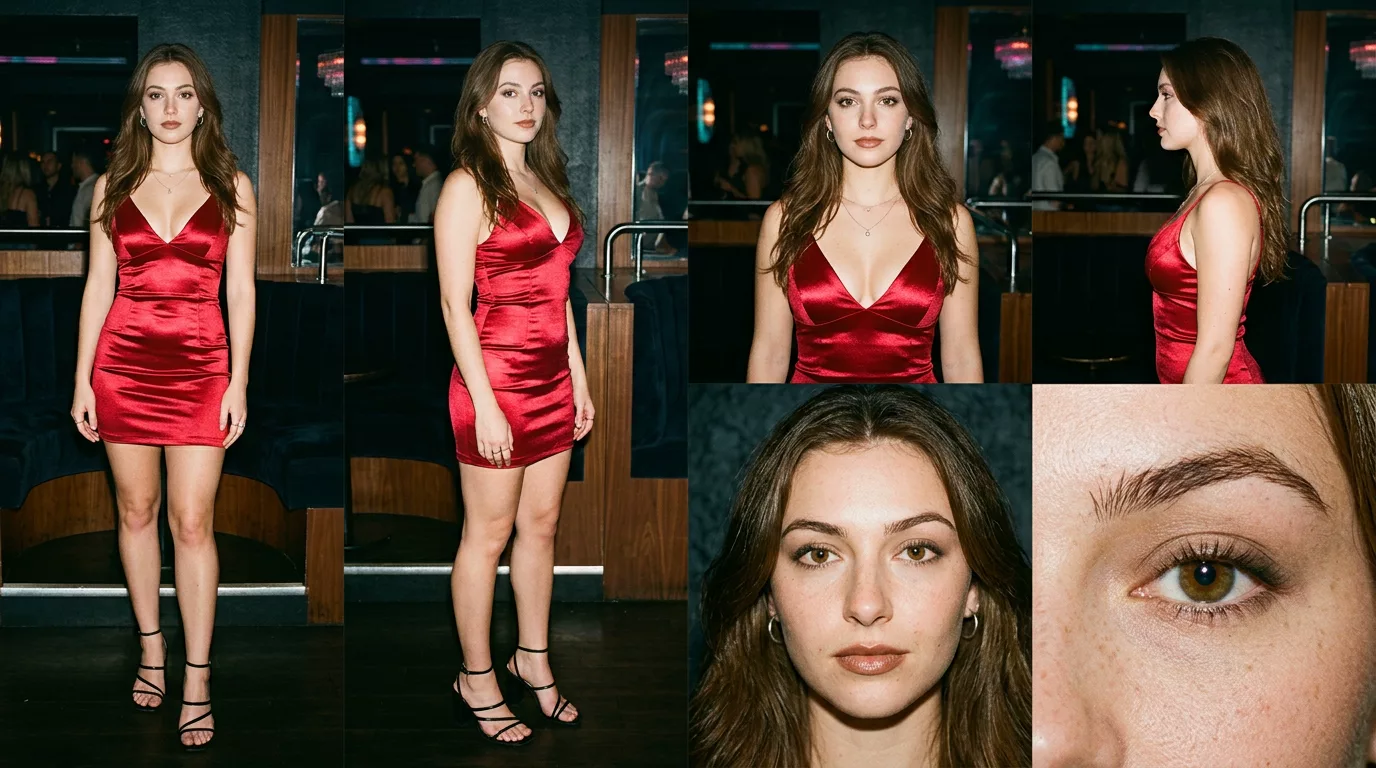
Create a highly realistic photographic character sheet of a handsome white American man, approximately 21-23 years old, designed as a recurring main character for a late-1990s nightclub film.

He should look like a real young American man from approximately 1998-1999 - naturally handsome, stylish and confident, but not like a modern model dressed in vintage clothing.

FACE:
Strong but realistic facial structure, expressive brown eyes, natural eyebrows, defined cheekbones, realistic nose and lips, subtle facial asymmetry and a relaxed confident expression. Slight natural facial imperfections.

SKIN:
Extremely realistic human skin texture: visible pores, fine peach fuzz, subtle blemishes, natural under-eye texture, realistic lips, individual facial hairs and believable skin translucency. No plastic AI skin, no beauty filter, no airbrushed appearance.

HAIR:
Medium-length dark brown hair with an authentic late-1990s hairstyle: naturally thick, slightly layered, softly tousled with subtle volume and imperfect individual strands. Period-correct without becoming exaggerated.

FACIAL HAIR:
Very subtle late-90s stubble along the jaw and upper lip, naturally uneven and realistic.

WARDROBE:
Authentic late-1990s upscale club fashion: relaxed black button-up shirt worn slightly open at the collar, fitted but not skinny dark charcoal trousers, black leather belt and polished black leather shoes.

Add a simple silver chain necklace and understated silver watch.

The clothing should feel expensive and fashionable for 1998-1999 without looking like modern streetwear.

BODY:
Natural lean athletic build with realistic proportions, broad but believable shoulders and relaxed posture. No exaggerated muscularity.

CHARACTER PRESENCE:
Calm, confident, slightly mysterious and effortlessly cool. He should feel like someone who naturally belongs in an upscale late-90s nightclub.

ENVIRONMENT:
Place him in a private seating area inside an authentic late-1990s American nightclub: dark velvet booth seating, small low table, dark wood, smoked glass, chrome details, dim club lighting, subtle cyan/blue practical lights and warm amber highlights, with an indistinct dance floor and blurred clubgoers far behind him.

The space must feel PRIVATE while clearly being part of a real nightclub.

PHOTOGRAPHIC STYLE:
Premium realistic photographic aesthetic with cool cyan-blue and muted green environmental tones contrasted against warm natural skin and subtle amber practical lighting.

Slightly desaturated colors, soft highlights, gentle contrast, atmospheric haze and realistic depth of field.

Authentic late-1990s nightlife photography shot on 35mm film. Fine organic film grain, subtle analog softness, realistic halation around lights and natural photographic imperfections.

CHARACTER SHEET:
Show the EXACT SAME MAN in:

1. Full-body front view
2. Full-body 3/4 view
3. Waist-up front portrait
4. Waist-up 3/4 portrait
5. Side profile
6. Tight facial close-up
7. Extreme facial close-up showing realistic pores, peach fuzz, facial hair, eyelashes and natural skin texture

Maintain EXACT facial identity, hairstyle, age, body proportions, wardrobe, accessories and skin tone across every view.

No modern clothing, modern hairstyle, modern grooming, influencer aesthetic, plastic skin, CGI appearance, excessive retouching, logos, text or watermarks.Create a highly realistic photographic establishing image of an upscale late-1990s American nightclub, specifically a private VIP seating area inside the club.
The location should feel like an authentic 1998-1999 nightclub - sophisticated, slightly dark, intimate and expensive, NOT a modern nightclub designed to look retro.
COMPOSITION:
A spacious private booth area occupies the foreground and middle ground. Large curved dark charcoal/black velvet banquettes wrap around a low dark wooden table. Several empty booth sections extend naturally through the space.
The camera is positioned at approximately seated eye level, looking diagonally across the private seating area. Leave enough open space in the main booth for two people to sit naturally later.
The VIP area should feel secluded but still visually connected to the nightclub behind it.
BACKGROUND:
Behind the private booths, show a larger nightclub environment with a distant dance floor and bar area. Only a few indistinct clubgoers are visible in the background, heavily blurred by shallow depth of field.
Include subtle late-1990s nightclub details:
dark wood paneling,
smoked glass,
brushed chrome,
black leather and velvet,
small table lamps,
frosted glass partitions,
mirrored surfaces,
period-correct bar furniture,
subtle decorative wall panels,
dim practical lighting.
No modern LED screens, no contemporary furniture, no modern architectural details.
LIGHTING:
The nightclub is primarily illuminated by practical light sources.
Cool cyan-blue ambient lighting runs subtly along architectural edges and ceiling details.
Warm amber table lamps and small tungsten practicals illuminate the booths.
Very subtle magenta/purple nightclub light can appear deep in the background around the dance floor.
The lighting must feel sophisticated and atmospheric rather than colorful or neon-heavy.
Create beautiful pools of warm light on the seating while the surrounding environment falls into cool cyan-green shadows.
COLOR PALETTE - CRITICAL:
Premium cinematic photographic color treatment:
deep charcoal black,
dark espresso brown,
muted cyan,
cool blue-green,
soft teal,
warm amber,
subtle muted magenta in the distant background.
The environment should be slightly desaturated overall.
Keep the blacks rich but retain visible detail.
Keep cyan lighting subtle and sophisticated.
Warm amber practical lights should create contrast against the cool environment.
Do NOT use exaggerated neon colors.
Do NOT make everything blue.
Do NOT use modern teal-and-orange Hollywood grading.
The result should have the same refined cool-environment / warm-subject relationship as a high-end commercial photograph.
CAMERA / LENS:
Photographed on a professional 35mm film camera with a natural 40-50mm perspective.
Moderately shallow depth of field.
Foreground booth texture remains detailed.
Background gradually falls into soft optical blur.
Natural lens rendering, subtle halation around practical lights, gentle highlight rolloff, organic film grain and very slight analog softness.
The image should feel photographed rather than digitally rendered.
ERA AUTHENTICITY:
Every visible object must feel appropriate to approximately 1998-1999.
Late-90s nightclub furniture.
Late-90s lighting fixtures.
Late-90s bar design.
Late-90s interior materials.
Late-90s glassware and tables.
Late-90s atmosphere.
Avoid obvious 1970s, 1980s or modern nightclub design.
ATMOSPHERE:
Sophisticated late-night energy without looking chaotic.
There is a sense that a busy party is happening beyond the private booth, but this particular seating area is quiet enough for two people to have a conversation.
Subtle atmospheric haze catches the distant club lighting.
The club feels exclusive, intimate, slightly mysterious and luxurious.
IMPORTANT:
No main characters.
No recognizable people in the foreground.
Only indistinct blurred silhouettes far in the background.
No text.
No logos.
No signage.
No DJ visible.
No screens.
No modernPour les créer, ouvrez Image dans le menu Créer et choisissez le modèle, ou demandez au NOLGIA Agent et il sélectionne le modèle adapté à la tâche. Pour choisir manuellement : pour les images contenant du texte, comme une affiche, une publicité ou un titre de miniature, choisissez GPT Image 2.6 Flare ; pour les personnes et les personnages récurrents, Seedream 5.5 ; pour une véritable image 4K, Nano Banana 2.1 en 4K. Google a depuis déprécié Nano Banana 2, qui produisait ces trois modèles ; Nano Banana 2.1 le remplace au même prix. Pour les utiliser, appuyez sur Images de référence dans le compositeur vidéo et ajoutez-les via Importer ou Bibliothèque. La comparaison et le plan au 200 mm ne joignent que sa fiche, car il est le seul à y apparaître.
Les scènes du stand : dialogue et caméra
Les quatre clips du stand portent le script. Chaque prompt donne les mots exacts entre guillemets, qui les prononce et quand, et comment les deux personnages se comportent : "TWO CONFIDENT PEOPLE CASUALLY TALKING IN A NIGHTCLUB WHILE A CAMERA HAPPENS TO BE FILMING THEM." Chacun a une idée de caméra claire :
- La question : un plan large à deux, un lent mouvement de caméra vers elle pendant qu'elle parle, puis un rapide balayage flou vers lui. Cela recrée le mouvement de caméra d'une vidéo de référence attachée par le créateur.
- La prise de conscience : une lente rotation d'un quart autour du stand, avec la sélection Mouvement de caméra Orbit left.
- L'explication : un plan fixe par-dessus son épaule, cadré à partir d'une image de référence importée.
- La réplique finale : caméra fixe, ses yeux dans l'objectif pour la réplique, puis il se retourne vers la conversation.
SEEDANCE 2.5 - 7.5 SECOND VIDEO - 9:16 VERTICAL

REFERENCE IMAGES:
@Image 1 = exact male character reference.
@Image 2 = exact female character reference.
@Image 3 = exact nightclub location reference.

Preserve the exact facial identity, hairstyle, body proportions, wardrobe, accessories and skin texture of both characters.

Preserve the exact nightclub booth, curved seating, low table, lamp, wood paneling, glass partitions, background club and lighting from the location image.

IMPORTANT COMPOSITION:
The man and woman are sitting OPPOSITE EACH OTHER across the curved VIP booth, with the low table between them.

They are NOT sitting beside each other.

Both characters sit in a relaxed, confident, natural manner. They look completely comfortable in the environment, as if they regularly spend time in this nightclub.

They are stylish, self-assured and charismatic, but NOT overly posed.

ONE CONTINUOUS CONVERSATIONAL SCENE.

DIALOGUE - EXACT WORDING:

WOMAN:
“Why does AI show my whole body when I ask for a close up?”

MAN:
“Let’s get to specifics. We are gonna break down focal length.”

Do not change, shorten, paraphrase or add dialogue.

--------------------------------------------------
PERFORMANCE
--------------------------------------------------

The couple must speak naturally, like two confident young adults having a casual conversation.

The dialogue must NOT feel like an advertisement being recited.

The woman speaks naturally to the man while remaining relaxed in her seat.

She uses subtle, believable conversational hand gestures while talking - a small movement of one hand, a slight open-palm gesture or a small gesture toward herself when saying “my whole body.”

Her gestures should happen naturally at appropriate moments, NOT on every word.

Her facial expression changes naturally throughout the sentence: confident, mildly amused, slightly questioning and curious.

She occasionally shifts her eyes toward the man, briefly glances away naturally, then returns her attention to him.

She does NOT stare directly into the camera while delivering the entire sentence.

The man listens confidently and comfortably.

While the woman speaks, he naturally reacts with small facial expressions, subtle eye movement, a slight nod or tiny amused reaction.

He does NOT sit completely frozen.

When the camera transitions to him, he naturally takes over the conversation.

The man delivers:

“Let’s get to specifics. We are gonna break down focal length.”

His tone is calm, confident and conversational.

He makes one or two subtle natural hand gestures while speaking, emphasizing the idea of “specifics” and “focal length.”

He may briefly shift his posture or lean slightly forward as he begins speaking.

Both characters have:
natural blinking,
natural breathing,
subtle facial reactions,
small head movements,
natural eye movement,
realistic mouth movement,
small posture adjustments,
natural hand gestures.

Do NOT exaggerate their expressions.

Do NOT make them constantly smile.

Do NOT make them constantly gesture.

Do NOT make them look like actors performing for a commercial.

The feeling should be:
TWO CONFIDENT PEOPLE CASUALLY TALKING IN A NIGHTCLUB WHILE A CAMERA HAPPENS TO BE FILMING THEM.

--------------------------------------------------
CAMERA MOVEMENT - MATCH THE ORIGINAL REFERENCE
--------------------------------------------------

THIS IS THE MOST IMPORTANT PART OF THE PROMPT.

Recreate the camera movement of the uploaded reference video as closely as possible.

The reference camera movement is NOT a dramatic cinematic dolly, orbit or handheld sequence.

It is a very controlled, gradual move from a wide two-shot into a close-up of the woman, followed by a fast motion-blurred transition to the man.

0.0-0.7 SECONDS:

Start with a WIDE TWO-SHOT.

Both characters are visible sitting opposite each other across the booth.

The entire seating area and some of the nightclub environment are visible.

The camera is stable and positioned at approximately eye level.

The couple is already sitting naturally when the video begins.

0.7-3.3 SECONDS:

Begin a SLOW, CONTINUOUS FORWARD CAMERA MOVE toward the WOMAN.

The camera gradually gets closer and closer to her.

This should feel like the camera is physically moving toward her while maintaining the same general viewing direction.

The composition progressively changes:

WIDE TWO-SHOT
→ MEDIUM TWO-SHOT
→ MEDIUM CLOSE-UP OF WOMAN
→ CLOSE-UP OF WOMAN.

The man gradually leaves the frame as the woman becomes dominant.

The movement is smooth, controlled and deliberate.

It is NOT a dramatic dolly.

It is NOT a digital zoom.

It is NOT random handheld movement.

The camera should reproduce the restrained forward movement visible in the reference.

The woman delivers her complete line during this movement:

“Why does AI show my whole body when I ask for a close up?”

By the end of her sentence, the camera is close to her face and upper torso.

Her natural facial expressions and hand movements remain visible during the move.

3.3-3.8 SECONDS:

FAST CAMERA TRANSITION.

Immediately after the woman finishes speaking, rapidly swing the camera from the woman toward the man.

Create the SAME strong motion-blurred camera transition visible in the original reference.

The entire frame briefly becomes naturally motion-blurred as the camera rapidly changes direction.

This must look like REAL CAMERA MOTION.

Not a digital transition.
Not a crossfade.
Not a whip-pan graphic.
Not an editing effect.

The motion blur should naturally smear the nightclub and the woman's figure during the rapid camera movement.

3.8-7.5 SECONDS:

The camera lands on the MAN in a close-up.

The man is still seated opposite the woman in the same booth.

His position, wardrobe, face and environment remain completely consistent.

He begins speaking naturally:

“Let’s get to specifics. We are gonna break down focal length.”

He initially looks naturally toward the woman, then shifts his gaze toward the camera as he begins explaining.

While speaking, the camera makes a VERY SUBTLE continued forward movement toward him, similar to the gentle push-in visible in the original reference.

Do not make this movement dramatic.

The man remains relaxed and confident.

Finish with him in a tight conversational close-up.

--------------------------------------------------
CAMERA RULES
--------------------------------------------------

The camera sequence MUST be:

WIDE TWO-SHOT
→ SLOW FORWARD MOVE TOWARD WOMAN
→ PROGRESSIVELY TIGHTER WOMAN FRAMING
→ WOMAN CLOSE-UP
→ FAST MOTION-BLURRED CAMERA TRANSITION
→ MAN CLOSE-UP
→ SUBTLE FORWARD PUSH-IN.

NO camera cuts.

NO orbit.

NO crane.

NO drone.

NO gimbal look.

NO dramatic dolly.

NO digital zoom.

NO random handheld shake.

NO exaggerated camera movement.

NO slow motion.

The camera should feel like a real operator deliberately moving closer to whoever is speaking.

--------------------------------------------------
VISUAL AESTHETIC
--------------------------------------------------

Match the uploaded nightclub location and the premium color aesthetic of the original reference.

Late-1990s upscale nightclub.

Cool cyan-blue and blue-green ambient lighting.
Warm amber practical table lamp.
Warm natural skin tones.
Deep charcoal blacks.
Dark brown wood.
Glossy red dress catching subtle cyan and amber reflections.
Slightly desaturated environment.
Soft highlights.
Gentle contrast.
Subtle atmospheric haze.

Keep the nightclub environment cool while maintaining naturally warm skin.

Background clubgoers remain distant, indistinct and heavily out of focus.

Use realistic optical depth of field.

Premium 35mm photographic rendering.
Fine organic film grain.
Subtle analog softness.
Gentle highlight halation.
Realistic skin pores.
Natural hair texture.
Realistic satin reflections.

The result should feel like a premium contemporary commercial photographed with a real camera, while retaining authentic late-1990s nightclub styling.

--------------------------------------------------
CONTINUITY
--------------------------------------------------

The couple remains seated opposite each other throughout the entire sequence.

They never switch seats.

They never stand up.

They never sit beside each other.

The booth remains identical.

The nightclub remains identical.

Their faces, hairstyles, clothing and accessories remain identical.

No new foreground characters.

No text.
No subtitles.
No captions.
No logos.
No watermarks.
No UI.

FINAL FEEL:

A confident, stylish young couple casually talking in a private VIP booth inside a late-1990s nightclub.

Natural facial expressions.
Natural hand gestures.
Relaxed confident body language.

The camera behaves exactly like the reference:
it starts wide, gradually moves toward the woman as she speaks, gets progressively tighter until her close-up, rapidly motion-blurs across to the man, then settles into his close-up with a subtle forward push. Camera: aggressive handheld, the frame shaking and lurching with the action, quick reframes and an urgent run-and-gun feel.SEEDANCE 2.5 - 5 SECOND VIDEO - 9:16 VERTICAL
Use the uploaded male and female character references as STRICT identity references.
Use the uploaded reference image as the framing and visual composition reference.
SCENE:
Continue inside the same late-1990s nightclub booth.
The woman and man remain seated opposite each other across the table.
This shot is filmed OVER THE WOMAN'S SHOULDER, with the woman in the immediate foreground and the man as the primary subject.
The woman should be partially visible from behind in the foreground/right side of frame.
Her shoulder, upper back, and a small portion of her hair create natural foreground depth.
The man's face and upper torso are clearly visible beyond her.
The composition should closely resemble the uploaded reference:
woman's shoulder/hair softly out of focus in foreground,
man centered / slightly off-center in the background,
man looking toward the woman,
shallow depth of field,
natural nightclub environment behind him.
--------------------------------------------------
DIALOGUE - EXACT
--------------------------------------------------
MAN:
“Yes, more millimetres, tighter framing. Moving closer or farther changes it too.”
He delivers the ENTIRE sentence naturally and continuously.
No unnecessary pauses.
No extra words.
No rushing.
The delivery should sound like a confident person casually explaining something to someone sitting across from him.
--------------------------------------------------
PERFORMANCE
--------------------------------------------------
The man speaks directly to the woman.
He does NOT look into the camera.
He maintains natural eye contact with the woman positioned in the foreground.
His expression is relaxed, confident and slightly instructional.
As he says:
“Yes, more millimetres, tighter framing.”
he can make a small natural hand gesture toward the space between them, subtly emphasizing the idea of tighter framing.
As he says:
“Moving closer or farther changes it too.”
he makes a restrained conversational gesture, perhaps a small movement of his hand forward and backward to naturally illustrate moving closer/farther.
Keep the gestures subtle.
Do NOT choreograph every word.
The woman remains mostly still in the foreground, listening naturally.
She can make a tiny head movement or nod while listening.
Natural blinking.
Natural breathing.
Natural facial expressions.
Natural eye movement.
Subtle posture shifts.
--------------------------------------------------
CAMERA
--------------------------------------------------
STATIC OVER-THE-SHOULDER COMPOSITION.
Do NOT orbit in this shot.
Do NOT zoom.
Do NOT push in.
Do NOT pull out.
The camera should remain positioned behind and slightly to the side of the woman.
The woman's shoulder and hair should remain softly out of focus in the foreground.
The man remains the sharp focal point.
Use realistic shallow depth of field to separate him from the woman and nightclub background.
Very subtle organic handheld micro-movement is acceptable, but the framing itself remains stable.
--------------------------------------------------
TIMING
--------------------------------------------------
0.0-0.4 SEC:
Establish the over-the-shoulder composition.
Woman's shoulder/hair in foreground.
Man looking naturally toward her.
0.4-4.5 SEC:
Man continuously delivers:
“Yes, more millimetres, tighter framing. Moving closer or farther changes it too.”
Natural facial expressions and subtle hand gestures throughout.
4.5-5.0 SEC:
He finishes the sentence and holds a subtle confident expression while maintaining eye contact with the woman.
No additional dialogue.
--------------------------------------------------
VISUAL STYLE
--------------------------------------------------
Match the established nightclub aesthetic.
Authentic late-1990s upscale American nightclub.
Dark wood.
Black leather booth.
Warm amber table lamp.
Cool cyan-blue ambient lighting.
Deep shadows.
Subtle red/magenta nightclub accents.
Soft atmospheric haze.
Distant nightclub crowd.
Late-1990s clothing and styling.
Natural realistic skin texture.
Visible pores and subtle facial imperfections.
Realistic eyes, lips, hair and facial movement.
Organic 35mm film grain.
Gentle analog softness.
Natural optical depth of field.
Subtle highlight halation.
The woman's foreground should have realistic optical blur rather than artificial Gaussian blur.
The man should have crisp, photorealistic facial detail.
No beauty filter.
No plastic skin.
No artificial sharpening.
No modern nightclub elements.
No smartphones.
No text.
No subtitles.
No logos.
No watermarks.
FINAL FEEL:
A natural cinematic conversation.
The camera observes the man from over the woman's shoulder while he casually explains:
“Yes, more millimetres, tighter framing. Moving closer or farther changes it too.”
He feels relaxed and confident, not like he is presenting to an audience.
The woman feels like a real conversational partner rather than a foreground prop.Attention :Une sélection qui contredit le prompt. La question du prompt demande un « mouvement très contrôlé et progressif » et exclut une séquence à l'épaule, mais sa dernière phrase indique dans le champ Mouvement de caméra l'option Handheld avec une intensité Strong : « caméra à l'épaule agressive, cadre tremblant et vacillant ». Cette option s'ajoute après votre prompt et rien ne vérifie qu'ils sont cohérents, donc choisissez le mouvement qui correspond, ou aucun.
La question a nécessité cinq tentatives : la quatrième était une exécution en 720p du prompt final, et la cinquième, en 1080p, est celle qui a été conservée. La phase de réalisation a pris trois tentatives, l'explication une, et la phrase de conclusion trois.
Trois confusions courantes
- Focale ou distance. Les deux modifient la taille apparente du sujet. Déplacer la caméra change aussi la perspective, c'est-à-dire la relation entre les objets proches et lointains ; changer la focale depuis un même point ne le fait pas. Dans la vidéo, la réplique de l'homme le dit : « Se rapprocher ou s'éloigner change aussi cela. »
- Gros plan ou arrière-plan flou. Ce sont deux choix distincts. Si vous souhaitez un arrière-plan doux, demandez-le explicitement : « Arrière-plan doucement flou, yeux nets. »
- Une focale ou un mouvement de caméra. 200 mm est une focale. Un crash zoom est un changement rapide de focale pendant le plan, comme le plan du bar dans le reel. Un dolly in est un déplacement physique de la caméra vers le sujet, comme le lent rapprochement sur elle dans la cabine. Si vous voulez que le plan commence serré, écrivez "Start on a close-up", et ajoutez un mouvement seulement si vous voulez que le public voie l'approche.
Générez-le dans NOLGIA
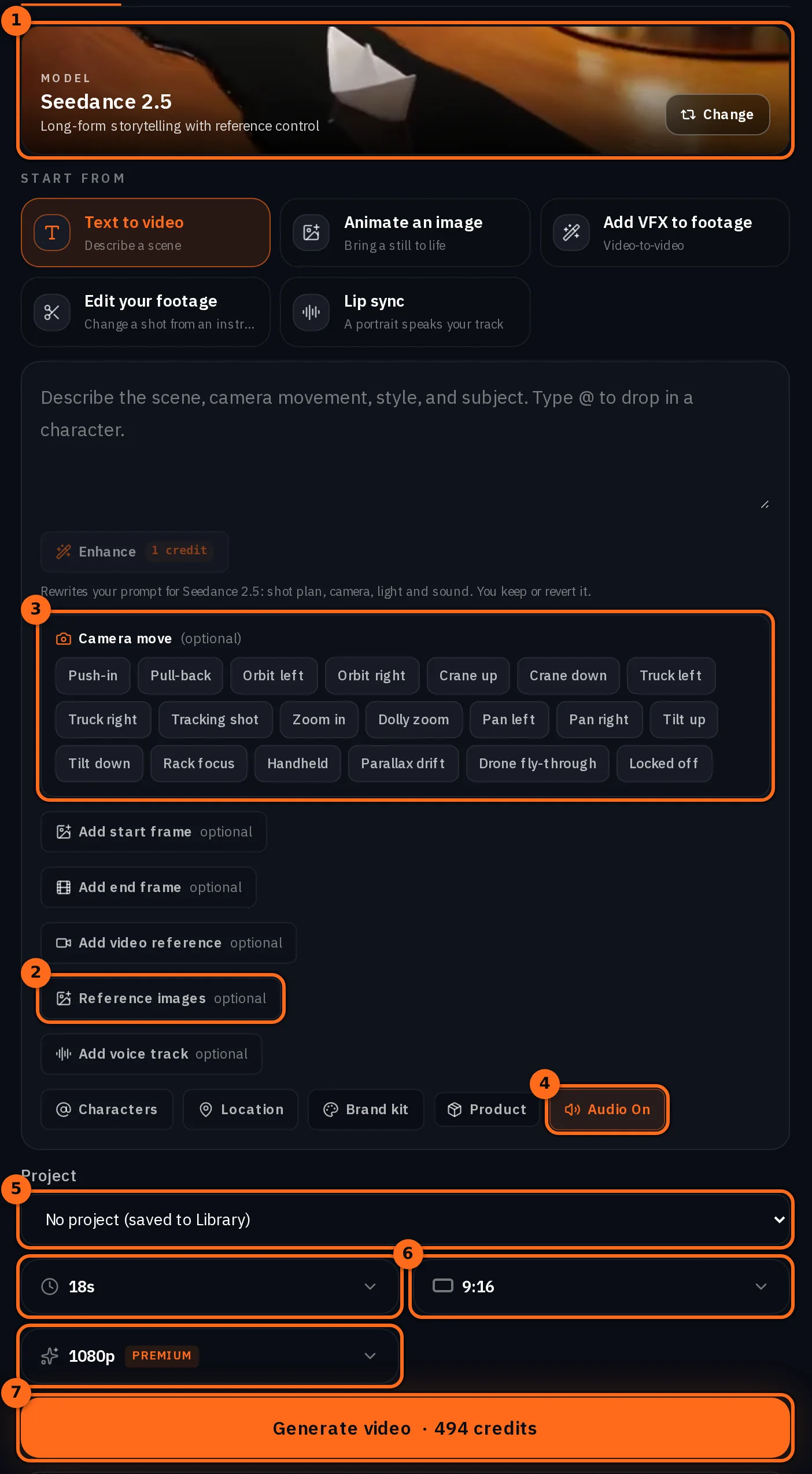
Ouvrez Vidéo depuis le menu Créer et restez sur Texte vers vidéo. Appuyez sur Modifier sur la carte du modèle et choisissez Seedance 2.5. Appuyez sur Images de référence et ajoutez les feuilles et le club. Réglez la puce du format sur 9:16, la puce de la durée sur la longueur souhaitée (18 s pour la comparaison), la qualité sur 1080p comme ici ou 720p pour tester, et laissez Audio On pour les dialogues. Dans la ligne Mouvement de caméra, choisissez le mouvement décrit par le prompt, ou aucun. Sélectionnez votre projet dans le menu déroulant Projet, collez le prompt et appuyez sur Générer une vidéo. Le prix s'affiche sur le bouton avant tout lancement.
Attention :La puce de durée définit la longueur. Deux prompts indiquent ici 6 SECOND VIDEO et ont produit des vidéos de 5 secondes ; la question indique 7.5 et a produit une vidéo de 8 secondes. La durée de la clip correspond à la puce de durée, quel que soit le contenu du prompt, donc calibrez vos temps forts sur la puce.
Les six clips ont nécessité 22 exécutions de Seedance 2.5 en environ quatre heures : cinq pour la question, quatre pour la comparaison (y compris les deux tests courts), six pour le plan au 200mm, trois pour la réalisation, une pour l'explication et trois pour la phrase de clôture.
Essayez avec votre propre personnage
Faites deux plans : 24 mm pour poser le lieu, puis 135 mm pour montrer la réaction. Dans chaque prompt, indiquez exactement ce qui doit rester visible. C'est ainsi que vous guidez l'attention du spectateur : d'abord le lieu, puis ce qui compte.
- Le cadrage en mots : large, moyen ou serré, et de quel point à quel point.
- La focale comme un rendu visuel, exprimée en équivalent plein format.
- Ce qui doit rester visible : la tête entière, les deux mains, la voiture derrière lui.
- Une action simple.
- Le mouvement de caméra, ou aucun zoom et aucun déplacement de caméra.
- Pour une comparaison, tout est fixe sauf l'objectif.
Ce que cela coûte
Les clips sont facturés selon le modèle, la durée et la qualité, et la 1080p coûte plus cher que la 720p, donc testez en 720p. Le prix s'affiche sur le bouton Générer une vidéo avant le lancement. Les tarifs en vigueur pour les modèles de cette séquence :
Seedance 2.5Pro et plus
Per 5s clip
480p 31 crédits · 720p 66 crédits · 1080p 160 crédits · 4K 202 crédits
1080p renders at 16:9 and 9:16
4K renders at 16:9 and 9:16
Nano Banana 2Toutes les offres
Per image
Native 4 crédits · 2K 6 crédits · 4K 9 crédits
Lu en direct dans le catalogue au chargement de cette page. Chaque prix est affiché avant que vous ne génériez. Voir tous les tarifs.
Questions et réponses
- Pourquoi l'IA montre-t-elle tout le corps quand je demande un gros plan ?
- Parce que le cadrage dépend autant de la distance de la caméra que de l'objectif, et le modèle complète ce que vous omettez. Décrivez le cadre : un gros plan des épaules vers le haut, en gardant toute la tête visible, avec un rendu d'objectif équivalent 135 mm plein format.
- Écrire 135 mm me donne-t-il un vrai objectif 135 mm ?
- Non. En vidéo générée par IA, la focale est un indice visuel, pas une promesse d'optique réelle. Jugez le résultat par l'image : la taille du sujet, la quantité d'environnement visible et si la réaction est lisible.
- Que signifie « équivalent plein format » ?
- C'est la focale qu'aurait un objectif sur un appareil photo plein format 35 mm. Utiliser cette référence pour chaque valeur permet de comparer les angles de champ.
- 200 mm est-ce la même chose que zoomer ?
- Non. 200 mm est une focale. Un zoom brutal modifie la focale pendant le plan, et un travelling avant déplace la caméra vers le sujet. Si vous voulez un plan serré dès le début, écrivez « Commencer sur un gros plan ».
- Puis-je montrer les trois objectifs dans un seul clip ?
- Oui. La séquence le fait en un seul clip de 18 secondes avec Seedance 2.5 et trois étapes minutées. Pour un contrôle plus précis, créez trois images de référence assorties et animez chacune séparément.
- Les personnes sont-elles réelles ?
- Non. Les personnes et le club ont été générés avec NOLGIA à partir des prompts de ce guide.
Essayez la paire 24 mm et 135 mm
Ouvrir le compositeur vidéoGuides associés
Prompts
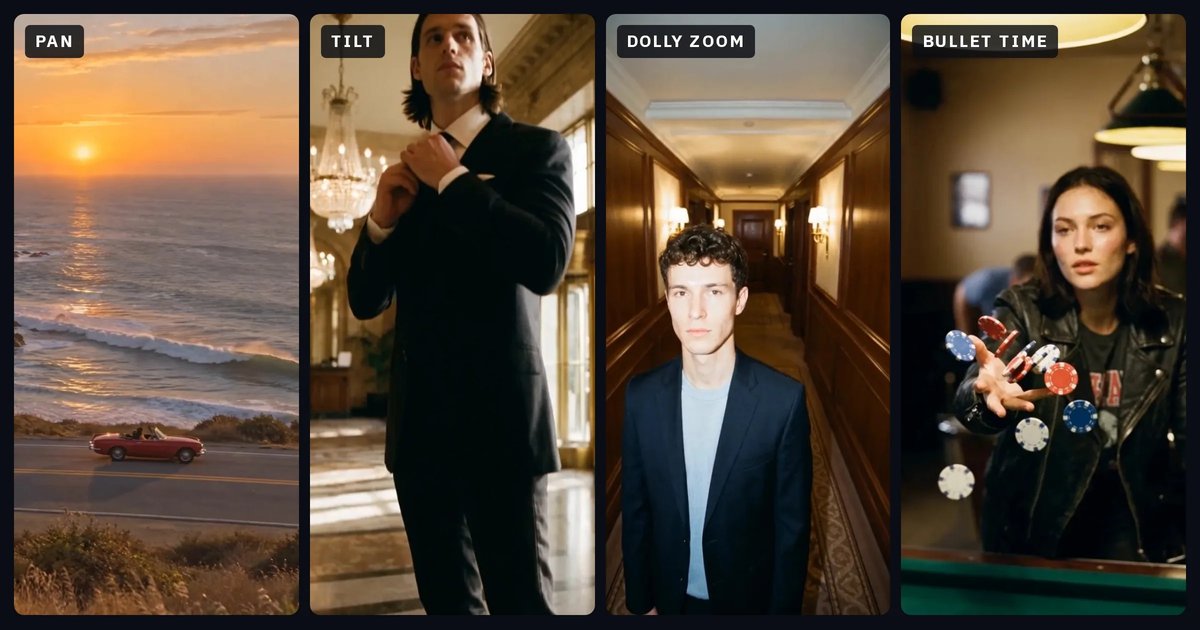
Mouvements de caméra : ce que chacun fait et les mots pour l'obtenir
Douze mouvements de caméra expliqués simplement : ce que fait la caméra, ce qu'elle fait ressentir, les mots à écrire dans votre prompt, et le mouvement avec lequel on la confond souvent. Chacun illustré par un clip réalisé dans NOLGIA.
· 26 min de lecture
Cinéma
Comment créer des vidéos IA réalistes
Le workflow étape par étape pour des vidéos IA réalistes : planifiez avec NOLGIA Agent, verrouillez les personnages et le lieu, écrivez chaque plan beat par beat pour Seedance 2.5, puis ajoutez la musique et montez.
· 22 min de lecture
Prompts
Seedance 2.5 : comment le prompter, avec une bibliothèque qui a été exécutée
Comment écrire pour Seedance 2.5 sur NOLGIA : texte vers vidéo, une image fixe comme première frame, une prise comme @Video1 avec son son, les six formats d’image, de 4 à 30 secondes, et ce qu’il refuse.
· 10 min de lecture